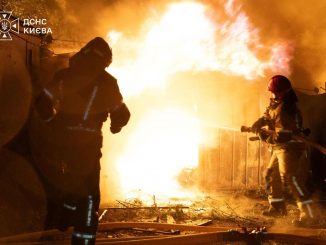
Ukraine’s drone barrage has targeted energy infrastructure deep inside Russia, including recent hits on an oil refinery near Moscow [File: Social media via Reuters]
Published June 26, 2026
Russian air defences intercepted hundreds of Ukrainian drones across multiple regions, including Moscow and annexed Crimea, in one of the largest reported drone attacks since the war began.
MOSCOW, June 26, 2026 — Russia’s Defense Ministry said its air defense forces intercepted and destroyed 660 Ukrainian drones overnight in what officials described as one of the largest aerial attacks launched by Ukraine since the start of the full-scale war.
According to the ministry, the drones were shot down across multiple regions, including Belgorod, Bryansk, Kursk, Oryol, Kaluga, Lipetsk, Rostov, Voronezh, Tula, Ryazan, Astrakhan, the Moscow region, annexed Crimea, and over the Black and Azov seas.
Russian authorities reported that at least 47 drones were intercepted near Moscow, prompting temporary restrictions at several airports. No major casualties were immediately reported, although regional officials said some infrastructure facilities sustained damage.
The large-scale attack comes as Ukraine intensifies its long-range drone campaign against Russian military and energy infrastructure. Ukrainian officials have increasingly targeted oil depots, industrial facilities, air bases, and logistics hubs deep inside Russian territory in an effort to disrupt Moscow’s war effort.
 Russia claims its air defences destroyed 660 Ukrainian drones in a massive overnight aerial assault.
Independent verification of the exact number of drones involved was not immediately possible.
Reports from Russian and Ukrainian media indicated that facilities in Russia’s Tula region, including a chemical plant and energy infrastructure, may have been among the targets. Fires were also reported at several sites following the strikes.
The overnight barrage coincided with continued Russian missile and drone attacks on Ukrainian cities. Ukrainian authorities said Russia launched ballistic missiles and drones against several regions, damaging residential buildings and critical infrastructure.
Meanwhile, Russia denied speculation that it was seeking military assistance from neighboring Belarus for operations in Ukraine. Kremlin officials said there were no plans for Belarusian forces to directly participate in combat, despite ongoing military cooperation between Moscow and Minsk.
The latest exchange of long-range strikes underscores the growing importance of drone warfare in the conflict, with both sides increasingly relying on unmanned systems to strike targets far behind front lines.
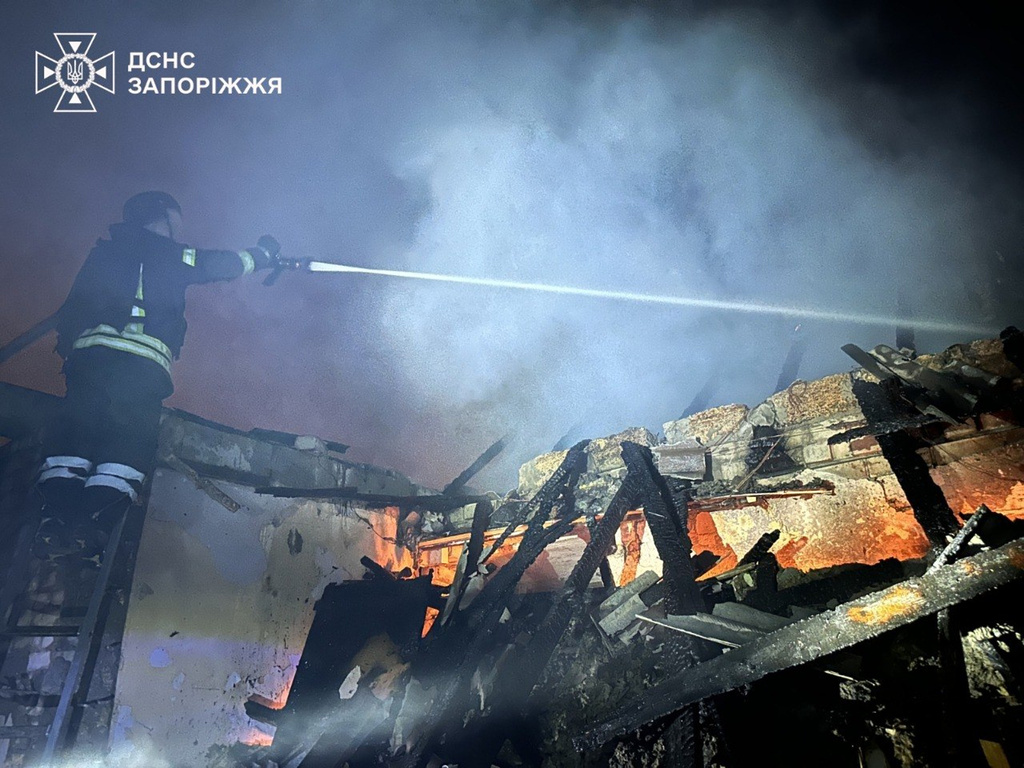 In this photo provided by the Ukrainian Emergency Service, firefighters extinguish a fire in a residential building following a Russian drone attack in Zaporizhzhia, Ukraine, June 26, 2026. (PHOTO / UKRAINIAN EMERGENCY SERVICE VIA AP)
Military analysts say the expanding drone campaigns are placing additional pressure on air defense networks while highlighting the increasingly technological nature of the more than four-year-old conflict.
The war, now in its fifth year, has seen both Russia and Ukraine dramatically expand domestic drone production, making unmanned aerial systems a central component of battlefield operations and strategic strikes.
 Public / Political Reactions:
🇷🇺 Russian Government and Kremlin Officials
Russian officials portrayed the large-scale Ukrainian drone assault as further evidence of what Moscow describes as Kyiv’s escalating attacks on civilian and civilian-adjacent infrastructure.
- Russia’s Defense Ministry emphasized that its air defense systems successfully intercepted hundreds of drones across multiple regions, highlighting the effectiveness of the country’s air defenses.
- Kremlin officials accused Ukraine of attempting to intimidate Russian civilians and disrupt daily life through long-range drone attacks.
- Russian authorities used the incident to reinforce calls for continued military operations and increased security measures throughout the country.
➡️ Position: The Russian government condemned the drone strikes as acts of aggression and cited them as justification for maintaining and strengthening its military campaign.
🇺🇦 Ukrainian Officials and Supporters
While Ukrainian authorities did not immediately comment on every reported strike, Kyiv has consistently defended long-range drone operations as legitimate military actions against Russia’s war infrastructure.
- Ukrainian officials have argued that strikes targeting military facilities, fuel depots, and defense-related industries are intended to weaken Russia’s ability to wage war.
- Supporters of Ukraine said attacks deep inside Russian territory are a response to Russia’s continued missile and drone strikes on Ukrainian cities.
- Pro-Ukraine commentators maintained that targeting logistical and military assets inside Russia is a necessary component of Ukraine’s broader defense strategy.
➡️ Position: Ukrainian officials and supporters view long-range drone strikes as a legitimate means of degrading Russia’s military capabilities and pressuring Moscow.
🌍 International Analysts and Security Experts
Security analysts described the reported drone barrage as another demonstration of the increasingly central role of unmanned systems in the conflict.
- Analysts noted that both Russia and Ukraine are relying more heavily on drones to strike targets far from the front lines.
- Some experts warned that the growing scale of drone warfare could further blur the distinction between battlefield operations and attacks affecting civilian areas.
- Others argued that the expanding use of long-range drones reflects a broader transformation in modern warfare, with relatively low-cost systems capable of producing significant strategic effects.
➡️ Position: Analysts believe the latest drone attacks underscore the rapid evolution of drone warfare and highlight the conflict’s increasingly technological character.
🇧🇾 Belarusian Officials
Belarusian authorities rejected speculation that Minsk would directly join Russia’s military operations in Ukraine.
- Belarusian and Russian officials reiterated that military cooperation between the two countries remains defensive in nature.
- Officials stressed that there are currently no plans for Belarusian forces to participate directly in combat operations in Ukraine.
- Observers noted that despite close military ties, Belarus continues to avoid direct involvement in frontline fighting.
➡️ Position: Belarus maintains close security cooperation with Russia but continues to deny plans for direct participation in the war.
 Resulting Effects
The reported large-scale Ukrainian drone assault and Russia’s claim of intercepting 660 drones have intensified military, security, and diplomatic concerns surrounding the Russia-Ukraine war.
1. Increased Pressure on Russian Air Defense Systems
The scale of the reported attack highlighted the growing challenge posed by long-range Ukrainian drone operations.
📌 Russian air defense units were forced to respond across multiple regions simultaneously.
📌 Authorities may accelerate the deployment of additional air defense and electronic warfare systems.
📌 The incident exposed the continuing vulnerability of strategic facilities located deep inside Russian territory.
➡️ Result: Massive drone attacks → increased pressure on Russia’s air defense network.
2. Expansion of Drone Warfare in the Conflict
The latest attacks underscore the increasingly central role of drones in the war.
🚁 Both Russia and Ukraine are expected to intensify the use of unmanned aerial systems.
🏭 Military industries in both countries may further expand drone production.
⚔️ Long-range strikes are likely to become an even more important component of military strategy.
➡️ Result: Escalating drone operations → greater reliance on unmanned warfare by both sides.
3. Heightened Security Measures Across Russia
The attacks prompted renewed concerns about the security of critical infrastructure and major population centers.
🛡️ Russian authorities may strengthen security around military facilities, energy infrastructure, and transportation hubs.
🏙️ Additional restrictions and emergency measures could be introduced in regions frequently targeted by drone attacks.
📄 Regional governments are expected to review and update emergency response procedures.
➡️ Result: Deep strikes inside Russia → enhanced domestic security and infrastructure protection measures.
4. Reduced Prospects for Near-Term Diplomatic Progress
The continued exchange of large-scale attacks may further complicate efforts to end the conflict.
🤝 Ongoing hostilities could reduce incentives for either side to pursue immediate negotiations.
📄 International mediation efforts may face additional obstacles amid escalating military operations.
🌍 Diplomatic tensions between Russia and Ukraine are likely to remain high.
➡️ Result: Continued cross-border attacks → diminished prospects for near-term peace negotiations.
5. Increased International Attention to Modern Drone Warfare
The reported scale of the drone assault has drawn renewed global attention to the evolving nature of warfare.
📊 Defense analysts worldwide are expected to closely study the operational lessons from the attacks.
🌍 Governments may reassess their own air defense and counter-drone capabilities.
📰 The conflict will likely continue shaping international discussions on the future of modern warfare.
➡️ Result: Large-scale drone attacks → heightened global focus on drone warfare and national defense preparedness.
 Future Outlook
The reported large-scale drone assault is expected to have significant implications for the military, political, and diplomatic dimensions of the Russia-Ukraine war.
1. Drone Warfare Is Likely to Intensify Further
The latest attacks underscore the growing importance of unmanned systems in the conflict.
🚁 Both Russia and Ukraine are expected to continue expanding domestic drone production and long-range strike capabilities.
🛡️ Military planners will likely place greater emphasis on air defense and counter-drone technologies.
⚔️ Large-scale drone attacks may become increasingly common as both sides seek to weaken each other’s military infrastructure.
➡️ Outlook: Escalating drone operations → greater reliance on unmanned warfare across the conflict.
2. Russia May Strengthen Domestic Security Measures
The scale of the reported attack could prompt additional security initiatives inside Russia.
🛡️ Russian authorities are expected to reinforce air defense systems around major cities and strategic facilities.
🏭 Critical infrastructure sites may receive additional protection against future drone strikes.
📄 Moscow could introduce further emergency and security measures in regions frequently targeted by attacks.
➡️ Outlook: Expanding drone threats → enhanced domestic security and defensive preparations.
3. Ukraine Is Expected to Continue Deep-Strike Operations
Kyiv has increasingly relied on long-range strikes to target Russian military and logistical assets.
🎯 Ukrainian forces are likely to continue targeting military facilities, energy infrastructure, and defense industries inside Russia.
🏭 Deep strikes may remain an important component of Ukraine’s strategy to disrupt Russia’s war effort.
🚁 Continued technological innovation could improve Ukraine’s ability to conduct long-range operations.
➡️ Outlook: Sustained deep-strike campaigns → continued pressure on Russian military infrastructure.
4. Diplomatic Efforts Could Face Additional Challenges
The continued escalation of cross-border attacks may complicate prospects for negotiations.
🤝 International mediators are expected to continue encouraging dialogue between Moscow and Kyiv.
📄 However, ongoing military operations may reduce incentives for either side to pursue immediate concessions.
🌍 Major powers are likely to remain engaged diplomatically while monitoring the conflict’s broader regional implications.
➡️ Outlook: Continued military escalation → limited prospects for a near-term diplomatic breakthrough.
5. International Attention to the Conflict Is Expected to Remain High
The scale of the reported drone attacks is likely to sustain global interest in the war.
🌍 Governments and security analysts are expected to closely monitor developments in drone warfare.
📊 Defense planners worldwide may continue studying lessons from the conflict for future military planning.
📰 International scrutiny of civilian and infrastructure impacts from cross-border attacks is likely to persist.
➡️ Outlook: Ongoing large-scale attacks → sustained international focus on the Russia-Ukraine war.
 Bottom Line
The reported interception of 660 Ukrainian drones by Russian air defenses highlights the increasingly central role of long-range drone warfare in the Russia-Ukraine conflict. The large-scale aerial assault underscores both Ukraine’s growing deep-strike capabilities and Russia’s continuing efforts to defend critical infrastructure and major population centers. As both sides expand their use of unmanned systems, drone warfare is expected to remain a defining feature of the conflict, further complicating diplomatic efforts and contributing to the war’s continued escalation.
SOURCES: DECCAN CHRONICLE – Russia Says It Shot Down 660 Ukrainian Drones Overnight
AL JAZEERA – Russia reports downing 660 Ukrainian drones, denies seeking Belarus war aid
ENGLISH AL ARABIYA – Russia says shot down 660 Ukrainian drones overnight: Defense ministry
CHINA DAILY – Russia says downed 660 drones as Kiev reports missile attack