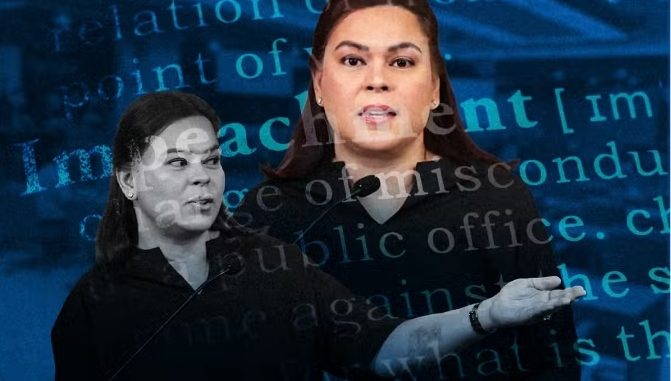
Vice President Sara Duterte. Composite photo from INQUIRER files.
Published June 23, 2026
MANILA, Philippines — The impeachment proceedings against Vice President Sara Duterte intensified this week as the Senate pre-trial entered its third day, with lawmakers continuing to review and “mark” a growing volume of documentary evidence tied to allegations involving public funds and unexplained wealth.
According to Philippine media reports, the latest session focused heavily on organizing and identifying key pieces of evidence related to the impeachment articles, particularly those involving alleged misuse of confidential and intelligence funds, as well as questions surrounding Duterte’s declared assets and financial records.
The process, which remains in the pre-trial stage, is part of the Senate’s preparation before the formal impeachment trial begins. Lawmakers are working through extensive submissions from both prosecution and defense teams, a process officials say has been slowed by the sheer volume of financial documents and supporting materials under review.
 Senate Secretary and impeachment court Clerk Rey Bantug Jr. discusses the marking of evidence in the impeachment case against Vice President Sara Duterte during a pretrial conference on June 22, 2026.
The impeachment case against Duterte centers on allegations that include the misuse of public funds and questions over accumulated wealth, accusations she has repeatedly denied, calling them politically motivated.
Supporters of the Vice President argue the proceedings are part of a broader political clash between rival factions in Philippine national politics, while critics say the case raises serious accountability concerns involving high-level public spending and transparency in government offices.
The Senate is expected to continue the pre-trial process in the coming days, with further evidence review and procedural hearings before the formal impeachment trial is scheduled to proceed.
If convicted by the Senate, Duterte could be removed from office and barred from holding future public positions—an outcome that would significantly reshape the country’s political landscape ahead of the next election cycle.
For now, the case remains in its early trial phase, but officials on both sides acknowledge that the evidence stage is becoming increasingly central to how the impeachment will ultimately unfold.
🧩 Reading Between the Lines:
More Than Just a Procedural Hearing
The Senate pre-trial in the impeachment case against Vice President Sara Duterte is not just administrative preparation. It is the stage where the foundation of the entire case is being built, as both sides organize and define the evidence that will shape the formal trial.
Evidence on Public Funds and Wealth Takes Center Stage
A major focus of the proceedings is the volume of documentary evidence tied to allegations involving confidential funds, public spending, and questions surrounding declared wealth. The way these materials are classified and accepted will likely determine how strong each side’s arguments will be once the trial begins.
A Lengthy Process Reflects Case Complexity
The extension of the pre-trial over multiple days highlights the complexity of the case against Sara Duterte. Large-scale financial records require careful review, and both the prosecution and defense are being given time to examine what can be formally introduced as evidence.
Impeachment as Both Legal and Political Process
While the Senate trial follows constitutional procedure, the impeachment of a sitting Vice President is inherently political. Every procedural step is being closely watched not only for its legal implications, but also for what it signals about alliances, opposition strength, and institutional direction.
Due Process and Documentation Rules
The marking of evidence underscores the Senate’s effort to ensure due process. Before testimony or arguments begin, both sides must agree on what materials are part of the official record, reducing disputes later in the trial phase.
What Comes Next in the Sara Duterte Case
Once pre-trial proceedings conclude, the impeachment trial proper will begin, where evidence tied to Sara Duterte’s use of funds and financial disclosures will be presented, examined, and challenged before senators who will ultimately decide the outcome of the case.
🔗 The Stakes: Sara Duterte Impeachment Pre-Trial
The impeachment pre-trial of Vice President Sara Duterte goes beyond procedural Senate hearings. It reflects how the Philippine political system handles high-level accountability cases involving allegations tied to public funds and financial disclosures. For many observers, the central question is whether constitutional processes are being carried out thoroughly, transparently, and without political interference.
Public Accountability Under Scrutiny
The case places public attention on allegations involving confidential funds, government spending, and questions about declared wealth. For critics, the proceedings are about whether high-ranking officials are being held to the same standards of financial transparency expected in public office. Supporters of the process argue that the trial is necessary to ensure accountability is properly tested through formal constitutional mechanisms.
Institutional Process and Due Diligence
The extended pre-trial stage highlights how complex impeachment proceedings can be when large volumes of financial records are involved. Before the trial itself begins, the Senate must ensure that both the prosecution and defense have reviewed and agreed on what evidence is admissible, reducing the risk of disputes later in the process.
Political and Government Dynamics
While the process is legal in nature, it unfolds in a highly political environment. The impeachment of a Vice President inevitably draws attention to broader political alignments, institutional relationships, and the balance of power within government. Each procedural development is therefore viewed not only in legal terms but also in terms of its political impact.
Due Process and Fair Trial Standards
A key part of the pre-trial is ensuring due process. Both sides are given time to examine documents, challenge submissions, and establish a clear evidentiary record. This step is designed to ensure that the eventual trial is based on verified materials rather than contested or incomplete records.
🏁 The Final Word:
The impeachment pre-trial of Vice President Sara Duterte marks a critical step in a process that could have lasting political and institutional consequences in the Philippines. While the current phase is focused on organizing evidence and establishing procedural rules, the direction of the case will become clearer once the formal trial begins. Ultimately, the outcome will depend on how the Senate weighs the evidence presented, how both sides argue their positions, and whether the process is viewed as a fair and transparent exercise of constitutional accountability.
SOURCES: INQUIRER.NET – Duterte impeachment: Pretrial Day 3 to mark evidence on funds, wealth
PHILSTAR – Sara Duterte pre-trial extends to Day 3 over evidence volume