Published January 27, 2025
In the wake of heightened tensions in Minneapolis following a fatal confrontation involving a U.S. Border Patrol agent, a rapidly spreading online story — dubbed “Signal‑Gate” — alleges that local anti‑ICE activists were operating a sophisticated and highly organized encrypted communications system that went far beyond typical protest coordination. While many details remain subject to verification, the narrative has ignited intense debate about law enforcement, civil liberties, and grassroots activism in the Twin Cities.
Encrypted Messaging and Rapid Mobilization
On Sunday, a series of posts and leaked screenshots shared on X (formerly Twitter) by independent journalist Cam Higby purported to expose internal Signal group chats used by anti‑ICE activists in Minneapolis. According to these accounts, the encrypted chats were not merely ad‑hoc protest groups but featured structured command‑and‑control elements: mobile “patrol” participants reporting vehicle sightings, designated “plate checkers” comparing license plates against shared databases, and real‑time alert dispatches directing members toward suspected federal agents.
Higby, in his posts, described infiltrating multiple Signal groups over several days, observing roles, code names, and operational practices that one military analyst characterized on social media as “low‑level insurgency infrastructure” — complete with role assignments, shift rotations, and specialized reporting formats familiar to counterinsurgency professionals.

Alleged Key Figures: Politicians and Organizers
Among the most provocative claims circulating online are the alleged identities of several administrators and influential members of the Signal chats. Several independent accounts and conservative outlets have pointed to the following individuals:
-
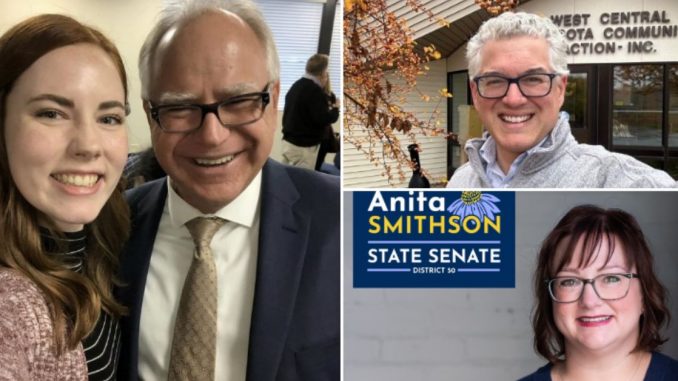
Amanda Koehler – Identified in leaked admin lists under a code name and described as a Minneapolis protest organizer and former campaign adviser to Minnesota Governor Tim Walz.
-
Aurin Chhowdhry – Named in some online threads as a Minneapolis City Council member involved in coordinating chat activity.
-
Other Minnesota Democratic officials and activists have also been mentioned in various threads, including speculation about the role of Minnesota Lt. Governor Peggy Flanagan and State Representative Alex Falconer in related chats — though such claims have not been independently confirmed by major news organizations.
Mainstream outlets have not independently verified the participation of these officials in such activities; fact‑checking services note that confirmation of specific individuals’ roles remains unproven and is based primarily on leaked screenshots and social‑media speculation.

🇺🇸 Aurin Chowdhry, a Minneapolis City Council member, has been linked to the top of an Anti-ICE Signal group chat.
This revelation is fueling calls for a major investigation into her and other city officials allegedly involved.
Source: @TheSCIF https://t.co/P8SCTFtIAI pic.twitter.com/IhwgGDGAR7
— Mario Nawfal (@MarioNawfal) January 26, 2026
Koehler has gone dark, deleting social media accounts and making her website private.
Amanda Koehler’s Instagram is no longer active🤣 pic.twitter.com/2kZXrzISVZ
— Politikal Kat-Tales (@PolitiKatTales) January 26, 2026
The group even had a ‘Signal Chat Guide’ advising anti-ICE protesters:

The Signal chat was exposed by journalist Cam Higby, who published a bombshell report on Sunday after infiltrating multiple groups across Minneapolis with the stated aim of tracking federal agents and impeding, assaulting, or obstructing their operations. The report sparked a wildfire across X overnight.
Coordination and Tactics
According to the Signal‑chat screenshots and reporting shared by Higby and echoed across conservative comment threads:
-
Each Signal group was structured with specific patrol zones, which allegedly allowed activists to share sightings of federal vehicles and synchronize movements.
-
Participants kept a database of vehicle license plates reportedly linked to federal agents or ICE operations, which activists could cross‑reference and update in real time.
-
Chats were created and deleted daily, potentially to limit traceability and reduce archived evidence.
Those promoting the Signal‑Gate narrative describe this as a “quasi‑police force” formed by civilians to track and impede federal immigration enforcement, characterizing the structure as “organized crime” or “insurrectionary” — labels that have been widely repeated across right‑wing platforms.
🧵🚨 MINNEAPOLIS SIGNAL INFILTRATED
I have infiltrated organizational signal groups all around Minneapolis with the sole intention of tracking down federal agents and impeding/assaulting/and obstructing them.
BUCKLE UP ALL WILL BE REVEALED
Each area of the city has a signal… pic.twitter.com/ATSHlCucWv
— Cam Higby 🇺🇸 (@camhigby) January 24, 2026
Higby’s reporting unleashed a rapid mobilization of citizen journalists, including accounts such as 0HOUR1, who began mapping what appears to be an organized command-and-control network of left-wing activists behind the groups.
What do we have on these signal chats
-Government officials
-Anarchists
-Antifa
-Gang members
-JournalistsCoordinating and attacking ICE AGENTS across the country.
This my friends is Organized Crime not Protesting.
RICO
— 0HOUR1 (@0hour1) January 25, 2026
Context: Protests and Street Tension
The emergence of the Signal‑Gate narrative comes amid ongoing protests and unrest following several violent incidents involving ICE and Border Patrol in Minneapolis, including the recent killing of 37‑year‑old protester Alex Pretti. National and local reports describe encrypted activist messaging being used to alert supporters to law enforcement movements — a tactic that has both energized demonstrators and drawn sharp criticism for endangering public safety.
In some documented cases, broad anti‑ICE Signal alerts appear to have triggered confrontations, including the mistaken harassment of civilians mistakenly believed to be federal agents based on chat reports.
Claims, Controversy, and Verification Challenges
Signal‑Gate has become a lightning‑rod issue, with strong opinions and claims on both sides:
-
Critics of the activists argue that the messaging network amounts to a dangerous, clandestine coordination tool that crosses the line from protest into organized, potentially unlawful activity.
-
Supporters or skeptics of the narrative caution that many of the most explosive claims — including the involvement of elected officials and organized insurgent structures — remain unverified by reputable news sources, and are based on leaked screenshots and anonymous social‑media posts.
 Implications
The emergence of Signal‑Gate carries wide-ranging implications for public safety, civil liberties, and the political landscape in Minneapolis and beyond:
-
Law Enforcement and Security – The alleged use of encrypted chat apps to track federal agents demonstrates a new operational challenge for local and federal law enforcement. If verified, it could indicate a shift from traditional protest to more coordinated, potentially disruptive or dangerous tactics. This raises questions about how authorities can respond while balancing constitutional rights.
-
Political Fallout – Allegations that elected officials or political advisers were involved could have major repercussions for local governance and public trust. Even unverified claims can influence public perception, intensifying partisan divides and scrutiny of city leadership.
-
Digital Organizing and Protest Tactics – Signal‑Gate highlights the increasing role of digital platforms in real-time activist coordination. While technology can empower legitimate civic engagement, it also introduces risks of misuse, misidentification, or escalation of confrontations.
-
Civil Liberties and Free Speech – The situation underscores the tension between the right to organize and protest versus the potential for organized efforts to obstruct lawful federal operations. Policymakers, legal experts, and courts may be forced to grapple with these boundaries.
-
National Security Lens – At a broader level, the use of encrypted networks for coordinated action against federal personnel could be framed as a national security concern. Even if not technically insurgent, the structure and intent resemble low-level, organized resistance — prompting federal agencies to reassess security and intelligence approaches to domestic activism.
In sum, Signal‑Gate is more than a local controversy: it represents a convergence of digital activism, political tension, and public safety concerns. Its evolution will likely influence policy debates on encryption, law enforcement accountability, and the limits of protest in the digital age.
Legal and National Implications
Federal authorities and political leaders have reacted strongly to the situation. Some elected Republicans have called for federal investigations into the reported chats, with accusations that these networks may amount to domestic security threats. Meanwhile, defenders of the protesters stress civil liberties and the right to organize, highlighting ongoing disputes over federal immigration enforcement policies.
 Overall Takeaway:
The emergence of Signal‑Gate in Minneapolis highlights the growing role of encrypted messaging platforms in organizing and coordinating activist movements — whether for protest or more aggressive forms of civil disobedience. While leaked screenshots and social‑media reports suggest a structured command‑and‑control network targeting federal agents, independent verification of key claims, including the involvement of elected officials, remains limited. What is clear is that modern technology allows rapid mobilization and real‑time communication, raising complex questions about public safety, civil liberties, and the fine line between activism and unlawful interference. As investigations continue, Signal‑Gate serves as a cautionary example of how digital networks can amplify both legitimate dissent and potential security risks, and underscores the need for careful scrutiny before drawing definitive conclusions.
SOURCES: ZEROHEDGE – ‘Signal-Gate’: Anti-ICE ‘Insurgency Command’ Chat Was Highly Organized
NEWSMAX – Cam Higby’s ‘SignalGate’ Potentially Ties Unrest to Minn. Dems
THE GATEWAY PUNDIT – Signal Chat Infiltrated by Conservative Journalist Reveals Democrat Politicians and Former Tim Walz Staffer Orchestrating Anti-ICE Protests and Doxxing of Agents