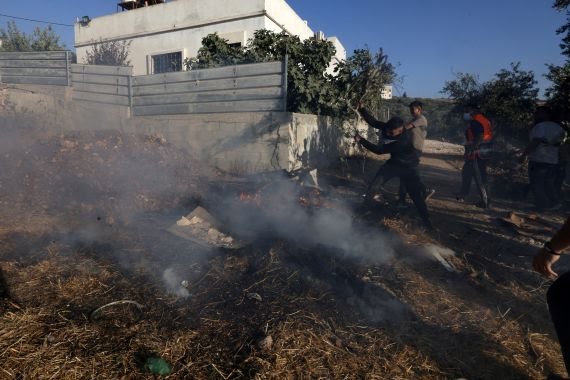
Palestinian residents extinguish a fire after vehicles and homes were torched in an attack reportedly carried out by Israeli settlers in the village of Sarra, west of Nablus in the Israeli-occupied West Bank, on Friday [Jaafar Ashtiyeh/AFP]
Published July 25 , 2026
WASHINGTON, D.C. — July 25, 2026 — U.S. President Donald Trump said the United States remains “locked and loaded” for potential military action against Iran while emphasizing that Washington is engaged in serious diplomatic discussions aimed at easing tensions between the two countries.
Speaking to reporters at the White House, Trump said negotiations with Tehran are continuing and described Iranian officials as appearing more serious than in previous rounds of talks. However, he cautioned that no agreement has been reached and stressed that the U.S. military remains fully prepared should diplomacy fail.
“We’re locked and loaded,” Trump said, adding that although the United States has the capability to launch a major response, his administration is not rushing into military action while diplomatic channels remain open.
The comments come amid months of heightened tensions between Washington and Tehran following military confrontations and disputes over regional security. While both sides have exchanged strong rhetoric, recent statements from the White House suggest diplomacy is once again being explored as an alternative to further escalation.
Iran has not publicly confirmed that a breakthrough is imminent, and officials in Tehran continue to maintain a cautious stance regarding negotiations. Previous rounds of talks have failed to produce a lasting agreement, leaving significant differences unresolved.
The Trump administration has repeatedly stated that military options remain available if Iran undertakes actions viewed as threatening U.S. interests or regional stability. At the same time, the president indicated that diplomacy remains his preferred path if meaningful progress can be achieved.
International observers are closely monitoring the renewed diplomatic effort, as any breakthrough—or collapse—could have major implications for security in the Middle East and global energy markets. For now, negotiations continue under the shadow of a U.S. military that Trump says is prepared to act at any moment if necessary.
👥 Public / Political Reactions:
🇺🇸 United States
The Trump administration says it is pursuing diplomacy with Iran while maintaining a strong military posture.
- President Donald Trump said the United States is engaged in “serious talks” with Iran but remains “locked and loaded” should negotiations fail.
- U.S. officials have emphasized that military readiness is intended to deter further escalation while diplomatic channels remain open.
- Washington continues to seek a negotiated outcome while warning that all options remain available if U.S. interests or regional security are threatened.
➡️ Position: The United States says it prefers a diplomatic resolution but is prepared to use military force if necessary.
🇮🇷 Iran
Iran has acknowledged ongoing contacts with the United States but has remained cautious about the prospects for a breakthrough.
- Iranian officials continue to stress that any agreement must respect Iran’s sovereignty and national interests.
- Tehran has not publicly indicated that a deal is imminent and maintains that negotiations remain complex.
- Iranian leaders have continued criticizing U.S. sanctions and past military actions while signaling openness to dialogue under acceptable conditions.
➡️ Position: Iran says it is willing to engage in diplomacy but insists that any agreement must address its core national interests.
🌍 International Community
Governments and international observers are closely monitoring the renewed diplomatic effort.
- Several countries have welcomed continued dialogue while urging both Washington and Tehran to avoid actions that could further escalate tensions.
- Analysts caution that negotiations remain fragile and that independently verifiable progress has yet to be demonstrated.
- International observers continue calling for diplomatic engagement to reduce the risk of military confrontation in the Middle East.
➡️ Position: The international community broadly supports continued diplomacy while urging restraint from both sides.
👥 Public Response
Public reaction remains divided, reflecting differing views on diplomacy and national security.
- Supporters of the administration argue that maintaining military readiness strengthens the U.S. negotiating position.
- Critics warn that strong military rhetoric could increase regional tensions and complicate diplomatic efforts.
- Analysts continue awaiting independently verifiable evidence of meaningful progress before assessing the likelihood of a lasting agreement.
➡️ Position: Public opinion remains mixed, with hopes for diplomacy tempered by concerns over the potential for renewed conflict.
🌍 Broader Political Impact
The renewed U.S.-Iran negotiations have become a significant foreign policy issue with implications for regional and domestic politics.
- The administration’s strategy of combining diplomacy with military deterrence is likely to remain a focus of political debate.
- Regional allies and adversaries are closely watching the outcome of the talks for potential impacts on Middle East security.
- Analysts say the success or failure of negotiations could influence future U.S. foreign policy and regional stability.
➡️ Position: While diplomacy remains the stated priority, the outcome of U.S.-Iran talks is expected to shape broader discussions on security, deterrence, and stability in the Middle East.
⚠️ Resulting Effects:
President Donald Trump’s statement that the United States is “locked and loaded” while pursuing diplomatic talks with Iran has reinforced the delicate balance between deterrence and diplomacy. Although Washington says negotiations remain active, analysts caution that the combination of military warnings and ongoing talks leaves the situation highly uncertain.
1. Diplomatic Talks Face Greater Pressure
The renewed negotiations are taking place under heightened regional tensions.
🤝 U.S. and Iranian officials continue engaging in discussions, but major differences remain unresolved.
🕊️ Diplomatic progress depends on whether both sides are willing to make concessions on key security issues.
📉 Strong military rhetoric could complicate efforts to build confidence during negotiations.
➡️ Result: Continued talks under military pressure → greater uncertainty over the prospects for a diplomatic breakthrough.
2. Military Readiness Remains High
Washington continues emphasizing that all options remain available.
🛡️ The U.S. says maintaining military readiness is intended to deter further escalation.
⚔️ President Trump warned that the United States remains “locked and loaded” if diplomacy fails.
🌍 Regional governments continue monitoring U.S. military posture and its potential implications.
➡️ Result: Military preparedness → increased deterrence but continued risk of escalation.
3. Regional Security Concerns Persist
The outcome of the negotiations could significantly affect Middle East stability.
🇮🇷 Iran remains a central actor in regional security developments.
🌐 U.S. allies continue watching the talks closely for their impact on regional defense and cooperation.
⚠️ Any breakdown in diplomacy could increase tensions across the region.
➡️ Result: Uncertain negotiations → continued concerns over regional stability.
4. Global Markets Remain Sensitive
Investors continue monitoring developments between Washington and Tehran.
🛢️ Oil and energy markets remain sensitive to any signs of increased regional instability.
📈 Escalating tensions could contribute to volatility in global energy prices.
💹 Businesses and financial markets continue assessing geopolitical risks.
➡️ Result: Ongoing uncertainty → potential volatility in global energy and financial markets.
5. Political Pressure Increases
The negotiations have become an important foreign policy issue.
🏛️ The Trump administration faces pressure to demonstrate that diplomacy can produce tangible results.
⚖️ Critics continue debating whether military deterrence strengthens or complicates negotiations.
🗳️ The administration’s handling of Iran is expected to remain a focus of political discussion.
➡️ Result: Continued negotiations → increased political scrutiny of U.S. foreign policy.
6. International Diplomacy Continues
Governments and international organizations are encouraging restraint.
🌍 Many countries continue supporting diplomatic engagement over military confrontation.
🤝 International partners are urging both sides to avoid actions that could derail negotiations.
📖 Analysts continue awaiting independently verifiable evidence of meaningful progress.
➡️ Result: Continued diplomacy → sustained international efforts to reduce tensions and prevent conflict.
7. Long-Term Outlook Remains Uncertain
While dialogue continues, the final outcome remains unclear.
🔍 No comprehensive agreement has yet been announced.
⚠️ Analysts say negotiations could either reduce tensions or break down if major disagreements persist.
🌐 Future developments are expected to influence security dynamics throughout the Middle East.
➡️ Result: Ongoing negotiations → uncertainty over whether diplomacy or confrontation will ultimately shape U.S.-Iran relations.
🔮 Future Outlook:
The outlook for U.S.-Iran relations remains uncertain as Washington pursues diplomatic negotiations while maintaining a strong military posture. Although President Donald Trump says “serious talks” are underway, his warning that the United States is “locked and loaded” underscores the possibility that tensions could escalate if diplomacy fails. The coming weeks are expected to be shaped by the progress of negotiations, regional security developments, and the willingness of both sides to reach common ground.
1. Diplomatic Talks Will Face a Critical Test
Negotiations are expected to continue but remain fragile.
🤝 U.S. and Iranian officials are expected to pursue further discussions aimed at reducing tensions.
⚖️ Major disagreements over sanctions, security, and regional issues remain unresolved.
📢 Any military incident or breakdown in communication could derail diplomatic progress.
➡️ Outlook: Continued negotiations → cautious diplomacy with an increased risk of setbacks.
2. The United States Is Expected to Maintain Military Readiness
Washington is likely to continue emphasizing deterrence alongside diplomacy.
🛡️ The U.S. is expected to maintain a strong military posture in the region.
⚔️ President Trump has reiterated that all options remain available if negotiations fail.
🌍 American allies are expected to closely monitor U.S. military and diplomatic actions.
➡️ Outlook: Continued military readiness → sustained deterrence while diplomacy proceeds.
3. Iran’s Next Moves Remain Uncertain
Tehran’s response will play a key role in determining the direction of negotiations.
🇮🇷 Iranian leaders are expected to continue evaluating diplomatic proposals while defending their national interests.
🤝 Any meaningful agreement will likely require concessions from both sides.
🏛️ Domestic political considerations within Iran may also influence the pace of negotiations.
➡️ Outlook: Iran’s approach → uncertain but critical to the success of diplomatic efforts.
4. Regional Stability Will Continue to Be Closely Watched
Developments between Washington and Tehran will influence security across the Middle East.
🌍 Regional governments are expected to monitor negotiations closely.
⚠️ Any escalation could affect neighboring countries and broader regional security.
🕊️ Diplomatic success could help reduce tensions throughout the region.
➡️ Outlook: Regional security → dependent on whether diplomacy succeeds or fails.
5. Global Markets May React to New Developments
Financial markets are expected to remain sensitive to events involving Iran.
🛢️ Energy markets could experience volatility if regional tensions increase.
📈 Investors will continue watching for signs of diplomatic progress or renewed confrontation.
💹 Market confidence may improve if negotiations produce measurable results.
➡️ Outlook: Ongoing negotiations → continued market sensitivity to geopolitical developments.
6. International Diplomatic Efforts Are Expected to Continue
Governments and international organizations will likely encourage continued dialogue.
🌍 Many countries are expected to support diplomatic engagement over military confrontation.
🤝 International partners may continue facilitating communication between Washington and Tehran.
📖 Analysts will continue awaiting independently verifiable evidence of significant progress.
➡️ Outlook: Global diplomacy → continued efforts to prevent further escalation.
7. Long-Term Relations Remain Uncertain
The future of U.S.-Iran relations will depend largely on the outcome of current negotiations.
🏛️ A successful agreement could ease tensions and improve regional stability.
⚠️ Failure to reach common ground could increase the likelihood of renewed confrontation.
🕊️ Lasting progress will likely require sustained diplomatic engagement, confidence-building measures, and continued international support.
➡️ Outlook: U.S.-Iran relations → the long-term future remains uncertain and dependent on the success of ongoing diplomacy.
🧩 Bottom Line:
The United States and Iran remain engaged in diplomatic talks, but the situation continues to be marked by uncertainty. While President Donald Trump says Washington is pursuing a negotiated solution, his warning that the U.S. is “locked and loaded” highlights that military options remain on the table if diplomacy fails.
🤝 Diplomacy remains active, but no major breakthrough has been publicly confirmed.
⚔️ Military deterrence continues, with the United States maintaining that it is prepared to respond if necessary.
🌍 Regional and global stakeholders continue urging restraint, warning that any escalation could have significant consequences for Middle East stability and global energy markets.
📖 Analysts continue awaiting independently verifiable evidence of meaningful progress before concluding that a lasting agreement is within reach.
➡️ Bottom Line: The immediate focus remains on whether ongoing negotiations can produce tangible results. Until then, U.S.-Iran relations are expected to remain defined by a delicate balance between diplomacy, military preparedness, and continued international scrutiny.
SOURCES: AL JAZEERA – Trump says US ‘locked and loaded’ as it seeks Iran talks
AP NEWS – Trump says ‘serious’ talks are going on with Iran but warns US is ‘locked and loaded’