Reported by:

Cherry Meigh Timbol
News Content Editor
Published August 29, 2026
Israel is facing a potentially dangerous new security challenge in Syria as Turkey expands its military and economic influence across the war-torn country, according to an expert interviewed by The Jerusalem Post.
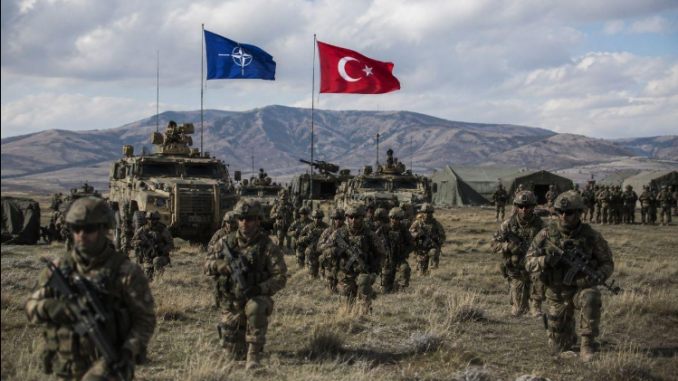
Dr. Eitan Hai Cohen warned that Turkey’s presence in Syria represents a significantly different threat from the armed groups and regional powers Israel has confronted in the past because the Turkish military operates according to NATO combat doctrine and standards.
The warning comes amid increasingly visible friction between Israel and Turkey and growing questions over Washington’s relationship with Ankara.
Turkey Emerges as a Major Player in Post-Assad Syria
Since the fall of the Assad regime, Turkey has positioned itself as one of the most influential outside powers in Syria.
Cohen said Ankara has been training Syrian President Ahmed al-Sharaa and has worked with Washington to remove American sanctions on Syria as part of efforts to rebuild the country’s economy. Turkey also has a major economic interest in Syrian reconstruction, particularly through its powerful construction industry.
According to Cohen, Turkey’s ambitions extend beyond economic reconstruction.
He warned that Ankara has already established a significant presence in northern Syria and could use its growing relationship with Damascus to expand its military footprint farther into the country.

Turkish Navy underwater assault (SAT) commandos perform a drill during a Teknofest Blue Homeland event at the Naval Command on August 21, 2026 in Golcuk, Turkey; Illustrative. (photo credit: Burak Kara/Getty Images)
Syrian Oil Adds Another Layer to the Power Struggle
The competition is not only about military positioning.
Cohen pointed to developments involving Syria’s oil resources, saying Syrian government forces took control of oil wells in the Kurdish-controlled northeast earlier this year. Shortly afterward, American energy giant Chevron signed a cooperation agreement with Syria’s state oil company.
The developments could give Washington a greater economic foothold in Syria while simultaneously strengthening Turkey’s role as a regional power broker.
Cohen argued that Ankara could effectively serve as a gateway for increased American involvement in Syria—something he described as a major geopolitical shift.
Why Israel Is Concerned
For Israel, however, Turkey’s growing influence presents a serious strategic dilemma.
Cohen emphasized that Israel cannot treat Turkey’s military presence as comparable to the military capabilities of weaker regional actors.
“Turkey’s way of warfare” follows NATO standards, Cohen warned.
That distinction matters because Turkey possesses a large, technologically advanced military and is itself a NATO member.
Israel has traditionally sought to prevent hostile military forces from establishing a permanent presence close to its northern borders. A deeper Turkish presence in central or southern Syria could therefore create a new strategic problem for the Israeli Defense Forces.
Israeli Strikes Sent a Message to Ankara
Cohen argued that recent Israeli strikes in Syria were intended not only to address immediate security threats but also to send a message directly to Turkey.
He described Israeli military action in Syria as a red line, warning that Jerusalem does not want to see Turkish military penetration into central or southern Syria.
The concern is particularly significant because some areas where Israel has conducted strikes are reportedly within Turkey’s sphere of influence.
Cohen said Turkey may have been surprised that Israel was willing to strike in northwestern Syria, particularly in the Idlib area.
Washington Caught Between Two Allies
The growing Israel-Turkey friction could also put the United States in an increasingly difficult position.
Washington maintains close strategic ties with Israel while simultaneously viewing Turkey as an important NATO ally and regional partner.
Cohen argued that the United States may be underestimating the possibility that the current verbal confrontation between Ankara and Jerusalem could eventually become a physical confrontation.
That creates a complicated strategic equation for Washington: supporting Israeli security concerns while maintaining cooperation with Turkey and encouraging Syria’s reconstruction.
🧩 Bottom Line:
Syria is rapidly becoming the center of a new strategic contest involving Israel, Turkey and the United States.
Turkey’s expanding military and economic presence gives Ankara unprecedented influence over Syria’s future, while Israel sees the possibility of a powerful NATO military establishing itself within a country directly adjacent to its borders.
For Israel, the issue is not simply that Turkey is present in Syria—it is what Turkey’s long-term ambitions might mean for the regional balance of power.
If Ankara continues expanding southward, Jerusalem may increasingly regard Turkey as a direct strategic competitor rather than simply another regional actor. And if Washington continues supporting Turkey’s role in rebuilding Syria while simultaneously backing Israel’s security concerns, the United States could soon find itself caught between two increasingly assertive partners.
The next phase of the Syrian conflict may therefore be less about Assad-era battles and more about a struggle over who controls Syria’s future—and how close competing military powers are allowed to come to Israel’s borders.
SOURCES: THE JERUSALEM POST – Turkish presence in Syria poses threat to Israel due to Ankara’s NATO combat doctrine, expert warns