Published March 12, 2025
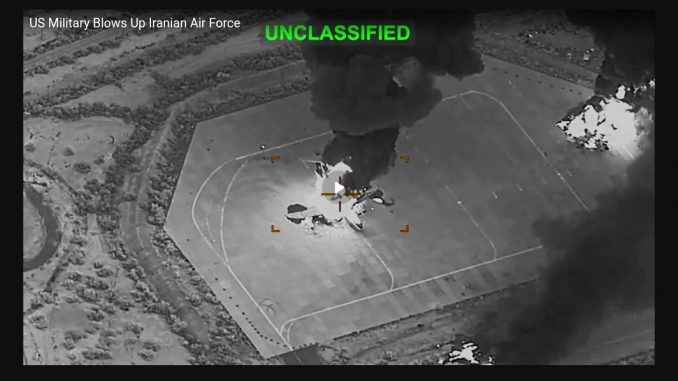
WASHINGTON, D.C. — United States Central Command (CENTCOM) this week publicly released new aerial footage showing U.S. military strikes against Iranian military targets as part of the broader Operation Epic Fury — the U.S. campaign against Iranian forces following a major escalation in early March 2026.
The video, shared on CENTCOM’s official social media channels and in military press updates, depicts a series of precision strikes against a range of targets, including naval vessels, missile launchers and other strategic infrastructure. The U.S. military described the footage as evidence of its ongoing efforts to degrade Iran’s offensive capabilities.
Dramatic Visuals of Military Action
According to CENTCOM, the released clips show:
- U.S. forces striking Iranian naval vessels, including minelayers in the Strait of Hormuz, a critical trade route where Tehran has previously threatened to disrupt shipping.
- Missile launches and coordinated attacks by aircraft from U.S. carriers and destroyers operating in the region.
- Targeted destruction of missile launch platforms and other high‑value military assets said to pose a threat to U.S. and allied forces.
The footage has been characterized by U.S. commanders as a demonstration of precision and overwhelming force, with CENTCOM stating that strikes are aimed at neutralizing offensive threats while limiting civilian harm.
Context: Operation Epic Fury
The release of visual material comes amid heightened conflict between the United States, its allies, and Iranian forces. The Pentagon has confirmed that U.S. forces have struck more than 5,500 targets inside Iran, including warships and missile facilities, since the start of the campaign.
U.S. officials say these operations are designed to diminish Iran’s military reach following a series of provocations and attacks. CENTCOM commander Adm. Brad Cooper has repeatedly emphasized that ongoing strikes are aimed at systematically degrading Iranian military capacity.
Casualties and Risks
The U.S. military has acknowledged combat casualties as part of the conflict. Multiple reports confirm that U.S. service members have been killed and wounded during the campaign — including three confirmed deaths and additional serious injuries announced by military officials.
These losses underscore the risks involved in the larger confrontation, which has drawn international attention and raised concerns about regional escalation.
Ongoing Developments
As Operation Epic Fury continues, CENTCOM and allied forces are expected to maintain pressure on Iranian military infrastructure, while diplomatic efforts persist in parallel forums. Analysts warn that the conflict’s trajectory remains uncertain and dependent on both military developments and international diplomatic negotiations.
Officials have not released a comprehensive timeline for the campaign, but updates — including additional footage and briefings — are expected as the situation evolves.
 Public / Political Reactions
The release of the CENTCOM footage has sparked widespread discussion and varying reactions both in the United States and internationally.
Domestic U.S. Responses
- Political Leaders:
Key members of Congress have expressed differing opinions. Some Republican lawmakers have praised the U.S. military’s precision strikes as a necessary deterrent against Iranian aggression, framing the footage as evidence of strong American defense capabilities. Meanwhile, several Democratic leaders have called for caution, emphasizing the need for diplomatic solutions and warning against escalation that could lead to wider conflict.
- Public Opinion:
Citizens are divided. Supporters of the military campaign highlight the footage as proof of America’s technological and tactical superiority. Critics, however, have raised concerns about civilian casualties, transparency in target selection, and the broader humanitarian implications of ongoing strikes. Social media platforms have amplified both sides, with hashtags such as #USMilitaryAction trending alongside discussions questioning the ethics and long-term strategy of the operation.
International Reactions
- Allied Nations:
U.S. allies in Europe and the Middle East have largely reaffirmed support for American actions, calling the strikes “necessary to contain Iranian threats.” Some allies, however, have urged restraint, stressing the importance of maintaining regional stability and avoiding escalation that could draw neighboring countries into the conflict.
- Iran and Regional Observers:
Iranian officials condemned the footage as propaganda and an act of aggression, promising retaliation against U.S. and allied forces. Regional analysts caution that the public display of military action risks inflaming tensions and increasing the potential for miscalculation on both sides.
Media and Civil Society
- Media outlets have varied in framing the footage. Conservative platforms emphasize U.S. military strength and operational success, while independent and liberal outlets highlight potential civilian risks, the human cost of war, and the need for diplomatic solutions.
- Humanitarian organizations have expressed concern about the impact on civilians, especially in areas near targeted military installations, calling for transparency regarding collateral damage and adherence to international humanitarian law.
 Resulting Effects
The CENTCOM footage release and the ongoing strikes have several immediate and longer-term effects:
Deterrence of Adversaries
The display of precise and overwhelming military capability signals that any aggressive actions against U.S. or allied interests will be met with decisive force, potentially discouraging further provocations.
Strengthening Regional Alliances
Allies observing the strikes gain confidence in U.S. commitment to their security, which can deepen cooperation in intelligence, military operations, and strategic planning.
Enhanced Domestic Confidence
The public release reinforces trust in military leadership and strategic decision-making, demonstrating that the U.S. can protect its forces and respond effectively to threats abroad.
Operational Momentum
Success in targeted strikes boosts morale among service members and validates the effectiveness of current strategies, potentially enabling more efficient execution of future operations.
Risk of Escalation
While the strikes serve as a warning, publicizing the power of U.S. military action may provoke heightened rhetoric or retaliation from adversaries, making careful management of the conflict essential.
Geopolitical Signaling
The footage sends a broader message to the international community about U.S. readiness and technological superiority, reinforcing its position as a dominant security actor in the region.
 Future Outlook
Looking ahead, the U.S. military’s recent actions and the release of operational footage are likely to shape both regional dynamics and broader strategic calculations.
-
Sustained Deterrence
Continued demonstrations of military capability are expected to reinforce deterrence, discouraging further aggressive actions from adversaries and helping maintain stability in key regions.
-
Operational Readiness and Adaptability
The successful execution of precision strikes positions U.S. forces to respond rapidly to emerging threats, with lessons learned from current operations informing future strategies and technological deployments.
-
Strengthened Partnerships
Allies and partners may increase coordination and joint planning, confident in the U.S.’s commitment to shared security objectives. This could lead to more integrated defense networks and intelligence-sharing frameworks.
-
Diplomatic Leverage
Demonstrated military strength provides leverage in negotiations, allowing the U.S. to engage diplomatically from a position of clear capability, potentially shaping conflict resolution and regional policy outcomes.
-
Potential Risks Managed by Strategy
While assertive actions carry the risk of retaliation, a careful balance of military pressure and strategic communication can help mitigate escalation, maintaining credibility without provoking uncontrolled conflict.
-
Technological Advantage
Ongoing operations highlight the importance of advanced surveillance, precision targeting, and rapid response systems, underscoring the U.S.’s ability to maintain a technological edge in future conflicts.
 Bottom Line
The release of CENTCOM’s footage underscores the effectiveness and precision of U.S. military operations, demonstrating the ability to respond decisively to threats while maintaining operational discipline. These actions reinforce deterrence, strengthen alliances, and provide strategic leverage in the region.
Looking forward, continued vigilance, technological advantage, and coordinated efforts with allies will remain key to maintaining security and stability. The public display of capability not only reassures citizens and partners but also sends a clear message to adversaries that aggressive actions will meet a swift and measured response, shaping a more secure and predictable regional environment.