Published March 22, 2026
Growing Cartel Power and an Unusual Leader
A California‑born American citizen — identified as Juan Carlos Valencia González — has emerged as the new leader of the Jalisco New Generation Cartel (CJNG), one of Mexico’s most powerful and violent drug trafficking organizations, according to recent reporting.
Valencia González, sometimes referred to by his alias “03,” is the stepson of the recently killed cartel boss Nemesio “El Mencho” Oseguera Cervantes, who was widely considered Mexico’s most wanted drug kingpin before his death during a security operation.
The ascension of Valencia González marks a significant turning point in the cartel’s leadership — not because of his connection by blood, but because his U.S. citizenship adds a layer of legal complexity for U.S. law enforcement and intelligence agencies seeking to track or disrupt his operations.
Why Targeting Him is Complicated
Under U.S. law, monitoring or conducting intelligence activities on U.S. citizens abroad requires stricter legal processes than for non‑citizens. This means that while the CJNG remains a priority target for both U.S. and Mexican authorities, efforts to surveil or act against an American citizen leader are subject to heightened constitutional safeguards and legal constraints.
This situation creates a dilemma for policymakers: on one hand, the CJNG’s transnational criminal operations — including drug trafficking, fuel theft, and violent coercion — pose serious public safety threats in both Mexico and the United States. On the other hand, aggressive tactics against an American citizen must navigate complex domestic legal protections, making some traditional intelligence or covert operations more difficult.
The Cartel’s Reach and Threat
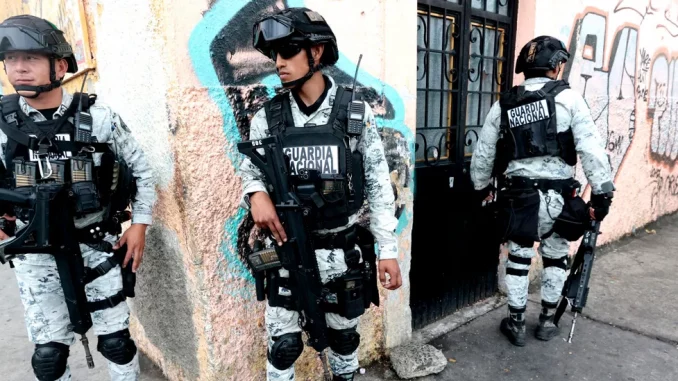
The CJNG is widely regarded as one of Mexico’s most paramilitary and brutal criminal organizations, with capabilities that have included downed military helicopters and attempted assassinations of rival leaders and security forces.
Despite the death of El Mencho, the cartel continues to wield immense influence in narcotics trafficking networks and territorial control in several Mexican states. Its operations span multiple continents, sending drugs — including fentanyl and methamphetamine — north into the U.S. and beyond.
Legal and Strategic Challenges Ahead
The combination of entrenched cartel infrastructure, continued financial resources, and an American national at the helm presents a unique challenge for bilateral law enforcement cooperation between the United States and Mexico.
U.S. authorities typically rely on extradition agreements and multinational task forces to prosecute cartel leaders. But legal experts note that targeting a U.S. citizen abroad demands additional oversight, warrants, and safeguards to ensure constitutional rights are upheld — which can slow or limit certain actions.
🔍 Analyst Insight:
The ascension of a U.S. citizen to the leadership of the CJNG represents a unique convergence of legal, operational, and strategic challenges. Analysts note that while cartel leadership transitions are common, having an American national at the helm complicates traditional counter‑cartel operations, particularly intelligence gathering and covert action.
From a strategic perspective:
- Legal Constraints – U.S. authorities must navigate constitutional protections that restrict surveillance, detention, or covert actions against citizens abroad. This can slow response times or limit certain operations that would be routine against foreign nationals.
- Operational Adaptation – Cartels are highly adaptive, and leadership changes often trigger shifts in tactics, territorial control, and smuggling routes. Intelligence agencies will need to reassess threat models and coordinate closely with Mexican security forces to mitigate emerging risks.
- Signal to Other Criminal Networks – The move may embolden other transnational actors who perceive loopholes in international enforcement when a U.S. citizen is involved, potentially increasing recruitment or operational boldness.
- Policy Implications – The situation underscores the importance of bilateral legal and law enforcement frameworks to disrupt transnational crime while respecting citizen rights. Analysts suggest that intelligence sharing, financial tracking, and targeted sanctions will remain the most effective levers.
Overall, experts argue that the rise of Valencia González highlights how modern transnational criminal organizations are exploiting both physical and legal landscapes, forcing authorities to balance effective enforcement with adherence to constitutional safeguards.
👥 Human Element:
Beyond the legal and operational complexities, the rise of a U.S. citizen to the top of the CJNG has real human consequences. Violence associated with cartel operations directly affects civilians, local communities, and law enforcement personnel. Families in cartel-controlled regions face threats, extortion, and displacement, while officers risk their lives confronting highly organized and armed criminal networks.
The human element also extends to the broader U.S. and Mexican populations:
- Public Safety: Cross-border trafficking of drugs like fentanyl and methamphetamine endangers communities far beyond Mexico, fueling addiction and crime in American cities.
- Law Enforcement Pressure: Officers and agents tasked with combating the cartel operate under intense stress and risk, navigating both violent actors and complex legal safeguards when dealing with a U.S. citizen leader.
- Community Trust and Resilience: The presence of a high-profile American at the helm underscores the importance of community engagement, awareness campaigns, and social programs to mitigate the impact of organized crime on everyday life.
Ultimately, the human dimension reminds policymakers and authorities that strategic and tactical considerations must be balanced with the protection of civilians and the well-being of those enforcing the law.
🎯 Conclusion:
The reported rise of a U.S. citizen to lead one of Mexico’s most violent cartels presents a complex challenge for law enforcement, intelligence agencies, and policymakers. It underscores the need for a balanced approach that combines strong enforcement, cross-border cooperation, and adherence to legal safeguards.
While traditional methods for combating transnational criminal organizations remain essential, the unique legal and operational hurdles posed by a U.S. national in a leadership role require innovative strategies, careful planning, and international collaboration.
Ultimately, the situation highlights that ensuring public safety, protecting communities, and dismantling criminal networks demands both vigilance and strategic foresight. Agencies must remain proactive, adaptive, and coordinated to address the evolving threats posed by highly organized and increasingly sophisticated criminal enterprises.
SOURCES: THE DAILY CALLER – US Citizen Reportedly Set To Lead One Of Mexico’s Most Violent Cartels, And Targeting Him May Be Difficult
THE WALL STREET JOURNAL – A U.S. Citizen Now Runs Mexico’s Top Drug Cartel—and Targeting Him Is Complicated