Published August 10, 2026
A potentially explosive new incident on NATO’s eastern flank has raised questions about the growing danger of the Russia-Ukraine war spilling across European borders after a drone of a type used by Ukrainian forces entered Bulgarian airspace and exploded near the Romanian border.
The incident occurred near the former Kardam border crossing, close to a strategically important gas corridor. Bulgarian officials said the drone entered the country from Romania before exploding roughly 1,000 meters from a compressor station connected to the Trans-Balkan gas pipeline. No casualties or damage to infrastructure were reported.
Ukraine, meanwhile, denied intentionally directing the drone toward Bulgaria and said it was cooperating with Bulgarian authorities to establish exactly what happened.
The incident comes as Romania and Bulgaria face increasing drone-related security concerns linked to the war in Ukraine.
Drone Explodes Near Strategic Gas Infrastructure
The explosion occurred in the Kardam area near Bulgaria’s border with Romania.
Bulgarian Prime Minister Rumen Radev said Romanian border police detected the sound of the drone before Bulgarian border patrol officers heard the explosion. Authorities subsequently located the crash site in Bulgarian territory.
The location immediately drew attention because of its proximity to the Trans-Balkan gas pipeline.
The compressor station was approximately one kilometer from the explosion, while another compressor facility on the Romanian side was also nearby, according to reporting on the incident. Reuters reported that the explosion occurred in a sunflower field and caused no casualties or infrastructure damage.
The proximity to critical energy infrastructure has intensified concerns over the vulnerability of Europe’s energy networks as drone warfare becomes increasingly widespread.
Ukraine Denies Targeting Bulgaria
Kyiv moved quickly to distance itself from any suggestion that Bulgaria had been deliberately targeted.
Ukrainian Foreign Ministry spokesman Georgiy Tykhyi said Ukraine was in close contact with Bulgarian officials and insisted that Ukrainian forces did not intentionally direct any assets toward Bulgaria.
That distinction could prove important.
A drone entering the airspace of a NATO member state is a serious security matter, but Bulgarian authorities have not indicated that the incident was a deliberate Ukrainian attack.
Bulgaria’s Defense Ministry said there was no indication the incident had been intentional, while officials examined the circumstances surrounding the drone’s flight and explosion.
The precise reason the drone ended up in Bulgarian territory remains a central question.
A Drone Type Used by Ukrainian Forces
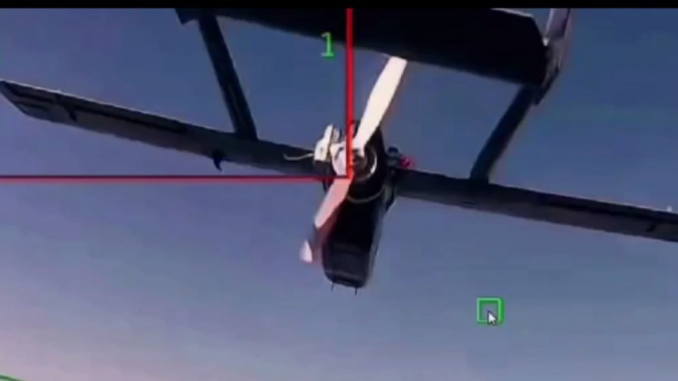
Bulgarian authorities identified the aircraft as likely being a Maya decoy drone, a type reportedly used by Ukrainian forces.
That does not, by itself, establish who launched the drone or why it entered Bulgarian airspace.
The distinction is particularly important because drones and electronic warfare systems have become increasingly common throughout the region, while aircraft can be diverted from their intended routes by technical failures, navigation problems or electronic interference.
Ukraine’s government has promised to help clarify what happened.
The incident therefore remains under investigation rather than being established as a deliberate Ukrainian attack on Bulgaria.
NATO’s Eastern Flank Faces Growing Drone Threat
The incident is particularly significant because Bulgaria and Romania are both NATO members located on the alliance’s eastern flank.
Both countries border the Black Sea and have increasingly found themselves dealing with the consequences of Russia’s war against Ukraine.
Romania has experienced several drone incidents in recent months. Euronews reported that Romanian forces shot down three drones in its airspace over three days in late July, with at least one subsequently identified as a Shahed-type drone associated with Russian forces.
Earlier this year, a Russian drone also struck a residential building in Romania’s Galați region, according to Romanian authorities, prompting NATO and European officials to express concern about repeated violations of allied airspace.
The Bulgarian incident adds another layer to an increasingly complicated regional security picture.
Air-Defense Gaps Under Scrutiny
Perhaps one of the most troubling elements of the incident was the reported failure of Bulgarian and Romanian authorities to detect the drone before it reached Bulgarian territory.
Radev said both countries’ authorities failed to pick up the aircraft as it traveled through their respective airspace. He subsequently called for increased surveillance operations in the region.
That raises uncomfortable questions for NATO planners.
If a relatively small drone can travel across an allied nation’s airspace without being detected, military officials may have to reassess the effectiveness of existing radar and counter-drone systems.
The challenge is becoming more urgent as inexpensive unmanned aircraft are increasingly being used in modern warfare.
Energy Security Adds Another Dimension
The incident also occurred along a strategically important energy route.
The Kardam area forms part of the Vertical Gas Corridor, a network designed to facilitate the movement of liquefied natural gas from Greece toward countries farther north, including Bulgaria, Romania, Hungary, Slovakia, Moldova and Ukraine.
That makes the area more than simply another stretch of NATO territory.
It is also part of Europe’s effort to diversify energy supplies and reduce vulnerabilities created by dependence on Russian energy.
A serious attack against such infrastructure could therefore have consequences extending well beyond Bulgaria’s borders.
In this case, however, officials reported no damage to the pipeline or compressor facilities.
A Major Test for European Drone Defenses
The Bulgarian incident highlights a rapidly emerging problem for Europe: how to defend enormous amounts of territory against small, inexpensive and potentially difficult-to-detect drones.
Traditional air-defense systems are designed primarily around aircraft and missiles. Modern conflicts have demonstrated that relatively cheap unmanned aircraft can create significant security problems without requiring sophisticated weapons systems.
For NATO’s eastern members, the challenge is particularly acute.
Romania and Bulgaria must protect their airspace while also securing ports, military installations, energy infrastructure and transportation networks.
Could This Be a Wider Warning for NATO?
The explosion does not establish that Bulgaria was deliberately attacked.
In fact, the available evidence points toward authorities treating the event as an incident requiring investigation rather than immediately describing it as an act of aggression. Ukraine has also explicitly denied intentionally directing the drone toward Bulgarian territory.
But the incident nevertheless demonstrates how quickly the consequences of the Ukraine war can cross international borders.
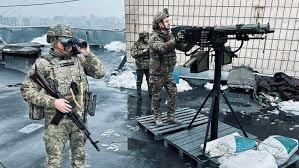
A drone launched or operating in the wider Black Sea region can potentially travel into the airspace of neighboring NATO countries, creating the risk of casualties, infrastructure damage or a dangerous escalation.
That reality is becoming one of Europe’s most serious security concerns.
International Security Concerns Growing
The Bulgarian explosion follows a series of drone incidents across Romania and other European countries.
The pattern has forced European governments to pay closer attention to airspace monitoring, electronic warfare, counter-drone technology and the protection of critical infrastructure.
The European Commission has previously described drone incursions connected to the war as a direct consequence of Russia’s invasion of Ukraine, underscoring the broader concern about the conflict’s impact on EU territory.
For NATO, the central issue is increasingly not simply whether a drone is Russian or Ukrainian.
It is whether allied territory can be reliably protected from unmanned aircraft operating in a war zone only a short distance away.
What Comes Next?
Bulgarian and Ukrainian officials are expected to continue investigating the drone’s origin, flight path and circumstances surrounding the explosion.
Authorities will also face pressure to explain how the aircraft managed to cross Romanian and Bulgarian airspace without being detected.
For Bulgaria, the incident could accelerate plans to improve border surveillance and counter-drone capabilities.
For NATO, it provides another warning that the alliance’s eastern flank is becoming increasingly exposed to the spillover effects of drone warfare.
And for Europe, the incident serves as a reminder that the Ukraine conflict is no longer confined neatly to the battlefield.
⚠️ Implications:
The Bulgarian drone explosion carries implications far beyond a single unexplained incident. The event highlights growing risks to NATO airspace, critical energy infrastructure, border security and European stability as the Russia-Ukraine war continues to generate large-scale drone activity.
1. NATO Airspace Could Face Greater Security Pressure
The drone reportedly entered Bulgarian airspace after crossing from Romania, raising questions about the ability of NATO members to detect and track small unmanned aircraft near the alliance’s eastern border.
Implication: Bulgaria, Romania and other NATO countries could face increased pressure to strengthen radar coverage, aerial surveillance and counter-drone defenses.
2. Critical Energy Infrastructure Could Become More Vulnerable
The drone exploded close to infrastructure associated with the Trans-Balkan gas pipeline, although authorities reported no damage to the facility.
Implication: European governments may increase security around gas pipelines, compressor stations, power facilities and other critical infrastructure located near potential conflict zones.
3. Romania and Bulgaria May Strengthen Border Surveillance
The incident comes amid growing concerns over drones operating near the Black Sea and Ukraine’s western border.
Implication: Romania and Bulgaria could expand joint monitoring, patrols and information-sharing to detect potentially dangerous drones before they reach populated areas or strategic facilities.
4. Ukraine Could Face Increased Diplomatic Scrutiny
Ukraine has denied intentionally directing the drone toward Bulgaria and said it was cooperating with Bulgarian authorities to determine what happened.
Implication: Kyiv could face additional diplomatic pressure to explain the drone’s origin, flight path and purpose, particularly if investigators determine that it originated from Ukrainian-controlled territory.
5. The Risk of Accidental NATO-Russia Escalation Could Increase
The incident demonstrates how easily military activity connected to the Ukraine war can cross international borders.
Implication: Another drone incident that causes casualties or significant damage inside NATO territory could create a much more serious confrontation and potentially trigger demands for a stronger alliance response.
6. Counter-Drone Technology Could Become a Higher Priority
Small drones can be difficult to detect and can travel across borders without being immediately identified by conventional surveillance systems.
Implication: European governments may accelerate investment in electronic warfare, specialized radar, jamming systems and other technologies designed specifically to detect and neutralize unmanned aircraft.
7. Europe’s Energy Security Remains a Major Concern
The drone explosion occurred near an important gas corridor connecting energy markets in southeastern and central Europe.
Implication: Any successful attack against energy infrastructure could disrupt regional supplies, increase energy prices and reinforce European efforts to diversify and protect energy routes.
8. Public Anxiety Could Increase Along the Eastern NATO Border
Repeated reports of drones entering or approaching NATO territory could make residents in Romania, Bulgaria and other eastern European countries increasingly concerned about the possibility of the war spreading.
Implication: Governments will need to communicate clearly about genuine threats while avoiding unnecessary panic or speculation before investigations are complete.
9. Military Cooperation Between NATO Members Could Intensify
The incident demonstrates the importance of cooperation between neighboring countries when drones cross multiple national airspaces.
Implication: NATO members could strengthen real-time intelligence sharing, coordinated air-defense procedures and joint responses to unidentified aircraft.
10. The Ukraine War Is Increasingly Creating Cross-Border Risks
The incident is another reminder that modern drone warfare does not remain confined to the battlefield. Aircraft can travel considerable distances and potentially enter neighboring countries without warning.
Implication: European governments may increasingly treat the protection of national airspace and critical infrastructure as part of the broader security challenge created by the Ukraine war.
11. NATO’s Eastern Flank Could See Greater Military Investment
Bulgaria and Romania occupy strategically important positions along the Black Sea and NATO’s southeastern frontier.
Implication: The alliance could face growing pressure to deploy additional surveillance equipment, air-defense assets and counter-drone capabilities throughout the region.
12. The Incident Could Become a Warning for Future Conflicts
The Bulgarian explosion demonstrates how inexpensive unmanned aircraft can create major international security concerns even when they do not cause casualties or significant physical damage.
Implication: European militaries may increasingly view drone defense as a permanent component of national security rather than simply a battlefield requirement.
13. Critical Infrastructure Protection Could Become a Political Issue
The proximity of the explosion to strategically important gas infrastructure could raise questions about whether existing protections are sufficient.
Implication: Governments could face increased demands for funding to protect pipelines, energy facilities, transportation networks and communications infrastructure from drone attacks.
14. Preparedness Could Reduce the Consequences of Future Incidents
Although the Bulgarian incident resulted in no reported casualties or infrastructure damage, a similar drone entering a populated area or striking a strategic facility could have dramatically different consequences.
Implication: Improving early detection, emergency response, public-warning systems and infrastructure protection could reduce the potential damage from future drone incursions.
💬 Overall Takeaway:
The explosion of a Ukrainian-type drone inside Bulgaria is a serious security warning even though there is currently no evidence that Bulgaria was deliberately targeted.
The aircraft entered Bulgarian airspace from Romania and exploded close to strategically important gas infrastructure, while authorities said there were no casualties or damage. Ukraine has denied intentionally directing the drone toward Bulgaria and pledged to cooperate with the investigation.
The bigger concern is what the incident reveals about Europe’s increasingly exposed eastern frontier.
As the Russia-Ukraine war continues to generate large-scale drone operations, the possibility of unmanned aircraft crossing into NATO territory — whether accidentally, through electronic interference or deliberately — is becoming an increasingly dangerous reality.
SOURCES: THE GATEWAY PUNDIT – Ukrainian Drone Explodes in Bulgaria Near the Border With Romania – Kiev Denies Attack on Pipeline
EURONEWS – Ukraine denies targeting Bulgaria as drone explodes near pipeline, Kyiv promises inquiry
AL JAZEERA – Bulgaria, Germany drone incidents raise security fears amid Ukraine war