Reported by:

Cherry Meigh Timbol
News Content Editor
Published September 9, 2026
There is something deeply unsettling about the news coming out of Burning Man this year.
For days, the Nevada desert was transformed into Black Rock City—a temporary world built around art, radical self-expression, music, community and the belief that, for a brief period, people can step outside the ordinary rules of life.
Then came the deaths.
Three people died in connection with the 2026 Burning Man festival, which ended Monday. Authorities say there is no indication of foul play in the deaths, but the circumstances surrounding each remain under investigation.
The number alone is striking. Burning Man’s Pershing County sheriff has said the festival averages about one death a year. This year, that number reached three.
But statistics can make tragedy feel distant.
Three deaths are not simply a number on a report. They represent three people who arrived in the desert and never made it home.
Three families received the kind of phone call no family wants.
And three communities are now left with questions that may not have immediate answers.
A Festival Built Around Freedom Meets the Reality of Human Fragility
Burning Man is difficult to describe to someone who has never experienced it.
Held in Nevada’s remote Black Rock Desert, the event creates an enormous temporary city where tens of thousands of participants gather for art, music, elaborate installations and an unusual culture built around participation and self-expression.
Its appeal is precisely that it does not feel like ordinary life.
But that is also what makes the deaths particularly sobering.
The desert does not care about the size of someone’s social following, how much money they have, how experienced they are, or how adventurous they consider themselves.
Heat, distance, medical emergencies, exhaustion and the simple unpredictability of the human body remain realities even in a place designed to feel almost outside reality.
And this year, that reality became impossible to ignore.
The First Death
The first reported death involved a man in his mid-50s who experienced a medical emergency at the festival.
According to the Burning Man Project, lifesaving measures were immediately attempted before the man was transported to the event’s emergency medical facility, where he was pronounced dead. His name initially was withheld while authorities worked to notify his family.
There is something particularly painful about that description.
A festival that prides itself on community suddenly became the setting for an emergency that ended with one participant’s life.
Whatever his reason for attending—whether it was the art, the people, the music or simply the desire to experience something different—his journey ended there.
Then Came a Second Death
On September 5, another participant, 60-year-old Craig Mann, was found dead by campmates in his camp.
Authorities have said there was no apparent indication of foul play. The cause of death has not been publicly established.
The detail that he was found by people in his own camp makes this particular death especially human.
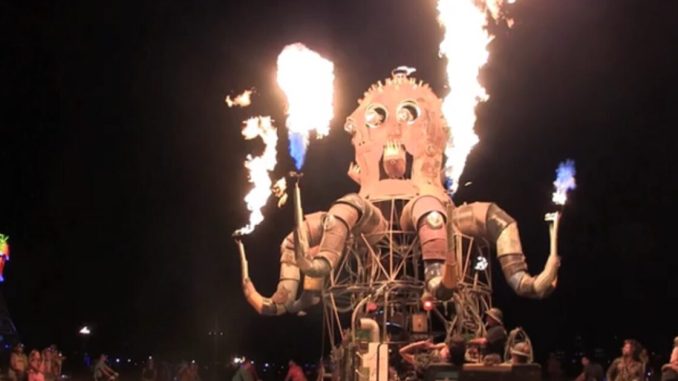
Burning Man is often portrayed through spectacular photographs: enormous sculptures glowing against the desert sky, elaborate costumes, art cars and thousands of people celebrating together.
But behind those images are ordinary human relationships.
Campmates become friends. Friends become family. People look after one another.
And sometimes, despite that community, someone is still lost.
A Third Death Changed the Picture
Then came the news of a third death.
A 51-year-old man identified as Armando Ramirez of Truckee, California, died while being transported from the festival toward a hospital in the Reno area, according to reporting based on statements from the Washoe County Regional Medical Examiner’s Office.
The three deaths occurred over a matter of days.
That concentration is what has made this year’s festival different.
The Pershing County sheriff said the festival normally averages about one death annually. The three deaths this year therefore represent a significant departure from the event’s usual fatality count.
Authorities have not publicly attributed the deaths to one common cause.
That distinction matters.
It would be irresponsible to suggest that the festival itself caused the deaths without evidence. Investigators are still determining the circumstances, and toxicology and autopsy results may take weeks.
The more responsible question is simpler:
What happened to these three people, and what can be learned from their deaths?
The Desert Was Challenging This Year
The 2026 festival also faced difficult environmental conditions.
Heavy rain turned portions of the playa into mud, while wind and weather affected movement around the temporary city. The festival’s remote location means that even routine medical transportation can become more complicated than it would be in a conventional urban environment.
This does not establish a connection between the weather and the deaths.
But it does underline something important about Burning Man: participants are not attending an ordinary music festival in a city with a hospital a few blocks away.
They are living temporarily in one of the most demanding environments in the country.
The Conversation Should Be About People, Not Just Burning Man
There is a temptation, whenever Burning Man makes headlines, to turn the discussion into a culture-war argument.
Some people see the festival as an extraordinary expression of creativity and freedom.
Others see it as a symbol of excess, hedonism or a counterculture that has become increasingly disconnected from its original ideals.
The latest deaths should not be reduced to either argument.
Whatever anyone thinks of Burning Man, the people who died were human beings first.
They were not statistics.
They were not political symbols.
They were not ammunition for one side of a cultural debate.
They were someone’s friend, partner, parent, child or relative.
That is where the conversation should begin.
A Changing Burning Man
There is also a broader question about the festival itself.
Burning Man has changed dramatically from its origins. Tens of thousands now attend, creating a temporary city of enormous scale. The event’s growing size means that organizers and authorities are managing a population comparable to a small town—except that this town appears in an isolated desert for only a short time each year.
The festival has also experienced changing demographics and attendance patterns. Recent reporting has noted an aging participant base, with fewer younger attendees than in previous years.
That evolution matters when considering safety.
A temporary city accommodating tens of thousands of people requires extraordinary medical, emergency-response and transportation resources.
And even the best planning cannot eliminate risk.
What We Still Don’t Know
The most important facts remain unknown.
Authorities have not announced definitive causes of death for the three victims. They have also indicated that there is no apparent foul play in the cases reported so far.
That means speculation should be avoided.
It is particularly important not to assume that drugs, weather, age, medical conditions or any other factor caused the deaths until investigators provide evidence.
The Gateway Pundit’s coverage uses highly charged language to describe Burning Man and its culture. Those characterizations are opinion, not established findings about the deaths.
The more responsible question is simpler:
What happened to these three people, and what can be learned from their deaths?
The Safety Question
Every large festival has a responsibility to protect the people who attend.
But Burning Man presents unusual challenges because of its location, scale and temporary infrastructure.
The event’s medical system is designed to respond to emergencies, and organizers have expressed condolences following the deaths.
Still, three fatalities in one year naturally raise questions.
Could emergency transportation be improved?
Are participants adequately prepared for the desert environment?
Does an aging participant population require adjustments in medical planning?
Are there additional warning systems or preventive measures that could save lives?
Those are legitimate questions—not accusations.
And they deserve serious answers.
The Human Cost Behind the Headlines
Perhaps the most important thing to remember is that Burning Man will eventually disappear from the headlines.
The installations will come down.
The camps will be dismantled.
The desert will become quiet again.
The thousands who attended will return to their homes, jobs and ordinary routines.
But for three families, there will be no return to normal.
That is the part of this story that photographs cannot capture.
There will be no spectacular image of the desert that explains what it feels like to lose someone unexpectedly.
There will simply be an empty place at a table, a phone that will never ring again, photographs that suddenly carry a different meaning and memories that become more valuable with every passing year.
My Take: A Celebration Should Never Make Us Forget How Precious Life Is
I have no desire to tell people how they should live, what festivals they should attend or what kind of experiences they should seek.
People are drawn to Burning Man for different reasons. For some, it is art. For others, friendship. For others, freedom, adventure or the opportunity to become someone different for a few days.
There is beauty in that.
But there is also something humbling about this year’s tragedy.
We can celebrate freedom while still respecting vulnerability.
We can admire creativity while recognizing risk.
And we can respect someone’s choice to enter the desert without pretending that the desert is harmless.
Three people went to Burning Man this year and did not return home.
Before the arguments begin about what Burning Man represents, perhaps we should pause and remember what those three people represented to the people who loved them.
They mattered.
And that should be the first thing this story asks us to remember.
What Happens Next?
Authorities are expected to continue investigating the deaths, with autopsy and toxicology findings potentially providing more information in the coming weeks.
For Burning Man organizers, the challenge will be to examine what happened without allowing the festival’s identity to overshadow legitimate safety concerns.
For participants, the deaths may serve as a painful reminder that preparation matters—especially in a remote environment where medical help can be considerably farther away than it feels.
And for everyone watching from outside the festival, there is a lesson that has nothing specifically to do with Burning Man.
Life is fragile.
Sometimes the person who leaves home expecting to return with stories instead becomes the story their family tells for years to come.
🧩 Bottom Line:
The three deaths at Burning Man 2026 deserve neither sensationalism nor dismissal.
They deserve facts, accountability and compassion.
The festival can be many things at once: inspiring, strange, beautiful, controversial, liberating and challenging. But beneath all of those descriptions are human beings.
This year’s deaths should remind us that even in the middle of celebration, life can change in an instant.
And when the music stops, the lights disappear and the desert becomes quiet again, the people left behind are the ones who must live with that silence.
SOURCES: THE GATEWAY PUNDIT – Third Person Dies at Burning Man
CBC – A 3rd festival-goer dies at Burning Man
LOS ANGELES TIMES – 3 people die during 2026 Burning Man festival