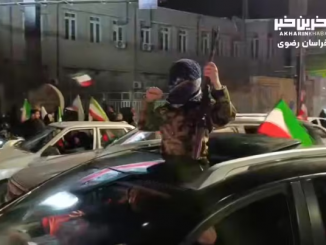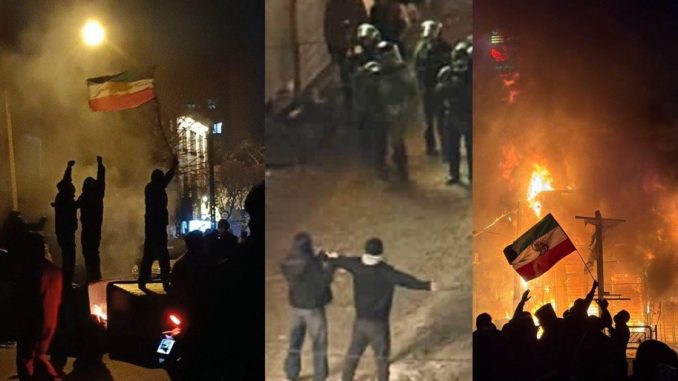
The 2022 Woman, Life, Freedom movement marked a turning point, when Iranians became more unified against the regime. The 2026 protests were the beginning of a new revolution.
Published March 24, 2026
Despite longstanding portrayals of Iran’s paramilitary and resistance networks as threats to the United States, some analysts argue that these groups may paradoxically advance U.S. strategic goals. By exploiting internal fissures in Tehran’s authoritarian system and sustaining regional leverage, Iran’s organized resistance can inadvertently create opportunities for American influence in the Middle East.
This counterintuitive perspective highlights the complexity of Middle Eastern geopolitics: not all actors opposed to U.S. policy are uniformly hostile, and understanding their dynamics can reveal unexpected strategic advantages.
Key Points
- Highly Organized Networks
Iran’s resistance groups — spanning Iraq, Lebanon, Yemen, and other regions — are deeply structured, capable of autonomous operations while maintaining ties to Tehran. These networks are not simply extensions of the regime; many operate semi-independently, driven by local grievances and strategic interests, which makes them resilient and adaptable even under external pressure. Their logistical sophistication, communication networks, and ability to coordinate across borders make them a significant force in the region. - Strategic Leverage Against the Regime
Analysts argue that these networks act as internal checks on the Iranian government. By sustaining pressure both domestically and abroad, they inadvertently expose weaknesses in Tehran’s authoritarian control. For U.S. policymakers, understanding this duality offers a pathway to exert influence indirectly, without committing large-scale resources. - Resilience Amid Pressure
Unlike conventional military forces, Iran’s resistance networks thrive under asymmetric conditions. Their decentralized command structure, knowledge of local terrain, and embedded community support allow them to endure attacks, sanctions, and external pressure. This resilience ensures that the networks remain influential and capable of shaping events over the long term. - Indirect Benefit from U.S. Actions
Conventional military strikes or targeted sanctions can unintentionally bolster these semi-independent networks, increasing their legitimacy and operational capacity. By carefully calibrating policy, the United States can potentially channel the energy of these groups toward outcomes that align with U.S. strategic interests, without directly supporting their actions. - Complicated Local Alliances
Resistance groups often hold sway in their communities, providing security, governance, and social services in areas where state authority is weak. This dual role — military and social — gives them legitimacy beyond mere combat capabilities. Understanding these local dynamics is crucial for any U.S. strategy seeking to exploit opportunities in the region without exacerbating conflict.
Why it’s relevant:
This video explains how Iran developed its extensive network of allied militias and proxy groups across the Middle East — the very “organized resistance” discussed in your article — giving historical background and strategic context. It breaks down how these networks operate, why they were built, and why they matter for regional power dynamics.
🔍 Analyst Insight:
Experts note that Iran’s resistance networks are not simple proxies, but semi-autonomous entities shaped by local grievances, regional politics, and the balance of power:
- Organizational Strength: Embedded in local communities with robust logistical and command structures.
- Asymmetric Capabilities: Skilled in guerrilla tactics, drones, and networked defense, making them resilient against conventional attacks.
- Political Complexity: Ties to domestic opposition and diaspora groups create a nuanced landscape beyond a simple “enemy/friend” binary.
- Strategic Leverage: Their persistence can provide the U.S. with indirect influence, particularly when Tehran’s priorities are strained by internal and external pressures.
👥 Human Element:
It is crucial to understand the real-world consequences for people living in these conflict zones:
- Civilians in affected regions often rely on these groups for protection and basic services in the absence of reliable state governance.
- Internal Iranian dissenters see the networks as a vehicle to challenge the regime’s oppressive control.
- Ordinary Iranians navigating economic hardship, censorship, and political repression are caught between authoritarian control and the resistance’s activities.
Recognizing these human dynamics is essential for any U.S. strategy that seeks to influence Iran without exacerbating suffering or empowering extremists.
♟️ Strategic Perspective: Prioritizing National Interest
From a standpoint focused on practical strategy and long-term security:
- Assess Actors Carefully: Not all opponents are monolithic; understanding the nuances of local and regional groups allows for smarter policy decisions.
- Use Pressure Wisely: Direct confrontation with Tehran may backfire, empowering semi-independent networks rather than weakening them.
- Leverage Local Dynamics: Supporting elements that naturally challenge oppressive authority can align with U.S. goals of stability and influence.
- Balance Strength and Diplomacy: Military power should be paired with diplomacy, coalition-building, and respect for regional socio-political realities to maximize effectiveness.
- Focus on Results, Not Rhetoric: Decisions should be guided by long-term outcomes for U.S. security and regional stability, rather than short-term ideology or appearances.
🎯 Conclusion:
Iran’s organized resistance presents a complex and paradoxical landscape for U.S. policy. These networks are resilient, deeply embedded, and semi-autonomous, meaning that simple military solutions are unlikely to achieve meaningful change.
Pressure on Tehran can strengthen alternative power centers within Iran — a dynamic that, if understood and leveraged wisely, could indirectly serve U.S. strategic interests. But missteps could empower the wrong actors, increase instability, or prolong regional conflict.
The human element underscores that strategy is not solely about military advantage: it is also about protecting civilians, empowering dissent, and shaping political outcomes responsibly. By recognizing these realities, U.S. policymakers can navigate the region more effectively, balancing strength, prudence, and foresight.
The key lesson is clear: not all opposition to U.S. policy is inherently hostile. Some actors, such as Iran’s organized resistance, may become instruments of influence — provided engagement is guided by careful analysis, strategic patience, and national interest.
Ultimately, the challenge for America is:
👉 How can we leverage the complexities of Iran’s political landscape to promote stability, security, and a future where freedom and order are possible — without overextending our forces or underestimating the human and geopolitical consequences?
SOURCES: THE GATEWAY PUNDIT – The Man in the Arena: Why Iran’s Organized Resistance Is America’s Real Ally