Iran has received a 15-point plan from the United States to end the Middle East war, Pakistani officials said Wednesday, raising hopes for a diplomatic solution even as Iran said it had fired a volley of cruise missiles at a US aircraft carrier.
Published March 25, 2026
The war between Iran, the United States, and Israel has entered a volatile new phase this week, marked by continuing military strikes, strategic jockeying over the Strait of Hormuz, and sharply divergent narratives about diplomatic efforts to end hostilities.
Iran has continued missile and drone attacks against U.S. and allied forces and infrastructure across the wider Middle East, even as President Donald Trump suggested progress in diplomatic efforts to halt the conflict. Iranian officials have publicly rejected those claims and dismissed the U.S. peace plan as disingenuous.
Iran Strikes and U.S. Military Posture
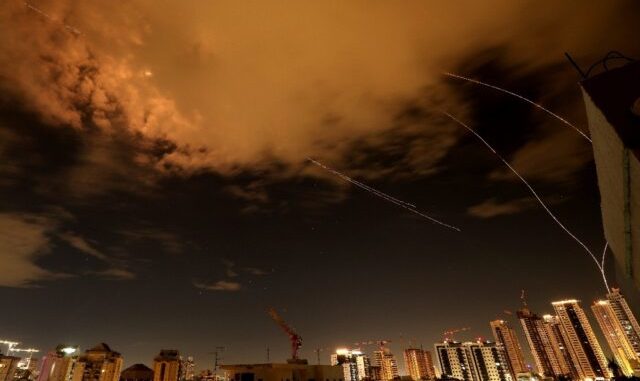
Over recent days, Tehran’s forces have launched missiles at a U.S. aircraft carrier strike group operating in the Arabian Sea, escalating tensions at sea, while allied forces have maintained pressure on Iranian military targets. The exchanges occur against the backdrop of weeks of conflict that began with a U.S.‑Israeli campaign aimed at weakening Iran’s military capabilities and reopening the Strait of Hormuz, a critical artery for global energy shipments.
Despite public claims by Washington that Tehran has shown willingness to engage, Iranian spokespersons mocked the idea. Tehran has insisted that any negotiations are premature, asserting instead that the U.S. “is negotiating with itself” and that true progress will only come on Iran’s own terms.
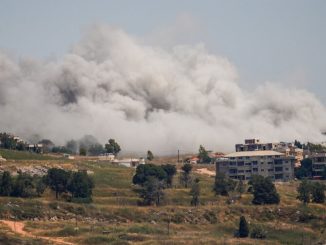
Missile and drone strikes, such as this Iranian drone strike near Kuwait Airport, continued on Wednesday
Diplomatic Messaging vs. On‑the‑Ground Reality
The United States recently tabled a 15‑point peace proposal that reportedly includes demands such as dismantling Iran’s nuclear development infrastructure, ending support for regional proxy groups, and reopening the Strait of Hormuz in exchange for sanctions relief. Washington officials touted this as a foundation for ceasefire talks, but Tehran’s official stance remains publicly hostile, framing the package as unacceptable.
Multiple international mediators — including officials from neighboring states — have been reported attempting to bridge differences. Iranian state media continue to reject direct talks, though independent reporting suggests the proposal is still under review.
Strait of Hormuz Remains a Flashpoint
Control of the Strait of Hormuz — through which roughly one‑fifth of the world’s oil transits — has been a central strategic issue in the conflict. For much of the war, Iran effectively restricted access, crippling tanker traffic and contributing to surging energy prices globally.
In recent days, Tehran publicly declared that “non‑hostile” vessels may pass through the strait if they coordinate with Iranian authorities, but explicitly excluded ships linked to the U.S., Israel, and their allies. The announcement does not remove uncertainty; commercial carriers remain hesitant to transit a waterway that has seen attacks on dozens of vessels since February.
Wider Regional and Economic Impact
The conflict’s ripple effects go beyond military destruction. Oil and natural gas markets have rattled under fears of prolonged disruptions, with energy security emerging as a diplomatic priority for governments and companies around the world. The continued closure or partial blockade of the Strait has magnified these concerns, underscoring how intertwined global economic stability is with Middle Eastern geopolitics.
🧩 The Core Analysis: Diplomacy Meets the Reality of Power
The ongoing standoff between Iran, the United States, and Israel illustrates a stark principle of international relations: diplomatic overtures cannot substitute for credible deterrence or control over strategic assets.
While Washington has signaled a willingness to engage Tehran with a detailed peace proposal, the Iranian response underscores a simple reality—words carry little weight unless backed by enforceable capabilities and credible consequences. Tehran’s insistence that the U.S. “is negotiating with itself” reflects a confidence born of operational leverage, especially its ability to strike at key military targets and control maritime chokepoints like the Strait of Hormuz.
Military Leverage Shapes Negotiation
Iran’s recent missile and drone strikes against U.S. assets are not acts of irrational aggression—they are strategic signals. By demonstrating both reach and precision, Tehran reinforces its negotiating position while testing the limits of U.S. resolve. In geopolitics, those who can impose tangible costs often define the terms of dialogue, not those issuing proposals from afar.
The partial reopening of the Strait of Hormuz to “non-hostile” vessels illustrates this dynamic. It is not a concession; it is selective control designed to assert authority, maintain leverage, and influence global markets—all while avoiding outright escalation that could provoke overwhelming retaliation.
Diplomatic Signaling vs. Operational Reality
The U.S. plan, while detailed, exists largely in the abstract until enforcement mechanisms align with on-the-ground realities. Tehran’s rejection demonstrates a mismatch between diplomatic intent and strategic capability: without credible enforcement, proposals are often treated as suggestions, not imperatives.
This highlights a broader lesson for any nation engaging in high-stakes diplomacy: leverage and security underpin negotiation. Offering terms without the ability to enforce compliance or project credible consequences reduces diplomatic capital and invites adversarial interpretation.
Global Implications
Energy markets, regional stability, and the credibility of alliances are all sensitive to the interplay of power and negotiation. The current crisis shows how quickly abstract diplomacy can be overshadowed by operational realities. Countries and companies dependent on secure maritime and energy access are forced to respond to facts on the ground, not promises.
🔗 The Synthesis: Diplomacy Demands Backing
The ongoing crisis between Iran, the United States, and Israel demonstrates that diplomacy alone cannot secure stability. While Washington has tabled a multi-point peace proposal, Tehran continues military strikes and controls access to the Strait of Hormuz, signaling that words without enforceable leverage carry little weight.
Stabilization Requires Credible Enforcement
Peace talks and proposals are important tools, but without credible deterrence, they risk being dismissed. Iran’s simultaneous engagement with messaging and aggressive actions shows that security and influence must be backed by the ability to enforce consequences.
The Cost of Limited Compliance
Restrictions on tanker traffic through the Strait of Hormuz and continued attacks on U.S. forces underscore that failure to act decisively carries direct costs—not only to regional security but also to global energy markets and economic stability. Diplomatic statements alone cannot mitigate these risks.
Public and Global Stakes
The ripple effects extend far beyond the region. Energy markets, shipping lanes, and international confidence are all affected. This conflict demonstrates that international actors must weigh both diplomacy and practical capability when responding to regional threats.
A Defining Moment for Strategy
The situation emphasizes the principle that negotiation must be paired with credible enforcement. Without it, agreements may be ignored and instability perpetuated. Leadership decisions now will shape not only the outcome of the current crisis but also long-term strategic credibility.
🏁 The Final Word: Strength Through Credible Resolve
The current crisis underscores a simple reality: words without leverage are insufficient. Tehran’s simultaneous engagement with diplomatic messaging and aggressive military operations illustrates that only a posture backed by credible deterrence can shape outcomes in the Middle East.
While peace proposals and negotiations remain important, they must be grounded in enforceable terms and supported by the capacity to respond decisively to violations. The situation in the Strait of Hormuz and the broader regional conflict demonstrates that security, stability, and influence are earned, not granted.
For the United States and its allies, the lesson is clear: diplomacy must be paired with resolve. Only through a combination of firm action and principled negotiation can lasting stability be achieved, protecting both national interests and the broader international order.
SOURCES: BREITBART – Tehran receives US plan to end Mideast war, as Iran fires at US carrier
ABS-CBN NEWS – Tehran receives US plan to end Mideast war, as Iran fires at US carrier
DW.COM – Iran war: Tehran says US is ‘negotiating with itself’
THE TIMES – Iran war latest: Tehran rejects US peace plan