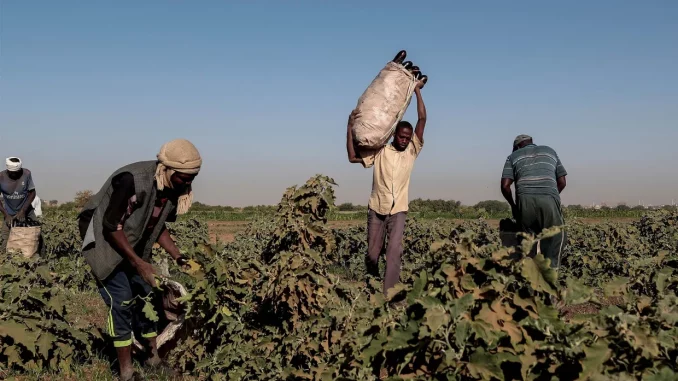
Workers harvest eggplants on a farm on Tuti Island in Khartoum, Sudan, February 14, 2020.(Zohra Bensemra/Reuters)
Published March 25, 2026
WASHINGTON, D.C. — A new analysis in National Review warns that actions by the Iranian regime are not only destabilizing the Middle East but exacerbating global hunger and threatening the world’s poorest populations by disrupting agricultural markets and food supplies worldwide.
Conflict Disrupts Food Supplies and Markets
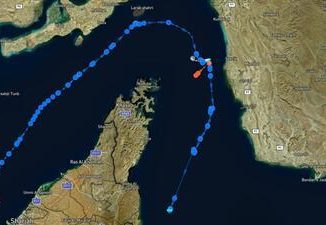
The article, written by veteran political commentator Jim Geraghty, highlights how continued geopolitical hostilities involving Iran have impacted global food production and distribution. Analysts say that ongoing tensions in the Persian Gulf, particularly around the Strait of Hormuz, have contributed to rising costs for shipping, fuel, and agricultural inputs such as fertilizer—factors that disproportionately harm low‑income regions reliant on imports.
Commercial vessels and oil tankers have faced increasing risks in Middle Eastern waters, pushing up insurance premiums and transport costs for basic goods. This has a cascading effect: grain, fertilizer, and other critical commodities become more expensive and harder to move, worsening food insecurity in vulnerable countries.
Economic Mismanagement and Global Effects
Geraghty argues that Iran’s internal economic dysfunction—marked by runaway inflation, mismanagement of state resources, and a collapsing currency—has not only strained Iranian households at home but created broader stress on global markets. Domestic food shortages in Iran amplify demand for imported staples, elevating prices in regions that already struggle with hunger.
International economists note that when a major energy and commodity transit route becomes unstable, global supply chains contract. This puts pressure on food‑importing nations, especially in Africa, South Asia, and other developing regions where people spend a large proportion of household income on food.
Political Priorities vs. Humanitarian Needs
The piece frames the Iranian regime’s choices—continuing regional power projection and internal repression over economic reforms—as a factor that deepens suffering both inside Iran and abroad. Critics say food scarcity and inflation are being used, intentionally or not, to concentrate resources among loyal elites while ordinary citizens and the world’s poorest suffer the consequences.
International Response and Future Risks
As global leaders monitor the situation, humanitarian groups are warning that continued disruption to food markets could escalate into a wider crisis of hunger, threatening millions in low‑income countries. Some experts urge diplomatic engagement to stabilize trade routes and address economic drivers so that food supplies can reach vulnerable populations.
🧩 The Core Analysis: Iran and the Starvation of the World’s Poorest
The ongoing conflict involving Iran highlights a broader reality: geopolitical instability in key trade corridors directly threatens the world’s most vulnerable populations. From this viewpoint, the crisis is not simply a humanitarian issue—it is also a consequence of policy decisions and systemic failures that elevate risk instead of mitigating it.
Market Disruptions and Human Cost
The conflict has disrupted critical supply chains for fertilizer, fuel, and food commodities, driving up prices for import-dependent nations. Countries already struggling with subsistence agriculture now face the dual burden of higher production costs and rising consumer prices, which can mean the difference between eating or going hungry.
This situation underscores a principle often emphasized in right‑leaning economic thought: stable markets and secure trade routes are essential for human welfare. When these are undermined by political or military instability, the effects are felt most acutely by those with the least resilience—small farmers, low-income households, and food-insecure regions.
Government Mismanagement and Incentive Failures
Iran’s internal economic policies, coupled with regional aggression, show how poorly structured governance and misaligned incentives can amplify global consequences. Decisions prioritizing political objectives over economic stability exacerbate scarcity, push up global prices, and hinder private-sector solutions that could alleviate shortages.
From this perspective, the crisis is not only about supply disruption; it is about how incentives, governance, and accountability—or the lack thereof—cascade into real-world suffering, disproportionately impacting people without access to safety nets.
Policy Lessons and Global Implications
The takeaway is clear: security, market integrity, and predictable trade flows are essential to prevent starvation and economic collapse in vulnerable regions. The world’s poorest people often bear the brunt of conflicts far beyond their borders, a reminder that sound economic and strategic policies—including protecting trade routes, ensuring transparency, and maintaining energy and agricultural stability—are critical to global survival and prosperity.
🔗 The Synthesis: Iran and the Global Hunger Crisis
The conflict involving Iran is a stark reminder that geopolitical instability in key regions has far-reaching consequences, especially for the world’s most vulnerable populations. While headlines focus on immediate military or political outcomes, the underlying economic and humanitarian dynamics reveal deeper lessons.
Markets, Scarcity, and Human Suffering
Disruptions to shipping lanes, fertilizer exports, and energy supplies create sharp ripple effects in global markets. Countries that rely heavily on imports for food production face skyrocketing costs, threatening both harvests and affordability. The poorest people—often subsistence farmers or low-income households—bear the brunt, emphasizing a timeless principle: stable markets and secure trade routes are fundamental to human well-being.
Governance, Incentives, and Consequences
Iran’s domestic mismanagement—high inflation, currency instability, and resource misallocation—combined with regional aggression, shows how bad incentives and weak governance can amplify global suffering. When political priorities override economic stability, food scarcity is no longer a local problem; it becomes a global crisis.
Policy Imperatives
This situation underscores the importance of predictable governance, market integrity, and strategic oversight. Protecting trade routes, maintaining energy and agricultural stability, and incentivizing private-sector solutions are not abstract economic principles—they are practical measures that prevent starvation and stabilize communities worldwide.
In short, the Iran‑driven food crisis is both a humanitarian tragedy and a systemic warning: policies that destabilize markets or ignore incentives create avoidable suffering for those who can least afford it, and the global community pays the price when these risks are left unaddressed.
🏁 The Final Word: Lessons from the Iran-Driven Global Hunger Crisis
The Iran conflict demonstrates that geopolitical instability, poor governance, and market disruptions have real human costs, espe#IranConflict #GlobalHunger #FoodCrisis #FertilizerShortage #EnergyPrices #TradeDisruption #WorldFoodSecurity #Geopolitics #SupplyChain #FoodInflation #DevelopingCountries #HumanitarianCrisis #MarketStability #EconomicImpact #GlobalTrade #Agriculture #StraitOfHormuz #FoodScarcity #PovertyImpact #StrategicPolicycially for the world’s most vulnerable. When trade routes falter, energy prices spike, and agricultural inputs become scarce, the poorest populations pay the highest price—a stark reminder that security, stability, and accountable decision-making are essential for human survival.
Ultimately, the crisis illustrates a fundamental principle: sound policies that protect markets, incentivize responsible governance, and maintain strategic stability are not optional—they are lifesaving. Ignoring these lessons allows suffering to spread far beyond the borders of conflict, reinforcing the need for practical, market-aware, and security-conscious solutions to prevent starvation and safeguard global well-being.
SOURCES: THE NATIONAL REVIEW – How Iran Is Setting Up the Starvation of the World’s Poorest People