Vance supports Orbán and rejects Zelensky’s threats
Published April 8, 2026
BUDAPEST — In an unprecedented and fiery condemnation of Ukrainian President Volodymyr Zelensky, U.S. Vice President JD Vance tore into what he described as “scandalous” remarks made by Zelensky against Hungarian Prime Minister Viktor Orbán, signaling growing friction between Washington, Kyiv, and European capitals over democratic sovereignty and foreign meddling.
Vance, who arrived in Hungary this week ahead of the critical April 12 parliamentary election, said Zelensky’s reported comments — allegedly threatening Orbán over Hungary’s approach to the Ukraine-Russia conflict — were unacceptable and posed a direct threat to European democracy.
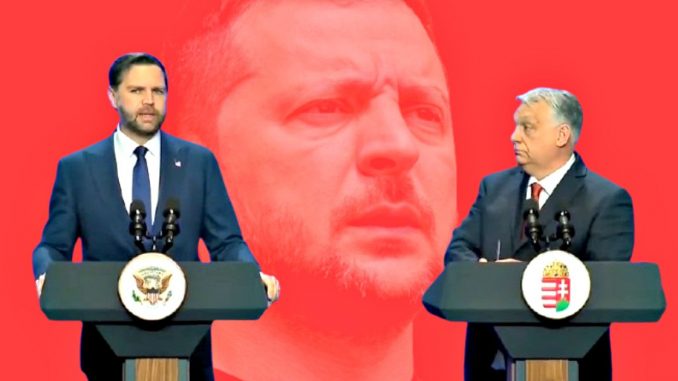
“It’s completely scandalous,” Vance declared during a press briefing in Budapest. “No foreign leader, particularly of a country we support, should be making threats against an allied nation’s elected leader. Hungary is a sovereign democracy, and its citizens deserve to make their choices free from foreign intimidation.”
A Diplomatic Firestorm
While Zelensky’s remarks have not been fully documented publicly, multiple sources close to European diplomatic circles say the Ukrainian leader warned Orbán against policies perceived as too accommodating to Russia — comments critics say cross the line of normal diplomatic engagement.
Vance framed these comments as emblematic of a broader problem: Kyiv’s growing willingness to use energy policy, military aid, and diplomatic pressure as tools of political influence in Europe.
“We’re seeing a pattern here,” Vance said. “Ukraine, instead of focusing solely on defending its own borders, is attempting to dictate European domestic politics. This is unacceptable, and we will not stand by silently.”
U.S. Support for Orbán
Vance’s visit to Hungary is being hailed by supporters as a reaffirmation of U.S. commitment to allied democracies resisting undue external pressure. Orbán, a polarizing figure in European politics, has often been criticized by Brussels for resisting EU mandates and for his cautious approach toward Russia.
“The United States stands with those leaders who defend their countries and the choices of their people,” Vance said, drawing clear lines between Washington’s support for Hungarian sovereignty and what he calls “meddling from Kyiv and Brussels.”
Critics, however, argue that Vance’s remarks amount to a U.S. intervention in Hungarian politics, particularly with an election just days away. European Union officials expressed concern, emphasizing that foreign interference — even from an ally — undermines democratic norms.
Zelensky vs. Orbán: The Larger Context
Hungary has been walking a tightrope during the Ukraine crisis. Unlike many EU members, Orbán has refused to fully sanction Russia and has resisted certain EU-led measures. This has made Budapest a frequent target of criticism from Kyiv, where officials have grown increasingly frustrated with Hungary’s independent approach.
Vance’s sharp rebuke of Zelensky is thus not only a defense of Orbán but a broader statement against what U.S. conservatives describe as “creeping influence by unelected European and Ukrainian officials in sovereign nations’ affairs.”
“We will not allow a situation where democratically elected governments in Europe are threatened for making independent decisions,” Vance said. “Hungary is not just standing up for itself — it is standing for the principle that nations decide their own future, not foreign bureaucrats.”
Energy, Politics, and Election Timing
Observers note the timing of Vance’s visit is politically sensitive. Orbán’s Fidesz party is facing a tough election battle, and Zelensky’s alleged comments came at a moment of heightened tension over energy policies and EU relations.
“This is a textbook example of political intimidation,” Vance said. “We are making it clear that the United States does not condone threats from Ukraine or Brussels against Hungary. The Hungarian people deserve to decide their government freely.”
European leaders, meanwhile, have called for calm and dialogue, urging Washington and Kyiv to avoid escalating tensions further ahead of the election. Yet Vance’s remarks suggest that the U.S. may take a more assertive role in defending allies it considers under threat, regardless of pushback from Brussels.
🔍 Critical View: VP Vance Condemns Zelensky — Sovereignty and Foreign Pressure in Europe
As tensions simmer across Europe, a separate but equally significant conflict has emerged: a clash between U.S. Vice President JD Vance and Ukrainian President Volodymyr Zelensky over reportedly threatening remarks directed at Hungarian Prime Minister Viktor Orbán. While some observers frame the dispute as another diplomatic spat, it underscores broader questions about national sovereignty, foreign influence, and the proper role of international actors in domestic politics.
In moments where elections, energy policy, and international alliances hang in the balance, the margin for error—or overreach—is critical.
1. Foreign Interference in Domestic Politics
At the heart of the controversy is whether Zelensky’s reported threats over Hungary’s policies constitute interference in a sovereign nation’s internal affairs.
- Using political pressure or intimidation to influence another country’s leadership undermines democratic principles.
- Vance’s condemnation highlights the risks posed when foreign leaders attempt to sway domestic decision-making.
- The debate is not only about one statement—it is about the broader norm of respecting national sovereignty in the international arena.
2. Energy Policy as a Tool of Coercion
Hungary’s cautious approach to Russian energy and sanctions has been a flashpoint, with Vance suggesting that Kyiv may be leveraging energy dependence to influence political decisions.
- Energy resources are increasingly entangled with diplomacy, creating potential leverage over allied nations.
- Pressure based on such dependence raises questions about fairness, autonomy, and the ethics of foreign influence.
- Vance’s comments warn that alliances should not come with implicit demands that compromise independent national policy.
3. Sovereignty vs. Bureaucratic Pressure
Beyond Kyiv, the controversy also touches on the role of supranational institutions like the EU, which have criticized Orbán’s policies.
- Vance framed these pressures as undue interference from unelected bureaucrats rather than representatives accountable to the people.
- The broader concern is whether democracies can remain meaningful if external powers, whether foreign governments or international organizations, attempt to dictate policy.
4. Election Timing and Diplomatic Sensitivity
The timing of Vance’s intervention, just days before Hungary’s election, has drawn scrutiny.
- Supporters argue the visit defends democratic integrity against intimidation.
- Critics warn that even well-intentioned statements risk influencing domestic politics.
- The episode underscores the delicate balance in diplomacy, where words carry weight and can alter political outcomes.
5. Balancing Support for Allies with Respect for Sovereignty
Finally, the incident highlights the tension between supporting Ukraine against Russian aggression and respecting the autonomy of European allies.
- Vance’s stance emphasizes that aid and cooperation should not come at the cost of coercing nations into policies they do not freely choose.
- The episode illustrates the principle that true alliances respect each country’s independent decision-making while promoting shared goals.
👥 On the Ground: VP Vance Confronts Zelensky — Upholding Hungary’s Sovereignty Amid Foreign Pressure
On the streets of Budapest, tension is palpable as the April 12 parliamentary elections approach. U.S. Vice President JD Vance has publicly condemned Ukrainian President Volodymyr Zelensky for reportedly threatening Hungarian Prime Minister Viktor Orbán, calling the remarks “scandalous” and a direct challenge to Hungary’s democratic process. While some view this as a routine diplomatic exchange, the situation raises pressing questions about foreign influence, the role of international actors in domestic politics, and the limits of diplomacy in protecting sovereignty.
1. Foreign Interference in Domestic Politics
Vance’s criticism zeroed in on what he describes as Ukraine’s attempts to sway Hungary’s domestic decisions.
- Threats against an elected leader undermine democratic norms and set a dangerous precedent for political coercion.
- The issue goes beyond one statement; it highlights the ongoing risk that foreign governments could influence elections and policymaking in sovereign nations.
2. Energy Policy and Political Leverage
Hungary’s cautious approach to Russian energy and sanctions has drawn sharp attention from Kyiv.
- Vance suggested that energy dependence could be used as leverage to push Hungary toward policies it does not choose independently.
- The situation illustrates how energy politics can intersect with diplomacy, raising ethical and strategic concerns about coercion.
3. Sovereignty vs. Bureaucratic Pressure
Beyond Zelensky, Vance also highlighted pressure from international institutions such as the EU.
- He framed these interventions as undue influence from unelected officials, rather than accountability to the citizens of Hungary.
- The broader issue is whether democracies can function when external authorities attempt to dictate policies that should be decided nationally.
4. Timing and Election Sensitivity
Vance’s remarks came just days before Hungary’s parliamentary elections, intensifying scrutiny.
- Advocates argue the timing defends Hungarian democracy from intimidation.
- Critics caution that even statements intended to uphold principles risk influencing domestic political outcomes.
- This underscores the delicate balance in diplomacy, where words from foreign leaders carry real consequences.
5. Balancing Support for Allies and Respect for Sovereignty
Finally, the episode highlights the challenge of supporting Ukraine while respecting European allies’ independence.
- Vance emphasized that international aid and cooperation should never come with the expectation that allied nations compromise their autonomy.
- Protecting sovereignty is essential to maintaining trust, long-term alliances, and a shared commitment to democratic principles.
🎯 The Final Word:
The confrontation between Vice President Vance and President Zelensky underscores the importance of defending national sovereignty in an era of heightened foreign pressure. While Ukraine remains a crucial partner in addressing regional security threats, European nations like Hungary must retain the ability to make independent policy decisions without intimidation. Upholding the principle that elected governments answer to their citizens—not external actors—is essential for maintaining the integrity of democratic institutions and ensuring that alliances are built on mutual respect rather than coercion.
SOURCES: THE GATEWAY PUNDIT – ‘SCANDALOUS’: VP Vance Torches Zelensky’s Threats Against Orbán, Says Ukraine Is Using Energy Supplies To Try To Influence Hungarian Elections