Multiple international reports now indicate that Iran’s newly installed Supreme Leader, Mojtaba Khamenei, is unconscious and suffering from a severe medical condition, leaving him effectively unable to govern.
Published April 8, 2026
WASHINGTON — Iran’s leadership appears to be teetering on the edge of crisis as reports indicate Supreme Leader Mojtaba Khamenei, who took power earlier this year following the death of his father, Ali Khamenei, is unconscious, receiving medical treatment in Qom, and unable to participate in decision-making. This development comes amid escalating military and political tensions across the Middle East, raising urgent questions about Iran’s chain of command, regional stability, and the potential for unpredictable actions by Tehran.
No Public Appearances Since Taking Power
Since succeeding his father, Mojtaba Khamenei has not appeared publicly, sparking widespread speculation among intelligence analysts, diplomats, and foreign governments. Iranian state media has issued written statements purportedly from the new leader, but there has been no live video or audio confirmation, feeding rumors about his health and authority.
“The lack of public appearances is highly unusual and raises serious questions about the actual control over Iran’s government and military,” one Middle East analyst told Fox News.
According to reports, Western and Israeli intelligence have flagged his condition as “severe,” suggesting the cleric is unable to manage or approve key decisions, leaving Iran’s military and political apparatus in an uncertain state.
A Leadership Vacuum at a Critical Moment
Iran is currently engaged in high-stakes military operations across the region, with proxy forces active in Iraq, Syria, Lebanon, and Yemen. Analysts warn that any ambiguity in leadership at the top can embolden hardliners and the Islamic Revolutionary Guard Corps (IRGC) to take unilateral action, potentially escalating conflicts with the U.S., Israel, or Gulf allies.
Key concerns include:
- Decision-making gap in Tehran: With the Supreme Leader incapacitated, the clerical council and IRGC may be the de facto authority.
- Regional instability: Uncertainty at the top could trigger aggressive or unpredictable military maneuvers.
- Policy confusion: Allies and adversaries alike may struggle to understand who is shaping Iran’s foreign and domestic strategy.
“Iran’s structure centralizes power in the Supreme Leader. If he is incapacitated, the entire chain of command becomes ambiguous,” a former U.S. intelligence officer explained.
Energy and Economic Pressures Complicate the Picture
Iran’s regional influence is not limited to military operations. Energy exports, particularly oil and gas, play a central role in Tehran’s leverage across the Middle East and beyond. With Khamenei reportedly incapacitated, there are fears that economic decisions — including energy policy, sanctions management, and negotiations — may be delayed or mishandled, creating ripple effects in global markets.
- Oil supply concerns: Any disruption or sudden policy shift could spike prices.
- Sanctions navigation: Uncertainty at the top complicates negotiations with Western and Gulf nations.
- Internal economic stability: Iran’s domestic economy, already strained by sanctions and inflation, could worsen under leadership ambiguity.
Implications for U.S. and Allied Policy
Washington has consistently pressured Tehran to curb aggressive actions and abide by international norms. The reported health crisis of Mojtaba Khamenei complicates these efforts:
- Negotiation challenges: U.S. officials may face difficulties identifying who can make binding decisions in Iran.
- Deterrence risks: Military planners must assume that elements of Iran’s government could act independently.
- Intelligence gaps: Monitoring Iran’s actions becomes harder when the chain of command is unclear.
“Any incapacitation of Iran’s top leader is a strategic risk,” a U.S. State Department official told Fox News. “It raises the stakes for everyone in the region, especially Israel, the Gulf states, and U.S. forces in the Middle East.”

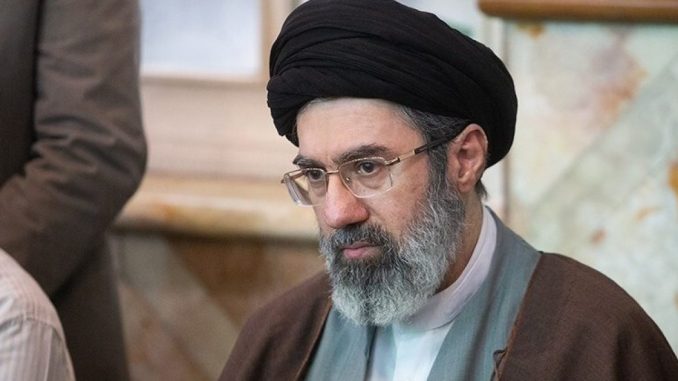
Iran’s new Supreme Leader Mojtaba Khamenei (seen here in 2019) vowed to support anti-American and anti-Israel terrorist cells in the Middle East.
Who Controls Iran Now?
While Iranian officials maintain that Mojtaba Khamenei remains in control, experts warn that decision-making authority may now lie largely with the IRGC or senior clerics in Qom. This has prompted speculation that hard-line elements could push more aggressive regional policies, potentially heightening the risk of conflict with the U.S. and Israel.
- Military autonomy: Elements of the IRGC may take advantage of the power vacuum.
- Diplomatic uncertainty: Allies cannot be certain which Iranian officials can negotiate or commit on behalf of the regime.
- Potential succession debates: Within Iran’s ruling elite, discussions over who should step in as acting leader could spark internal power struggles.
Global Watchers on High Alert
Intelligence agencies in Washington, Tel Aviv, and the Gulf are reportedly monitoring Tehran closely, assessing whether the reports are accurate and what they imply for both ongoing military operations and negotiations over regional security.
“Every move Iran makes right now will be scrutinized,” said a European diplomat. “The absence of clear leadership adds a dangerous layer of unpredictability.”
Analysts warn that the international community must prepare for rapid developments, including potential shifts in Iran’s alliances, military strategy, or approach to nuclear and proxy activities.
🔍 Critical View: Iran’s Leadership Crisis Raises Questions About Stability and Decision-Making
Reports that Iran’s new Supreme Leader Mojtaba Khamenei is unconscious and unable to participate in decision-making have sent shockwaves through international diplomatic and intelligence communities. While Iran’s state media maintains that he remains in control, multiple sources suggest the cleric is in severe condition, leaving the nation’s political and military apparatus in uncertainty. This development raises pressing questions about national sovereignty, regional security, and the risks of leadership vacuums in authoritarian regimes.
In moments where military operations, nuclear negotiations, and global energy markets are at stake, clarity in leadership is not optional — it is critical.
1. Leadership Vacuum in Tehran
At the center of the crisis is the possibility that Iran’s top office is effectively incapacitated.
- Mojtaba Khamenei has not appeared publicly since assuming power, fueling speculation about the true locus of authority.
- The lack of transparency raises concerns that key military and political decisions may now be guided by unelected hardliners or the Islamic Revolutionary Guard Corps (IRGC).
- The broader question is whether Iran can maintain cohesive governance at a time when strategic choices carry life-or-death consequences for the region.
2. Implications for Regional Security
Iran’s influence extends far beyond its borders through proxy militias in Syria, Iraq, Lebanon, and Yemen.
- A leadership gap could embolden hard-line factions to take unilateral military actions, heightening the risk of confrontation with the U.S., Israel, or Gulf allies.
- Allies and adversaries alike may miscalculate Iran’s intentions if public statements do not reflect who is actually making decisions behind the scenes.
- The region’s fragile balance of power makes even small errors in judgment potentially catastrophic.
3. Energy Politics and Global Markets
Iran’s domestic leadership affects not just security, but economic stability.
- Decisions regarding oil and gas exports, sanctions compliance, and internal economic policy may be delayed or erratic in the absence of clear authority.
- Uncertainty in Tehran could trigger global energy disruptions, affecting markets and allied nations dependent on Middle Eastern supply chains.
- The combination of political and economic unpredictability makes Iran’s current situation a concern for policymakers worldwide.
4. Intelligence and Diplomatic Challenges
The reported health crisis complicates Western intelligence and diplomatic efforts.
- U.S. and allied officials must navigate a landscape where it is unclear who has the authority to make binding decisions.
- This ambiguity makes negotiations, deterrence, and conflict prevention more difficult, as formal communications may not reflect actual power dynamics.
- The situation underscores the importance of accurate intelligence and verification when engaging with opaque regimes.
5. The Risk of Internal Power Struggles
Within Iran, the uncertainty surrounding Khamenei’s condition may spark internal disputes.
- Senior clerics and IRGC leaders may compete for influence, potentially leading to policy inconsistency or sudden shifts in strategy.
- Such struggles could accelerate aggressive actions, destabilizing both Iran and the broader Middle East.
- The episode serves as a reminder that leadership clarity is essential to prevent authoritarian systems from becoming dangerously unpredictable.
👥 On the Ground: Iran’s Leadership Uncertainty Raises Alarms Across the Middle East
In Tehran and Qom, whispers of uncertainty are spreading as reports indicate that Iran’s new Supreme Leader Mojtaba Khamenei is unconscious and unable to participate in decision-making. While Iranian officials insist the leader remains in control, intelligence from multiple sources suggests the cleric is in severe condition, leaving the country’s political and military hierarchy in question. On the ground, analysts, diplomats, and locals alike are weighing what this leadership gap could mean for the region, from ongoing military operations to internal governance and economic stability.
1. Leadership Vacuum in Tehran
The central issue is the reported incapacitation of the nation’s highest office.
- Mojtaba Khamenei has not appeared publicly since assuming power, fueling speculation about who actually makes decisions.
- Hardliners within the Islamic Revolutionary Guard Corps (IRGC) and senior clerics may be filling the vacuum, potentially making autonomous decisions.
- A lack of transparency at the top creates a dangerous environment for both domestic governance and international relations.
2. Regional Security Risks
Iran’s influence reaches far beyond its borders, with proxy forces active in Syria, Iraq, Lebanon, and Yemen.
- Leadership uncertainty could embolden aggressive factions to act independently, heightening the risk of conflict with the U.S., Israel, or Gulf allies.
- Miscalculations by neighboring nations may increase if Tehran’s public posture does not reflect the reality behind the scenes.
- Analysts warn that even small errors in judgment can have outsized consequences in the region.
3. Energy and Economic Implications
Iran’s decisions on oil and gas exports have direct consequences for global markets.
- An unclear command structure could lead to erratic or delayed economic policy.
- Disruptions in energy supply could affect not only the region but global markets dependent on Middle Eastern oil and gas.
- Policymakers are watching closely to anticipate shifts in production, sanctions compliance, and domestic economic measures.
4. Diplomatic and Intelligence Challenges
Uncertainty at the top complicates Western diplomatic efforts.
- U.S., Israeli, and European officials face difficulty determining who has real authority to negotiate or enforce policy.
- Intelligence agencies must contend with a potentially fragmented command structure, making accurate predictions and assessments more challenging.
- The situation highlights the critical importance of verified intelligence in dealing with opaque regimes.
5. Internal Power Struggles
Within Iran, the health crisis may spark jockeying for power.
- Senior clerics and IRGC leaders may compete to exert influence, creating policy inconsistency or sudden strategic shifts.
- Such internal struggles could accelerate aggressive actions abroad or destabilize domestic governance.
- Analysts warn that maintaining clarity at the top is essential to prevent authoritarian systems from becoming dangerously unpredictable.
🎯 The Final Word:
The reports of Mojtaba Khamenei’s incapacitation reveal the fragility of Iran’s leadership at a moment of heightened regional tension. With the Supreme Leader reportedly unable to make decisions, power may shift to hard-line elements within the clerical and military hierarchy, creating uncertainty for both domestic governance and international security. For the United States, Israel, and allied nations, the challenge is navigating a volatile situation where the true decision-makers are unclear, and miscalculations could have serious consequences for stability in the Middle East.
SOURCES: THE NEW YORK POST – Iran’s supreme leader unconscious and ‘unable to be involved in any decision-making’
THE GATEWAY PUNDIT – Iran’s New Supreme Leader Mojtaba Khamenei Reportedly UNCONSCIOUS, Being Treated for ‘Severe’ Medical Condition — Completely Incapable of Running the Terrorist Country
THE TIMES OF ISRAEL – Mojtaba Khamenei reportedly in ‘severe’ condition, unable to govern Iran
THE JERUSALEM POST – Mojtaba Khamenei unconscious in Qom, not actually running Iran – report