Published April 18, 2026
A new statewide poll is shaking up expectations in the race for California governor, suggesting Republicans may be in position to do something rare in a state long dominated by Democrats—control both spots in the final runoff.
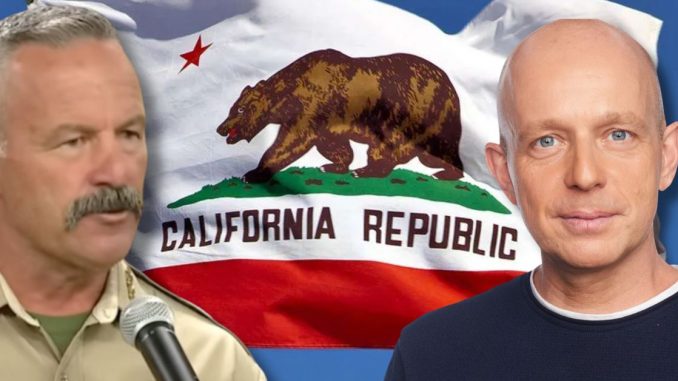
The survey shows Republican candidates Steve Hilton and Chad Bianco leading a crowded field, with Democratic contenders split across multiple candidates and struggling to consolidate support.
Under California’s “top-two” primary system, all candidates run on the same ballot, and the top two finishers—regardless of party—advance to the general election. That structure is now at the center of growing political tension.
A Crowded Field, a Split Vote
On the Democratic side, multiple well-known figures—including former Rep. Katie Porter, former federal official Xavier Becerra, and others—are competing for the same voter base, dividing support across the party. Meanwhile, Republican candidates have largely consolidated behind two main contenders.
That split is a key reason the race has tightened dramatically, with recent polling showing Republicans not only competitive—but ahead in some surveys.
What the Numbers Are Really Showing
While California has not elected a Republican governor in nearly two decades, the latest polling suggests something unusual is happening:
- Republican candidates are consistently near or at the top of multiple surveys
- Democratic voters are divided among several similar candidates
- A large portion of voters remain undecided
In plain terms: when one side is split and the other is concentrated, the path to victory becomes much narrower than expected.
Why This Matters Beyond One Election
This race is being closely watched because it highlights a broader political shift:
- Voter frustration with the cost of living
- Concerns over housing, taxes, and state spending
- Growing openness to alternatives in traditionally one-party strongholds
Recent polling indicates that many voters are less focused on party labels and more focused on day-to-day economic pressure.
A System That Can Flip the Outcome
California’s election system adds another layer of uncertainty.
Because the top two candidates—regardless of party—advance to the general election, it is mathematically possible for two Republicans to compete in the final round if Democratic votes remain fragmented.
That scenario, once considered unlikely, is now being openly discussed by political analysts.
🧩 Reading Between the Lines: What the California Governor’s Race Is Really Showing
When you step back from the headlines about polling numbers and candidate names, the California governor’s race starts to look less like a normal political contest and more like a reflection of everyday frustration building up over time. The discussion around candidates such as Steve Hilton and Chad Bianco is really just the visible part of something much bigger happening underneath.
At its core, this race is about how people feel their daily lives are going—not just politically, but practically.
1. The Cost-of-Living Pressure Is Driving Everything
For most voters, the biggest issue isn’t ideology—it’s survival math.
People are dealing with:
- Rent that keeps climbing faster than wages
- Grocery bills that stretch budgets thin
- Gas, utilities, and insurance costs that don’t seem to ease up
So when voters hear campaign promises, many are thinking in very simple terms: Can I afford to live comfortably here in the next few years?
This is why even small shifts in polling get attention. It’s not about the numbers themselves—it’s about what those numbers suggest about direction.
2. Long-Term Leadership Fatigue
When one political approach dominates a state for a long period, voters often start evaluating results instead of promises.
In plain language:
- If things feel like they’re improving, people stay comfortable
- If things feel stuck or getting harder, people start looking around
This doesn’t automatically mean a full rejection of leadership—it often starts as curiosity about alternatives.
That’s why candidates outside the usual political center of gravity tend to get more attention during stressful economic periods.
3. Why a Crowded Field Changes Everything
One of the most important structural factors in this race is how many candidates are running.
When multiple candidates compete for similar voters:
- Support gets divided
- Momentum is harder to build
- Clear frontrunners are harder to identify
So instead of one dominant candidate emerging early, you get a “split screen” effect where several people look competitive at the same time.
In practical terms, this creates uncertainty—not just for campaigns, but for voters trying to decide where things are going.
4. Small Shifts Look Bigger Than They Are
In a normal two-person race, a 3–5% shift might not change much. But in a crowded field like this:
- Small changes can move someone from 4th place to 2nd
- Undecided voters carry more weight than usual
- Polls can swing quickly without reflecting a final outcome
That’s why polling feels inconsistent right now. It’s not missing—it’s just unstable.
5. The Real Debate Behind the Campaigns
Even if candidates don’t always say it directly, the underlying debate is consistent:
- How much should government shape housing, business, and daily life?
- How much freedom should individuals and companies have to operate without heavy oversight?
- What should the balance be between regulation and economic growth?
These questions show up indirectly in every major issue—housing, taxes, energy, and job creation.
In simple terms, voters are trying to decide whether the current approach is solving problems or adding complexity.
6. Why This Race Is Getting National Attention
California is often seen as a trend-setting state, so political shifts here are watched closely.
If voters begin moving toward alternatives or expressing stronger demand for change, it’s often interpreted as:
- A signal of economic dissatisfaction
- A reaction to long-term policy direction
- A broader mood shift beyond just one election
That’s why even early polling noise gets amplified—it may hint at something larger than a single race.
🔗 The Stakes: What’s Really on the Line in the California Governor’s Race
When you move past the headlines about polling swings and candidate positioning, the California governor’s race starts to look like a referendum on everyday life. It’s less about political branding and more about whether people feel the system is helping them get ahead—or making it harder just to keep up.
This is why candidates like Steve Hilton and Chad Bianco are getting attention: not because of personality alone, but because they represent a possible shift in direction.
1. Cost of Living: The Pressure That Touches Everyone
For most Californians, the main issue is not abstract—it’s monthly survival.
People are dealing with:
- Rent that eats up a large share of income
- High taxes and fees layered into everyday costs
- Expensive groceries, fuel, and insurance
So when voters hear policy proposals, they are not thinking in theory. They are thinking: “Will I have more breathing room or less next year?”
The concern from many is that as government expands programs and spending increases, those costs don’t disappear—they get redistributed back into taxes, fees, or higher prices.
2. Jobs: Stability vs. Uncertainty
Jobs depend heavily on business confidence.
If companies feel:
- Over-regulated
- Heavily taxed
- Or uncertain about long-term costs
They tend to:
- Slow hiring
- Reduce expansion
- Move operations elsewhere
In simple terms, when it becomes more expensive or complicated to do business, job growth usually slows down.
For working families, that means fewer opportunities and more competition for the same positions.
3. Small Businesses: The First to Feel the Pressure
Big corporations can absorb costs. Small businesses cannot.
That’s why they often become the “early warning system” for economic pressure.
When conditions tighten:
- Family-owned restaurants reduce staff or close
- Local shops struggle to meet new requirements
- Startups delay hiring or expansion
In everyday language: when small businesses struggle, communities lose both jobs and local character.
4. Government Expansion vs. Individual Flexibility
One of the deeper questions in this race is how much responsibility government should take on versus how much should be left to individuals and the private sector.
A more expanded government approach often means:
- More programs and services
- More regulations to manage those programs
- Higher funding requirements
The tradeoff many voters worry about is flexibility.
In simple terms: the more centralized control increases, the less room individuals and businesses have to adjust quickly to their own needs.
5. Dependence on Systems and Long-Term Costs
Another concern is what happens when more people and services depend on government programs.
At first, it can feel helpful:
- More support programs
- More subsidies
- More public services
But over time:
- Funding needs grow
- Budgets get tighter
- Taxes or borrowing may increase
The key question becomes sustainability: how long can the system maintain itself without increasing pressure somewhere else?
6. Direction of the State: One Path or Another
At the core, voters are deciding between two broad approaches:
- A model where government plays a larger role in shaping outcomes
- Or a model where individuals, workers, and businesses have more independence to drive growth
In real-world terms, this affects everything from housing development to business formation to job creation.
It’s not just about policy details—it’s about who leads economic momentum.
7. Why This Race Feels Different
California is often seen as a trend-setting state, so any shift in voter mood gets attention beyond its borders.
What’s happening now is:
- A crowded field creating uncertainty
- Voters reacting strongly to cost-of-living pressure
- Growing openness to alternatives outside the usual leadership patterns
That combination makes even small polling changes feel significant.
🏁 The Final Word:
At its core, the California governor’s race is about the direction of the state and how much control people want to keep over their daily lives versus how much is managed through expanding government systems. As the debate continues around taxes, regulations, spending, and job creation, many voters are focused less on political messaging and more on practical outcomes—like whether it becomes easier to afford housing, find stable work, and keep small businesses alive. The concern for many is that as government grows in size and reach, it can unintentionally make life more expensive and less flexible for the very people it is meant to help. In the end, the decision comes down to whether Californians want a system that leans more on centralized planning or one that gives more space for individuals, families, and businesses to take the lead in building opportunity and stability.
SOURCES: THE GATEWAY PUNDIT – BOMBSHELL POLL: Republicans Take Control of California Gubernatorial Race as Disgraced Eric Swalwell’s Downfall Hands GOP Shot at Top Two Primary Sweep
NEWSMAX – Poll: GOP Leads Early in California Governor’s Race