Published April 18, 2026
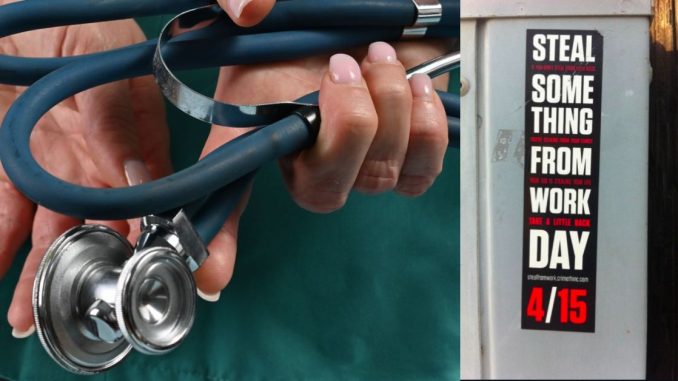
CrimethInc., an extremely far-left decentralized Antifa anarchist collective, has launched its annual “Steal Something from Work Day” campaign with a new article openly encouraging workplace theft, and a special focus on nurses pocketing medical supplies to support “community defense” against federal immigration enforcement.
A controversial anarchist collective known as CrimethInc. is drawing renewed attention after promoting its annual “Steal Something from Work Day,” an April 15 campaign that encourages workers to take items from their workplaces as a form of protest against corporate systems.
The group’s latest post, widely circulated online and amplified by critics, has sparked backlash over its messaging—particularly sections that reference nurses allegedly taking medical supplies and redirecting them for activist-related use.
A Long-Running Campaign Returns
The initiative, which the group has promoted for years, is framed by its supporters as a form of “workplace resistance.” According to the group’s own materials, employees are encouraged to question wage structures and “take back” value they believe is not fairly compensated.
The 2026 edition of the campaign, however, has drawn sharper criticism due to its explicit examples involving healthcare workers and medical supplies.
Focus on Healthcare Workers Raises Concerns
In the latest article, CrimethInc. highlights anecdotal accounts involving nurses and hospital staff, describing the removal of medical items such as gauze, alcohol swabs, and other supplies.
Critics argue the framing crosses a line by normalizing theft under the banner of activism, especially in sensitive environments like hospitals where shortages can have real-world consequences.
Supporters of the group, however, claim the message is intended to spotlight broader concerns about healthcare costs, staffing pressure, and institutional strain—not to encourage illegal activity outright.
Debate Over “Resistance” vs. Workplace Theft
The controversy highlights a deeper divide in how workplace protest is viewed:
- Supporters describe it as symbolic resistance to wage inequality and corporate profit systems
- Critics argue it promotes unlawful behavior that ultimately harms employers, coworkers, and public services
The group has long been associated with decentralized anarchist activism and online publishing campaigns challenging traditional economic structures.
Law Enforcement and Policy Questions
While no specific coordinated incidents have been confirmed in connection with this year’s campaign, the messaging has renewed discussion about the boundaries between political speech and encouragement of illegal conduct.
Legal analysts note that while advocacy itself is generally protected speech, urging or facilitating theft in real-world settings can raise serious legal and ethical questions depending on context and intent.
A Recurring Flashpoint in Activist Messaging
The “Steal Something from Work Day” campaign has been a recurring flashpoint for years, often resurfacing in political debates about labor rights, corporate accountability, and protest tactics.
Its critics say the messaging undermines legitimate labor movements by blurring the line between protest and theft. Supporters counter that it is meant to provoke discussion about economic inequality rather than serve as literal instruction.
🧩 Reading Between the Lines: What This “Workplace Protest” Really Signals
When you strip away the activist language from the CrimethInc messaging around “Steal Something from Work Day,” the real issue isn’t clever slogans—it’s the normalization of breaking workplace rules and treating private property as optional.
In simple terms, the message being pushed is that taking things from your employer can be framed as “resistance” rather than wrongdoing. That’s where many people see a serious red line being crossed.
1. Blurring the Line Between Protest and Theft
There’s a big difference between advocating for better wages and encouraging people to take things from their workplace.
In plain language:
- Asking for fair pay = part of normal labor discussions
- Taking supplies or property = crossing into illegal behavior
The concern is that when these lines get blurred, people start justifying actions that have real consequences.
2. Who Pays the Price
When workplace items—especially in places like hospitals—go missing, it’s not a victimless act.
It can lead to:
- Shortages of essential supplies
- Higher operating costs for employers
- Pressure that eventually affects patients or customers
In everyday terms: someone always ends up paying for what was taken.
3. “System Criticism” vs. Real-World Impact
It’s easy to talk about systems and corporations in abstract terms, but real workplaces are made up of people.
For example:
- Nurses still need proper tools to do their jobs
- Patients rely on those supplies being available
- Co-workers absorb the impact when shortages happen
So even if the message is framed as political protest, the effects are very practical and immediate.
4. Normalizing the Idea of Taking
A bigger concern is cultural: what happens when “taking from work” is presented as acceptable or justified?
Over time, that mindset can:
- Reduce trust in workplaces
- Increase internal losses and security costs
- Create tension between workers and employers
In simple terms: it weakens the basic agreement that work and pay are exchanged fairly and openly.
5. Real Change vs. Symbolic Action
Most people agree that workers deserve fair treatment and reasonable pay.
But the debate is about method:
- One path focuses on negotiation, policy, and organized labor action
- The other promotes direct taking as a form of protest
The concern is that symbolic actions like theft-based messaging don’t lead to lasting improvements—they just create more conflict and instability.
🔗 The Stakes: What This Kind of Messaging Could Lead To
When you take a step back from the CrimethInc “Steal Something from Work Day” messaging, the issue isn’t just about one activist campaign—it’s about what happens if this mindset spreads into everyday workplaces and normal behavior.
In simple terms, the stakes come down to trust, order, and how society functions day to day.
1. Trust in the Workplace Starts to Break Down
Every job is based on a simple agreement: you work, you get paid, and company property is used for work.
If that starts to blur, then:
- Employers become more suspicious
- Security rules get stricter
- Honest workers get treated like potential risks
In plain language: when trust goes down, everyone feels it.
2. Higher Costs for Everyone
When things go missing or rules are ignored, businesses don’t just absorb the loss.
They respond by:
- Raising prices
- Cutting benefits
- Spending more on security instead of wages
That means the cost often gets passed on to regular customers and workers—not just the employer.
3. Small Businesses Take the Hardest Hit
Large companies can usually handle losses or disruptions.
Small businesses can’t.
So when workplace theft or “gray area” behavior becomes normalized:
- Local shops feel it first
- Staffing becomes harder
- Some businesses close entirely
In simple terms: community-level businesses suffer the most.
4. Dangerous Lines Get Blurred
The biggest concern isn’t just the message—it’s what it encourages people to think is acceptable.
Once people start believing that “taking from work” is justified, even symbolically:
- The definition of right and wrong gets blurry
- Rules start to feel optional
- Boundaries weaken over time
In everyday terms: once rules stop meaning much, things become unpredictable.
5. Real Workers Are the Ones Affected
In places like hospitals, warehouses, and retail stores, it’s not abstract.
It affects:
- Nurses trying to treat patients
- Staff trying to keep supplies stocked
- Workers trying to do their jobs properly
So even “symbolic” actions can have real-world consequences for people who had nothing to do with the message.
6. What Kind of Society This Encourages
At a deeper level, this raises a bigger question:
Do people want a system where:
- Rules are respected and disputes are handled through law and negotiation
- Or one where breaking rules is rebranded as acceptable depending on intent
That difference shapes how stable or unstable workplaces—and eventually society—become.
🏁 The Final Word:
At the end of the day, the controversy around CrimethInc’s messaging isn’t really about slogans or political theater—it’s about whether basic rules that keep workplaces functional are respected or slowly eroded. When actions that involve taking or misusing employer property are framed as acceptable, it creates confusion about boundaries that most jobs rely on to operate safely and fairly. The concern is that once those lines blur, trust weakens, costs rise, and ordinary workers end up dealing with the consequences. In simple terms, a stable system depends on clear rules, mutual responsibility, and lawful ways of pushing for change—because without those, both workplaces and communities become harder to manage for everyone involved.
SOURCES: THE GATEWAY PUNDIT – Antifa-Linked Anarchist Group CrimethInc Promotes ‘Steal Something from Work Day,’ Urges Nurses to Steal Medical Supplies ‘to Save Lives’ and Equip Anti-ICE Agitators