Leftist leaders from Europe and Latin America are meeting in Barcelona this week for a series of conferences to coordinate opposition to right-wing political movements.
Published April 18, 2026
A powerful coalition of global leaders has descended on Barcelona, Spain, in what observers describe as a coordinated effort to push back against the policies and influence of U.S. President Donald Trump—raising fresh questions about the direction of global politics and the growing divide between competing visions of governance.
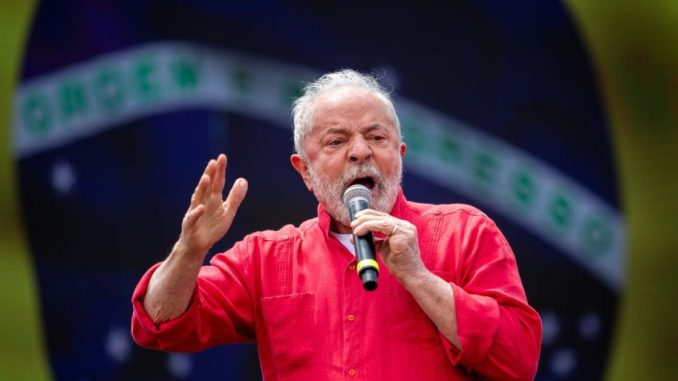
The high-profile gathering, led by Spain’s Prime Minister Pedro Sánchez and Brazil’s President Luiz Inácio Lula da Silva, brings together political figures, activists, and organizations from across Europe, Latin America, and beyond.
A Coordinated Global Effort
The summit—dubbed the “Global Progressive Mobilization”—is not just another diplomatic meeting. It is part of a broader push to unify left-leaning governments and movements under a shared agenda aimed at countering what organizers describe as a rising global shift toward nationalist and right-leaning policies.
Alongside it, the “IV Meeting in Defense of Democracy” has drawn thousands of participants, including heads of state and senior officials from countries like Mexico, South Africa, and Colombia.
Leaders attending the summit have emphasized themes such as:
- Strengthening multilateral institutions
- Combating political “extremism” and misinformation
- Expanding social and environmental policies
- Coordinating international strategies
The event is expected to culminate in a joint declaration outlining shared priorities and future actions.
Trump Policies at the Center of Debate
While some leaders insist the gathering is not explicitly aimed at any one individual, the backdrop tells a different story.
Many discussions have been shaped by reactions to President Trump’s policies—ranging from cuts in international aid to skepticism toward alliances like NATO.
Tensions have also surfaced publicly, with Trump criticizing Spain over defense spending and military cooperation, further deepening the divide between Washington and European leadership.
At the same time, proposals emerging from the summit include:
- New global taxes on wealth
- Increased regulation of social media platforms
- Redirecting military spending toward climate initiatives
Barcelona Becomes Political Ground Zero
The choice of Barcelona is no accident.
Over the course of several days, the city has effectively become the center of a growing international movement aiming to reshape political alliances and influence future elections worldwide. Multiple summits, roundtables, and strategy sessions are being held simultaneously, drawing thousands of participants.
Organizers say the goal is to demonstrate that a unified global front can counter rising political movements they oppose—while critics argue it looks more like an attempt to coordinate ideology across borders.
A New Political Alignment?
What makes this gathering significant is not just who is attending—but what it represents.
This is a rare moment where international leaders are openly working to align strategies, messaging, and policies across countries. From climate policy to economic redistribution, the agenda points toward deeper cooperation and centralized coordination on global issues.
For supporters, it’s about unity and collective action.
For critics, it raises concerns about sovereignty, national decision-making, and whether global agendas could override local priorities.
🧩 Reading Between the Lines: What This Global Meeting Really Means
When you look past the speeches and formal language from leaders like Pedro Sánchez and Luiz Inácio Lula da Silva, there’s a deeper message coming out of this gathering in Barcelona.
In simple terms, this isn’t just about cooperation—it’s about influence, control, and direction.
1. Decisions Moving Beyond Borders
The meeting shows a push toward making big decisions at an international level instead of within individual countries.
In everyday terms:
Policies that affect your job, your business, or your cost of living could increasingly be shaped by global groups—not just your own government.
For many people, that raises a basic concern: if decisions are made farther away, regular citizens have less say in them.
2. A Unified Political Direction
When multiple countries coordinate their messaging and policies, it creates a kind of “group direction.”
That can mean:
- Similar laws across different countries
- Shared economic strategies
- Coordinated political messaging
On the surface, that sounds efficient. But it also reduces differences between countries and limits alternative approaches.
In plain language: fewer choices, more uniform rules.
3. Economic Impact on Everyday People
Ideas often discussed at these gatherings—like wealth taxes, stricter regulations, and higher public spending—don’t stay at the top level.
They eventually reach:
- Small business owners
- Workers
- Consumers
Simple reality: when costs go up for businesses, those costs often get passed down to customers through higher prices or fewer job opportunities.
4. Power Shifting Upward
The more coordination happens at a global level, the more power shifts upward—away from local communities.
Think of it like this:
Instead of decisions being made in your town or country, they’re influenced by international agreements and organizations.
That can make it harder to adjust policies based on local needs.
5. Politics Becoming Global
This meeting also shows that politics is no longer just national—it’s becoming international.
Leaders are not just focusing on their own countries anymore; they’re working together to influence outcomes in other nations too.
In simple terms:
Political strategies are being shared across borders, which can affect elections, policies, and public opinion worldwide.
🔗 The Stakes: What This Means for Everyday People
What’s happening in Barcelona—with leaders like Pedro Sánchez and Luiz Inácio Lula da Silva—isn’t just about politics at the top. It has real-world effects that can reach into daily life.
Here’s what’s on the line, in simple terms:
1. Your Wallet
When governments coordinate on policies like higher taxes, stricter regulations, or increased spending, it often leads to higher costs overall.
In plain language:
- Businesses pay more → they raise prices
- Governments spend more → taxes or debt go up
End result: everyday people feel it at the grocery store, in rent, and in bills.
2. Job Opportunities
If rules become tighter across multiple countries at the same time, businesses have fewer places to operate freely.
That can lead to:
- Slower hiring
- Fewer new businesses
- Companies relocating or downsizing
Simple reality: fewer opportunities to find or grow a job.
3. Small Business Pressure
Big companies might manage global rules—but small businesses often struggle.
Think about a small shop or startup:
If costs and regulations increase, they don’t have the same safety net.
That can mean:
- Closures
- Less competition
- Fewer local services
4. Control Over Decisions
When policies are shaped through international coordination, decisions move further away from local communities.
In everyday terms:
You have less direct influence over rules that affect your life.
It becomes harder to adjust policies based on what people in one country actually need.
5. National Independence
A major issue here is independence.
If countries start aligning too closely on policies, they may lose flexibility to make their own decisions.
Put simply:
- Less freedom to try different approaches
- More pressure to follow a shared global direction
6. Long-Term Economic Direction
The biggest stake is where this leads over time.
If systems lean heavily toward centralized planning and shared global policies, it can result in:
- Slower economic growth
- Less innovation
- Fewer incentives for individuals to take risks
In plain terms: a system that may become harder to succeed in.
🏁 The Final Word:
In the end, what’s unfolding in Barcelona goes beyond one meeting or one political moment—it points to a growing shift in how decisions are made and who makes them. As leaders like Pedro Sánchez and Luiz Inácio Lula da Silva push for closer coordination across countries, the risk is that power moves farther away from everyday people and closer to centralized systems. When that happens, costs can rise, flexibility can shrink, and opportunities can become harder to find. For most people, the priority is simple: a system that keeps decisions close to the ground, supports businesses that create jobs, and allows individuals the freedom to move forward without unnecessary barriers.
SOURCES: THE GATEWAY PUNDIT – Leftist Leaders Gather In Barcelona to Plot Their Anti-Trump Agenda With ‘In Defense of Democracy’ Summit
REUTERS – Global leftist leaders gather in Spain to mobilise against far right
THE TIMES OF ISRAEL – Global leftist leaders gather in Spain to mobilize against far right