The US military on Friday struck Iran in response to an attack on a commercial vessel in the Strait of Hormuz.
Published June 27, 2026
The United States launched military strikes against Iranian targets Thursday after Tehran was blamed for a drone attack on a commercial cargo vessel transiting the strategic Strait of Hormuz, escalating tensions in the Middle East and raising new questions about the durability of a recently brokered ceasefire.
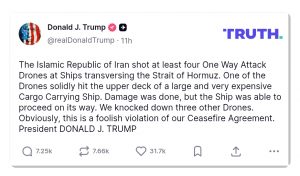
President Donald Trump condemned the attack as a “foolish violation” of the ceasefire agreement reached last week, warning that the United States would respond decisively to any threats against international shipping.
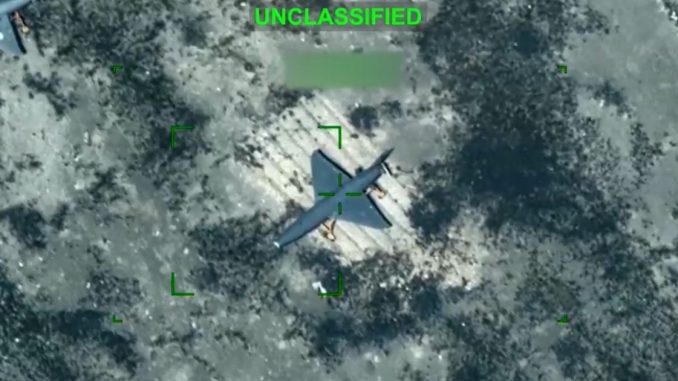
According to U.S. officials, American forces targeted Iranian missile and drone storage facilities, along with coastal radar installations believed to have supported the attack on the Singapore-flagged cargo ship M/V Ever Lovely. U.S. Central Command said the strikes were intended to protect freedom of navigation and deter future aggression against commercial vessels operating in one of the world’s most vital maritime corridors.
The cargo vessel was struck Wednesday while transiting near the coast of Oman. U.S. officials said multiple one-way attack drones were launched at the ship, with American forces intercepting several of them. One drone reportedly impacted the vessel, causing damage but no casualties among the crew.
Vice President JD Vance issued a stern warning following the retaliatory strikes.
“Violence will be met with violence,” Vance said, adding that the United States remains committed to enforcing the terms of the ceasefire while ensuring safe passage for international commerce.
Iran has denied violating the ceasefire and insisted that vessels operating in the Strait of Hormuz must coordinate with Tehran. Iranian officials argued that the ship was traveling through a route not approved by Iranian authorities and maintained that Iran, alongside Oman, has the right to oversee maritime traffic through the strategic waterway.
The Islamic Revolutionary Guard Corps (IRGC) vowed to respond to any additional U.S. military action, fueling concerns that the latest exchange could unravel efforts to de-escalate the conflict.
WATCH:
Per CENTCOM:
U.S. Central Command (CENTCOM) forces conducted strikes against Iran, June 26, as a powerful response to yesterday’s attack on a commercial ship that was transiting the Strait of Hormuz.
U.S. aircraft struck Iranian missile and drone storage locations and coastal radar sites after Iran hit M/V Ever Lovely on June 25 with a one-way attack drone. The Singapore-flagged cargo ship was exiting the Strait of Hormuz along the Omani coast at the time of Iran’s attack.
The unwarranted aggression against commercial shipping by Iranian forces clearly violated the ceasefire. Furthermore, Iran’s dangerous behavior undermined freedom of navigation as commerce increasingly flows through the vital international trade corridor.
CENTCOM forces continue to provide safe passage coordination and support to commercial vessels transiting the strait. The U.S. military remains present and vigilant to ensure all aspects of the agreement with Iran are adhered to, obeyed, and in full force and effect.
The Strait of Hormuz remains one of the world’s most critical energy chokepoints, with roughly one-fifth of global oil shipments passing through the narrow passage. Shipping traffic through the region has reportedly slowed significantly in recent days as shipping companies and insurers reassess security risks.
Secretary of State Marco Rubio reiterated Washington’s position that international waters must remain open and accessible.
“The free flow of commerce through the Strait of Hormuz is a vital global interest,” Rubio said.
Despite the latest hostilities, U.S. officials insist the ceasefire remains in effect. However, analysts warn that continued attacks on commercial shipping could trigger a broader regional confrontation involving U.S. allies and Gulf states.
The latest confrontation underscores the fragile nature of the current truce and highlights the ongoing struggle for control and influence in one of the world’s most strategically important waterways.
🧩 Reading Between the Lines: U.S.-Iran Tensions Threaten Fragile Regional Stability
1. More Than a Single Retaliatory Strike
A Dangerous Cycle of Escalation
The latest U.S. strikes against Iranian targets are unlikely to be viewed as an isolated military action. Instead, they represent another chapter in the long-running shadow conflict between Washington and Tehran, where direct and indirect confrontations have repeatedly pushed the region toward wider war.
While both sides have signaled a desire to avoid full-scale conflict, retaliatory actions increase the risk of miscalculation and unintended escalation.
2. The Strait of Hormuz Remains a Strategic Flashpoint
Control of a Vital Global Shipping Corridor
Iran’s insistence that it has the right to oversee maritime traffic in and around the Strait of Hormuz highlights the strategic importance of one of the world’s most critical waterways.
Roughly one-fifth of global oil shipments transit the narrow passage, making any disruption a matter of international concern. Even limited attacks on commercial shipping can trigger higher energy prices, increased insurance costs, and disruptions to global supply chains.
3. Commercial Shipping Is Increasingly Caught in the Crossfire
Civilian Maritime Traffic Faces Growing Risks
The drone strike on a commercial vessel underscores the vulnerability of civilian shipping operating in contested waters.
Shipping companies may be forced to reroute vessels, delay cargo movements, or pay significantly higher security and insurance costs. Prolonged instability could affect international trade flows and place additional pressure on global markets.
4. A Test for the Ceasefire and Diplomatic Efforts
Can Regional De-Escalation Survive?
The incident presents an early challenge for the recently announced ceasefire and broader diplomatic efforts aimed at reducing tensions in the Middle East.
If retaliatory strikes continue, regional mediators could face increasing difficulty preserving diplomatic channels. The durability of any truce will likely depend on both sides exercising restraint despite domestic and military pressure to respond forcefully.
5. Drone Warfare Is Reshaping Regional Conflict
Low-Cost Weapons, High Strategic Impact
The attack highlights the growing role of drones in modern warfare across the Middle East. Unmanned systems allow state and non-state actors to project force at relatively low cost while complicating attribution and response decisions.
As drone technology becomes more widespread, military planners may need to adapt defenses around critical shipping lanes, energy infrastructure, and military installations.
6. The Broader Economic Stakes Are Global
Markets Closely Watching the Gulf
Any sustained instability in the Gulf region could have repercussions far beyond the Middle East. Energy markets remain highly sensitive to disruptions in the Strait of Hormuz, and prolonged tensions could contribute to increased oil price volatility.
Governments and investors worldwide will likely continue monitoring developments closely, given the potential impact on inflation, trade, and global economic growth.
🔗 The Stakes: Why This Story Matters
The latest U.S. strikes against Iranian targets following a drone attack on a commercial vessel in the Strait of Hormuz highlight the fragile security environment in the Middle East. The incident underscores the persistent risk that localized confrontations between Washington and Tehran could escalate into a broader regional crisis with global economic and security implications.
Global Shipping Under Threat
The Strait of Hormuz Remains a Critical Chokepoint
The attack on a commercial vessel serves as a reminder of the vulnerability of one of the world’s most important maritime corridors. Any disruption in the Strait of Hormuz could affect international shipping, energy supplies, and global trade, given that a significant portion of the world’s oil exports transit through the narrow waterway.
Regional Stability at Risk
Ceasefire and Diplomatic Efforts Face New Pressure
The latest exchange threatens to undermine recent efforts aimed at reducing tensions in the region. Continued retaliatory actions could complicate diplomatic initiatives and increase the likelihood of additional military confrontations involving regional powers and U.S. allies.
Economic Consequences Could Spread
Energy Markets Closely Monitoring Developments
Markets remain highly sensitive to instability in the Gulf. Even limited attacks on commercial shipping can drive up insurance premiums, increase shipping costs, and contribute to volatility in global oil prices, potentially affecting consumers and businesses worldwide.
Commercial Vessels Caught in the Crossfire
Civilian Maritime Traffic Faces Elevated Risks
The incident highlights the growing dangers faced by commercial shipping operating in contested waters. Shipping companies may be forced to alter routes, implement additional security measures, or temporarily suspend operations in high-risk areas, increasing costs across global supply chains.
Military Escalation Remains a Concern
Retaliatory Actions Could Trigger a Wider Conflict
Although both Washington and Tehran have indicated they do not seek a full-scale war, repeated military exchanges raise the risk of miscalculation. A single incident or misunderstanding could rapidly escalate tensions and draw additional regional actors into the conflict.
The Bigger Picture
A Test for Middle East Stability and International Diplomacy
Ultimately, the latest confrontation illustrates how quickly incidents in the Gulf can evolve into broader geopolitical crises. The challenge facing policymakers is balancing deterrence and military response while preserving diplomatic channels and ensuring the security of international commerce.
🏁 The Final Word:
The latest confrontation between the United States and Iran underscores the enduring volatility of the Middle East and the strategic importance of the Strait of Hormuz. While both sides may seek to avoid a broader conflict, continued military exchanges and attacks on commercial shipping increase the risk of miscalculation and further escalation. As diplomatic efforts face renewed pressure, the ability of regional and international actors to prevent a wider crisis may prove critical to maintaining stability, protecting global trade, and preserving fragile peace efforts in the region.
SOURCES: THE GATEWAY PUNDIT – BREAKING VIDEO: US Strikes Iran in Response to Attack on Commercial Vessel in Strait of Hormuz
AL JAZEERA – US strikes Iran in response to drone strike on commercial ship
REUTERS – US strikes Iran in response to attack on cargo ship in Strait of Hormuz