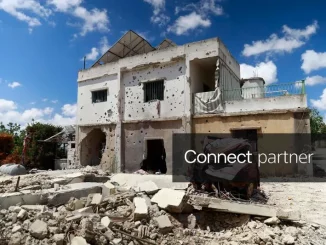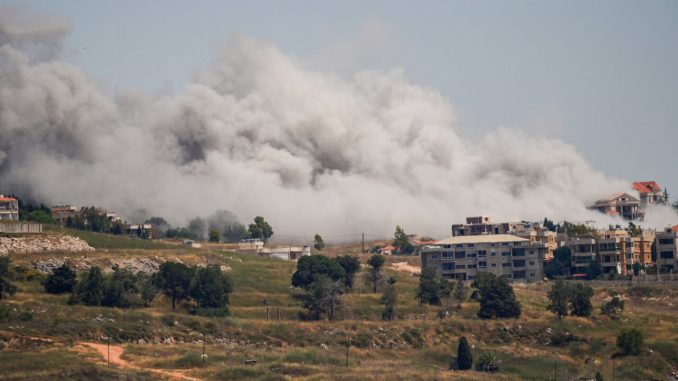
Smoke billows from southern Lebanon, following Israeli strikes, as seen from Nabatieh, Lebanon, June 3, 2026. REUTERS/Stringer — Stringer
Published July 5, 2026
BEIRUT / JERUSALEM — Israel has signaled that its military operations in southern Lebanon will continue for the foreseeable future, despite a U.S.-backed ceasefire framework intended to reduce hostilities with Hezbollah, according to statements from Israeli Defense Minister Israel Katz and regional reporting.
The announcement underscores the fragile nature of the recent diplomatic agreement between Israel and Lebanon, which was designed to halt cross-border violence and create a phased security arrangement in southern Lebanon. While the deal includes provisions for de-escalation and potential withdrawal conditions, Israeli officials have indicated that operational activity against Hezbollah-linked targets will not immediately stop.
Defense Minister Katz stated that Israeli forces would maintain their presence in designated security zones in southern Lebanon and continue efforts to dismantle what Israel describes as militant infrastructure. He added that residents displaced during the conflict would not be permitted to return to certain areas until security conditions improve, signaling a prolonged military posture in the region.
The ceasefire framework, brokered with U.S. involvement, outlines a conditional roadmap for reducing tensions, including provisions tied to Hezbollah activity and security enforcement in southern Lebanese territory. However, the agreement has faced immediate political and operational challenges, particularly over interpretation of withdrawal timelines and enforcement mechanisms.
Hezbollah and its political allies in Lebanon have strongly criticized the arrangement, arguing that it favors Israeli strategic interests and does not guarantee a full cessation of hostilities. Lebanese officials have also expressed concern that continued Israeli military operations could undermine the fragile agreement and prevent long-term stabilization in the south.
Despite the ceasefire announcement, reports of continued strikes and military activity in border areas have persisted. Analysts say this reflects a broader pattern in the conflict, where diplomatic frameworks are often reached but remain difficult to implement on the ground due to ongoing security concerns and unresolved military objectives.
The United States, which played a central role in mediating the agreement, has called for restraint from both sides while emphasizing the importance of maintaining the ceasefire mechanism. However, Washington has not announced any enforcement measures beyond diplomatic engagement.
Security experts note that Israel’s decision to continue operations highlights its longstanding position that Hezbollah remains an active and evolving threat along its northern border. At the same time, Lebanon’s fragile political environment and Hezbollah’s influence within it complicate efforts to fully implement any disarmament or territorial control arrangements.
The situation leaves the ceasefire framework in a precarious position, with both sides maintaining competing interpretations of the agreement’s terms. While diplomatic channels remain open, the continuation of military activity suggests that full de-escalation remains uncertain.
As tensions persist, the future of the Israel-Lebanon ceasefire will likely depend on whether both parties can align on enforcement mechanisms and security guarantees in the months ahead.
 Public / Political Reactions:
🇮🇱 Israeli Government
Israeli officials have defended the continuation of military operations in southern Lebanon, arguing that the presence of Hezbollah infrastructure near Israel’s northern border continues to pose an active security threat.
- Prime Minister Benjamin Netanyahu reiterated that Israel will not allow Hezbollah to rebuild its military capabilities in southern Lebanon.
- Defense officials say operations are focused on dismantling tunnels, weapons storage sites, and launch infrastructure used by Hezbollah.
- Israeli authorities insist that actions in southern Lebanon are consistent with self-defense commitments under the current security framework.
➡️ Position: Israel maintains that continued operations are necessary to prevent renewed cross-border attacks and ensure long-term security for northern communities.
🇱🇧 Lebanese Government
Lebanese officials have expressed concern that continued Israeli military activity risks undermining the fragile ceasefire arrangement and complicating national stability efforts.
- Beirut has repeatedly called for full respect of the U.S.-brokered ceasefire framework and withdrawal commitments.
- Lebanese leaders warn that ongoing strikes could weaken state authority in the south and increase internal political pressure.
- The government continues to rely on diplomatic engagement with international mediators to de-escalate tensions.
➡️ Position: Lebanon views continued Israeli operations as a violation of the spirit of the ceasefire and a threat to sovereignty.
⚔️ Hezbollah Response
Hezbollah and allied political figures have strongly rejected Israel’s justification for continued operations.
- The group has condemned Israeli strikes as violations of Lebanese sovereignty and the ceasefire framework.
- Hezbollah leadership has warned that continued Israeli presence in southern Lebanon will be treated as occupation.
- The group maintains that resistance operations remain legitimate under its interpretation of the conflict.
➡️ Position: Hezbollah considers continued Israeli operations unacceptable and maintains a posture of resistance.
🌍 United States and International Mediators
The United States, which helped broker the ceasefire framework, continues to call for restraint from all sides while avoiding direct enforcement commitments.
- U.S. officials have emphasized the importance of implementing the phased security arrangement and avoiding escalation.
- Diplomats stress that disagreements over withdrawal timelines and enforcement mechanisms remain unresolved.
- International mediators continue to push for dialogue to stabilize the situation.
➡️ Position: Washington supports de-escalation but relies on diplomatic pressure rather than enforcement.
👥 Public Response
Public opinion in Lebanon and Israel remains deeply divided, shaped by ongoing insecurity and competing narratives about the conflict.
- Residents in southern Lebanon report continued uncertainty over safety and displacement concerns.
- In Israel, communities near the northern border continue to support military action aimed at preventing future Hezbollah attacks.
- Social media reactions across the region reflect polarization, with strong support and opposition depending on political alignment.
➡️ Position: Public sentiment remains split, reflecting ongoing fear, displacement, and political polarization.
🏛️ Broader Political Impact
Analysts say the continuation of Israeli operations despite a ceasefire framework highlights the fragility of diplomatic agreements in the region.
- The dispute over implementation reflects broader disagreements about Hezbollah’s disarmament and Israel’s security demands.
- The situation risks delaying long-term stabilization efforts in southern Lebanon.
- Regional actors remain concerned that renewed escalation could draw in wider participants if diplomacy fails.
➡️ Position: The ceasefire framework remains unstable, with unresolved security and political disputes shaping the conflict’s trajectory.
 Resulting Effects:
Israel’s decision to continue military operations in southern Lebanon despite a ceasefire framework has produced immediate security, political, and diplomatic consequences. The situation highlights the fragility of the agreement and the difficulty of separating battlefield realities from negotiated settlements in an ongoing conflict.
1. Continued Military Pressure in Southern Lebanon
Israeli operations have sustained pressure on Hezbollah positions along the border region.
⚔️ Strikes and patrol operations continue in areas Israel identifies as militant strongholds.
🏗️ Infrastructure linked to tunnels, weapons storage, and surveillance has been repeatedly targeted.
🚧 Movement in parts of southern Lebanon remains restricted due to ongoing security activity.
➡️ Result: Ceasefire framework → ongoing localized military operations on the ground.
2. Strain on the Ceasefire Framework
The continuation of operations has complicated implementation of the U.S.-brokered arrangement.
📜 Disputes persist over interpretation of withdrawal timelines and security conditions.
🤝 Mediators face challenges in aligning Israeli and Lebanese expectations.
⚠️ Confidence in the durability of the agreement remains limited.
➡️ Result: Diplomatic framework → weakened trust and implementation uncertainty.
3. Heightened Political Pressure on Lebanon
The Lebanese government faces increased domestic and international pressure as operations continue.
🏛️ Authorities are under pressure to assert sovereignty in the south.
📢 Political groups in Lebanon criticize the ceasefire as ineffective or incomplete.
🏚️ Local communities remain affected by displacement and instability.
➡️ Result: Continued Israeli activity → intensified internal political strain in Lebanon.
4. Security Concerns Along Israel’s Northern Border
Israel continues to justify operations as necessary for border security.
🛡️ Israeli officials argue Hezbollah remains a persistent threat.
🚨 Northern Israeli communities remain on alert for possible escalation.
🎯 Preventive operations are prioritized to deter renewed cross-border attacks.
➡️ Result: Ongoing threat perception → sustained Israeli military engagement.
5. Diplomatic Tensions Among Mediators
International mediators, including the United States, face increased pressure to stabilize the situation.
🌍 Calls for restraint continue without enforcement mechanisms.
📊 Differences between political agreements and military realities remain unresolved.
🕊️ Diplomatic efforts focus on preventing escalation rather than full resolution.
➡️ Result: Weak enforcement capacity → limited diplomatic control over ground realities.
6. Persistent Regional Instability
The broader region remains on alert as tensions between Israel and Hezbollah continue.
🌐 Neighboring states monitor developments closely for signs of escalation.
⚠️ The risk of wider conflict remains tied to miscalculation or breakdown in deterrence.
📉 Long-term stability in southern Lebanon remains uncertain.
➡️ Result: Partial ceasefire → continued risk of renewed regional escalation.
 Future Outlook:
Future Outlook:
The continuation of Israeli military operations in southern Lebanon despite a ceasefire framework suggests that the situation is likely to remain unstable in the near term. The trajectory of the conflict will depend heavily on whether diplomatic mechanisms can be strengthened and whether both sides are willing to adjust their security and political expectations.
1. Ongoing Low-Intensity Military Operations
Israeli forces are expected to maintain limited but persistent operations in southern Lebanon.
⚔️ Targeted strikes and patrols may continue against suspected Hezbollah infrastructure.
🎯 Operations will likely focus on preventing reconstruction of militant capabilities.
🚧 Security zones near the border may remain under strict control.
➡️ Outlook: Partial ceasefire → continued localized military activity.
2. Uncertain Implementation of the Ceasefire Framework
The U.S.-brokered arrangement remains fragile and inconsistently applied.
📜 Disagreements over withdrawal conditions are unlikely to be resolved quickly.
🤝 Both sides continue to interpret the agreement differently.
⚠️ The absence of enforcement mechanisms limits compliance.
➡️ Outlook: Diplomatic agreement → slow or incomplete implementation.
3. Continued Diplomatic Pressure from International Mediators
External actors are expected to remain engaged in efforts to stabilize the situation.
🌍 The United States and regional partners will likely push for de-escalation.
🕊️ Mediation efforts will focus on preventing renewed full-scale conflict.
📊 Progress will depend on political willingness in both Beirut and Jerusalem.
➡️ Outlook: Ongoing diplomacy → gradual, uncertain stabilization efforts.
4. Hezbollah and Israeli Security Calculations Will Shape Developments
Both sides are expected to maintain cautious but firm security postures.
🎯 Israel will continue prioritizing deterrence and border security.
⚔️ Hezbollah is likely to maintain a posture of resistance while avoiding full escalation.
🚨 The risk of miscalculation remains a key concern.
➡️ Outlook: Deterrence-based balance → continued tension without full-scale war.
5. Lebanon’s Domestic Challenges May Intensify
Lebanon’s internal political and economic pressures could increase if instability persists.
🏛️ The government may face growing demands to assert sovereignty in the south.
📢 Public frustration could rise over displacement and insecurity.
💰 Economic recovery efforts remain vulnerable to regional instability.
➡️ Outlook: Continued unrest → added strain on Lebanon’s political and economic stability.
6. Risk of Future Escalation Remains Present
While full-scale war is not the immediate trajectory, escalation risks persist.
⚠️ Any major incident along the border could trigger rapid retaliation.
🌐 Regional dynamics could amplify localized clashes.
📉 The absence of a fully enforced agreement leaves uncertainty unresolved.
➡️ Outlook: Managed tension → persistent risk of sudden escalation.
 Bottom Line:
Israel’s decision to continue military operations in southern Lebanon despite a ceasefire framework highlights the fragility of the current arrangement and the unresolved security tensions along the northern border. While the agreement was intended to reduce hostilities and create conditions for stabilization, competing interpretations of its terms have limited its effectiveness on the ground.
For Israel, the continued operations are framed as a necessary security measure to prevent Hezbollah from rebuilding its military infrastructure and threatening border communities. For Lebanon, however, the ongoing strikes raise concerns about sovereignty, political stability, and the long-term viability of the ceasefire.
With diplomatic mechanisms struggling to bridge these differences, the situation remains highly unstable. The coming period will likely determine whether the ceasefire evolves into a lasting security arrangement—or remains a temporary pause in a continuing conflict.
SOURCES: AL MONITOR – Israel to continue operations in Lebanon for now despite ceasefire, defence minister says
MODERN DIPLOMACY – Israel Says Military Operations in Lebanon Will Continue Despite Ceasefire
ROYA NEWS – ‘Israeli’ forces will remain in Lebanon: Chief of Staff