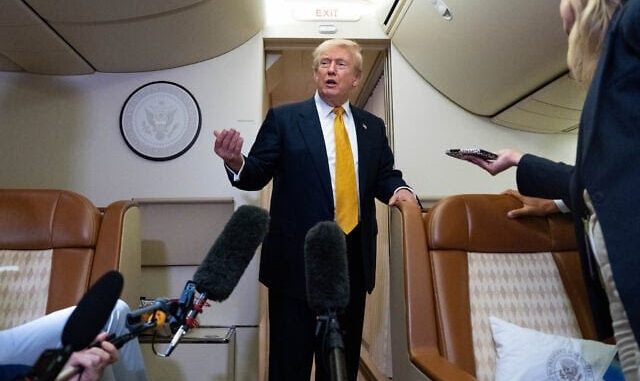
US President Donald Trump speaks with reporters in flight on Air Force One after landing at US Air Force Base at RAF Mildenhall, in Suffolk, Eastern England, July 8, 2026. (AP/Alex Brandon)
Published July 12, 2026
WASHINGTON — A reported Iranian assassination plot targeting President Donald Trump has triggered renewed concerns over national security, escalating tensions between Washington and Tehran and raising questions about the extent of Iran’s efforts to retaliate against the American leader.
According to reports, Israeli intelligence officials recently shared information with the United States warning of an alleged Iranian plan to assassinate Trump. The warning reportedly came as tensions between the two countries remained elevated following years of threats from Tehran connected to the 2020 U.S. strike that killed Iranian Revolutionary Guard commander Qassem Soleimani.
The alleged plot has intensified debate over Iran’s intentions, the security risks facing U.S. leaders, and whether Tehran is attempting to use covert operations as a form of retaliation against American officials.
Reported Iranian Plot Raises Alarm in Washington
The reported intelligence warning suggests that Iran may have been exploring options to target Trump, according to officials cited in media reports.
The claims emerged after Trump attended a NATO summit in Turkey, a trip that placed the president in a region closely connected to Iran’s geopolitical sphere.
Security concerns surrounding the president’s movements reportedly increased, with questions raised about protective measures taken during and after the overseas visit.
U.S. officials have not publicly released details of the alleged plan, including who may have been involved or whether any operational steps were taken.
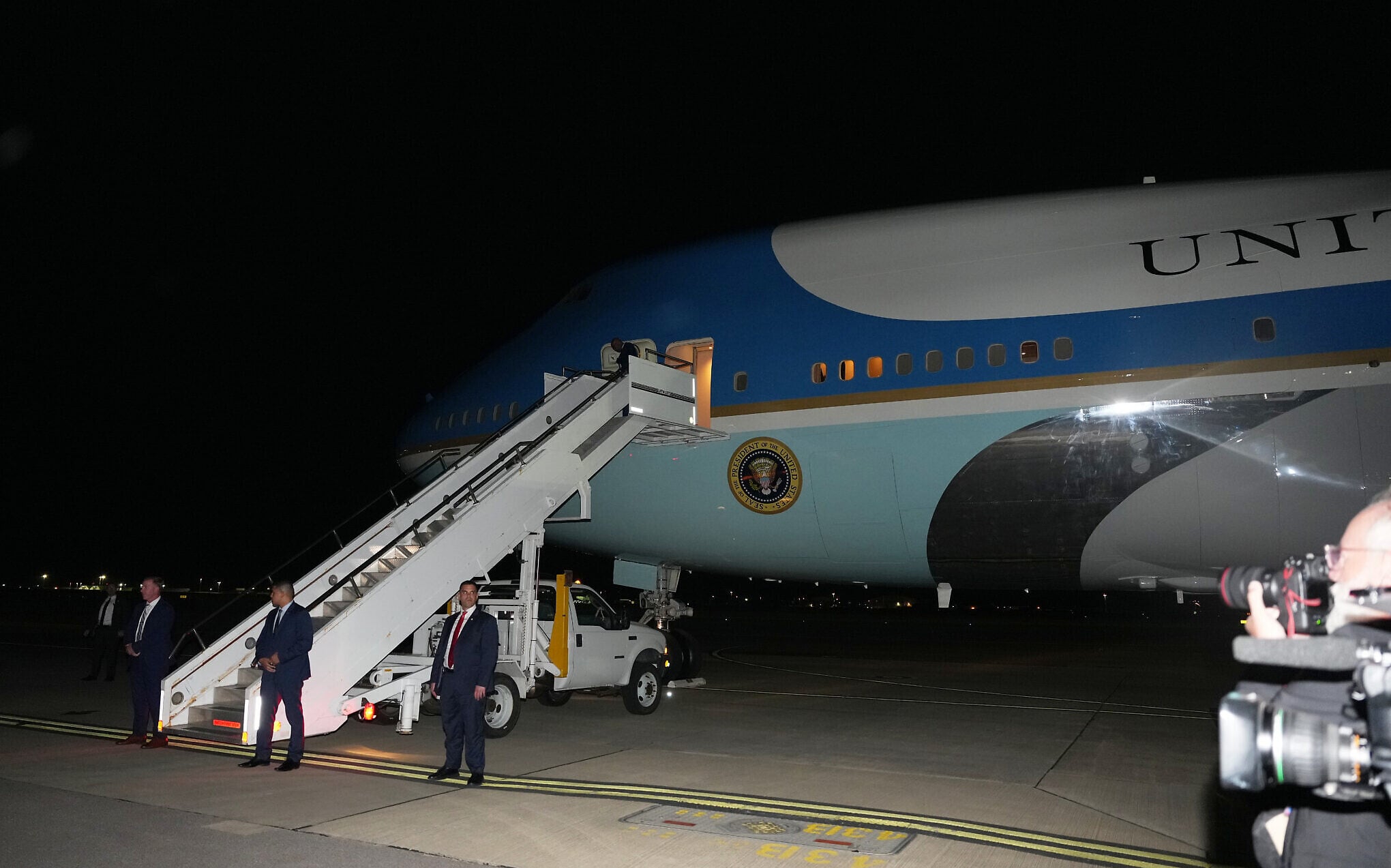
Air Force One sits on the tarmac as US President Donald Trump switches planes at US Air Force Base, RAF Mildenhall in Suffolk, Eastern England, on his way back to Washington from the NATO summit in Ankara, Turkey, July 8, 2026. (AP/Alex Brandon)
Iran’s Longstanding Threats Against Trump
The allegations come after years of Iranian threats against Trump and other U.S. officials linked to the 2020 killing of Qassem Soleimani, the commander of Iran’s Islamic Revolutionary Guard Corps’ Quds Force.
Iranian leaders have repeatedly vowed retaliation over Soleimani’s death, making Trump a symbolic target because he authorized the operation during his first administration.
Recent anti-American rhetoric from Iranian officials and supporters has increased concerns among U.S. security officials that Iran could attempt retaliation through direct or proxy actions.
Trump Warns Iran of Severe Consequences
Trump responded to reports of assassination threats by warning that any successful attempt against him would trigger a major U.S. response.
The president said the United States would respond with overwhelming force if Iran attempted to assassinate him, emphasizing that threats against the American president would be treated as a national security emergency.
The statements reflect growing tensions between Washington and Tehran as both sides remain locked in a broader confrontation involving military, intelligence, and diplomatic disputes.
Trump Warns Iran: ‘1,000 Missiles’ Ready if Tehran Attempts Assassination
Israel-U.S. Intelligence Cooperation Comes Into Focus
The reported warning has highlighted the close intelligence relationship between Israel and the United States.
Israeli officials reportedly provided information to American authorities about the alleged Iranian threat, demonstrating continued security cooperation despite occasional disagreements between Washington and Jerusalem over regional strategy.
The development also underscores Israel’s concerns about Iran’s willingness to pursue unconventional methods against its adversaries.
Iran’s Possible Strategy and Regional Impact
Security analysts say any attempt to target a U.S. president would represent a dramatic escalation and could trigger a major international crisis.
Iran has historically relied on proxy groups, intelligence networks, and asymmetric tactics to pressure opponents while attempting to avoid direct conventional conflict.
A confirmed assassination attempt against Trump could lead to military retaliation, increased sanctions, and a wider confrontation throughout the Middle East.
⚠️ Implications:
The reported Iranian assassination plot targeting President Donald Trump, along with Israel’s warning to U.S. officials, highlights the continuing confrontation between Washington and Tehran. The allegations carry major security, diplomatic, and geopolitical implications as tensions remain high across the Middle East.
🛡️ 1. Presidential Security Becomes a National Security Priority
- Reports of a possible Iranian plot reinforce concerns that Trump remains a high-value target for foreign adversaries.
- U.S. security agencies may increase protective measures, intelligence monitoring, and threat assessments surrounding the president and senior officials.
- The allegations demonstrate that threats against American leaders can extend beyond traditional military conflicts into covert operations.
🔍 Implication: Any credible attempt to target a U.S. president would be treated as a major national security threat and could trigger an aggressive response from Washington.
⚔️ 2. U.S.-Iran Tensions Could Escalate Further
- Iran has repeatedly threatened retaliation over the 2020 killing of Qassem Soleimani, making Trump a symbolic figure in Tehran’s grievances against Washington.
- A confirmed Iranian role in an assassination attempt could dramatically worsen relations between the two countries.
- The United States could face pressure to respond through diplomatic, economic, cyber, or military measures.
⚠️ Implication: Evidence of direct Iranian involvement could push the U.S. and Iran closer toward a broader confrontation.
🇮🇱 3. Israel-U.S. Intelligence Cooperation Takes Center Stage
- Israel’s reported warning highlights the importance of intelligence-sharing between the two allies.
- The incident reinforces Israel’s role as a key U.S. security partner in monitoring Iranian activities.
- Cooperation between Washington and Jerusalem could deepen as both countries focus on countering Iranian threats.
🌐 Implication: The alleged plot may strengthen security coordination between Israel and the United States while increasing pressure on Iran.
🌍 4. Regional Instability Risks Increase
- The allegations come amid wider tensions involving Iran, Israel, and U.S. interests throughout the Middle East.
- Any attempt to target an American president could trigger a major geopolitical crisis beyond the immediate dispute.
- Iran’s network of regional allies and proxy groups could become a focus of increased U.S. intelligence attention.
🚨 Implication: A major escalation between Washington and Tehran could create new security risks across the Middle East.
🏛️ 5. Iran Faces Greater International Pressure
- Accusations of targeting a sitting U.S. president could further damage Iran’s international standing.
- The allegations may increase calls for stronger sanctions and diplomatic isolation.
- Tehran could face additional scrutiny over its intelligence operations and activities abroad.
📢 Implication: If evidence is publicly confirmed, Iran could face significant political and economic consequences.
🔥 6. The Risk of Miscalculation Remains High
- Covert operations and retaliation threats create a dangerous environment where a single incident could rapidly escalate.
- Both sides may increase intelligence operations and military readiness as tensions continue.
- A failed or attempted attack could produce pressure for immediate action before all facts are known.
🧭 Implication: The situation carries the risk that an intelligence dispute or attempted attack could become a larger international crisis.
💬 Overall Takeaway:
Overall Takeaway:
The reported Iranian assassination plot targeting President Donald Trump has intensified concerns over the continuing security confrontation between Washington and Tehran. While details of the alleged plan remain limited and have not been independently verified publicly, the warning highlights the persistent threat environment surrounding senior U.S. leaders and the long-running tensions connected to Iran’s threats of retaliation.
The allegations also underscore the importance of intelligence cooperation between the United States and Israel, as both countries continue monitoring Iran’s activities across the region. A confirmed attempt by Iran to target an American president would represent a significant escalation, potentially triggering severe diplomatic, economic, and military consequences.
Beyond the immediate security concerns, the situation reflects a broader struggle between the United States and Iran involving regional influence, proxy conflicts, and competing strategic interests. As investigations continue, the response from Washington and its allies could shape the next phase of U.S.-Iran relations and the wider stability of the Middle East.