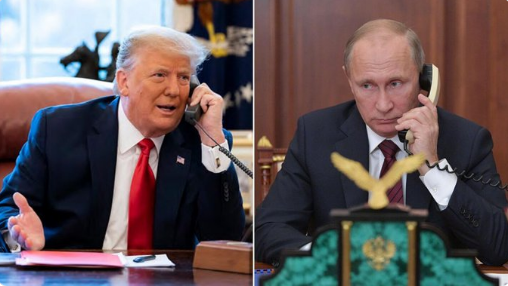
Trump and Putin spoke for over an hour.
Published March 10, 2025
In a renewed diplomatic engagement, Russian President Vladimir Putin and U.S. President Donald Trump spoke by phone on March 9, 2026 — their first direct conversation of the year — focusing on the ongoing war involving Iran and the prolonged conflict in Ukraine. The roughly one‑hour call was described by Kremlin officials as “businesslike, frank and constructive.”
Why the Call Took Place
According to Russian presidential aide Yuri Ushakov, the conversation was initiated by the United States at the request of the White House and centered on rising global tensions. Ushakov said Trump wanted to address the rapidly evolving situation around Iran’s conflict with U.S. and Israeli forces, as well as efforts to negotiate an end to Russia’s war with Ukraine.
🚨🇷🇺🇺🇸 Putin, Trump discuss Iran and Ukraine in phone call
The conversation, initiated by Trump, focused on the Iran conflict and negotiations on Ukraine.
Putin outlined ideas for a political and diplomatic settlement around Iran and gave positive assessments of US mediation… pic.twitter.com/inH95ML3vL
— Sputnik (@SputnikInt) March 9, 2026
Talks on the Iran War
Putin reportedly outlined several proposals aimed at achieving a “quick political and diplomatic settlement” to the Iran conflict, highlighting Russia’s communications with Gulf leaders and Iran’s own leadership as part of the effort to reduce hostilities.
While Russia is a long‑standing ally of Tehran, Putin’s proposals emphasized diplomatic avenues rather than further military escalation. The Kremlin aide said the exchange was a meaningful dialogue on how to limit wider destabilization in the Middle East.
Discussion on the Ukraine Conflict
On Ukraine, Trump reiterated his desire for a swift ceasefire and a long‑term political settlement, according to the Kremlin. Putin, in turn, briefed Trump on what he described as “successful progress” by Russian forces on the battlefield — a characterization that Western and Ukrainian officials dispute.
Both leaders had previously refrained from direct discussions in recent months, making this conversation a noteworthy effort to maintain diplomatic communication. Trump reportedly praised ongoing U.S. mediation efforts and expressed optimism about ending the long‑running conflict if negotiations can regain momentum.
“He wants to be helpful [with Iran]. I told him you can be more helpful by ending the war in Ukraine.”

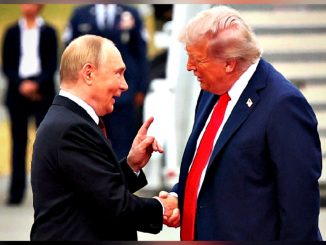
President Trump walks with President Putin in Anchorage, Alaska, on Friday, where they met to discuss ending the War in Ukraine. – via White House Video
Energy and Broader Strategic Issues
Beyond the wars themselves, global energy markets also featured in the discussion. Tensions around the Strait of Hormuz and disruptions caused by conflict in the Middle East have pushed crude prices above $100 per barrel, raising concerns about supply and economic strain worldwide. News reports suggest the call also touched on ways to stabilize energy supplies, potentially through coordinated diplomatic measures.
 Resulting Effects: Trump-Putin Call Potential Global Effects
The March 9, 2026 phone call between Donald Trump and Vladimir Putin is generating discussion about its long-term impact on international relations, the Middle East, and U.S. foreign policy.
1. Diplomatic Channels Reopened
By directly engaging with Russia, the U.S. is reestablishing lines of communication that had been limited over the past few years. This could prevent miscalculations or unintended escalation, especially in conflict zones like Iran and Ukraine. Even a single phone call signals to global players that the U.S. is actively pursuing influence through dialogue rather than relying solely on sanctions or military posturing.
2. Potential De-escalation in the Middle East
Putin reportedly offered proposals for a diplomatic resolution in Iran, which, if pursued, might reduce direct U.S.-Israel confrontations and limit regional instability. This could lower the likelihood of a full-scale war, keeping energy routes open and potentially easing crude oil price spikes that affect everyday markets.
3. Signals to Global Markets
Markets are sensitive to conflict and uncertainty. The fact that two world leaders are coordinating, even indirectly, on conflict management may stabilize investor confidence in energy and defense sectors. Lower volatility could translate to more predictable economic conditions in the U.S. and allied nations.
4. Domestic Political Implications
Engaging with Russia and Iran diplomatically positions the U.S. leadership as a pragmatic problem-solver, showing voters a willingness to act on global crises rather than waiting for situations to spiral. This approach may bolster the perception of strength without escalating troop commitments abroad.
5. Long-Term Geopolitical Effects
While immediate agreements are unlikely, keeping open channels with Russia may create opportunities for broader conflict resolution, including Ukraine. If diplomacy progresses, it could limit prolonged U.S. involvement, reduce military expenditures, and help redirect resources to domestic priorities.
 Future Outlook on Global Conflicts
The March 9, 2026 phone call between Donald Trump and Vladimir Putin signals a potential shift in the way the U.S. manages international crises, particularly in Iran and Ukraine. While immediate solutions are uncertain, several future outcomes are emerging.
1. Strengthened Diplomatic Engagement
Direct communication with Russia opens the door for predictable, managed diplomacy. If followed consistently, this could reduce the risk of sudden escalations in both the Middle East and Eastern Europe, allowing the U.S. to influence outcomes without relying solely on sanctions or military action.
2. De-escalation of Regional Conflicts
Putin reportedly outlined diplomatic proposals regarding Iran. If the U.S. leverages these channels, future months may see a gradual reduction in hostilities, fewer civilian casualties, and a potential stabilization of key energy supply routes, which would benefit global markets.
3. Strategic Leverage in Ukraine
While the conflict in Ukraine remains unresolved, sustained dialogue could strengthen U.S. bargaining power in eventual ceasefire negotiations. Future peace talks may allow the U.S. to shape settlement terms that preserve stability while minimizing long-term troop commitments.
4. Economic and Market Stability
Ongoing global conflicts create volatility in energy prices and international trade. Regular high-level communication between world leaders may temper market reactions and create an environment more favorable to investment, energy security, and economic growth.
5. Long-Term U.S. Global Positioning
By actively engaging adversaries diplomatically, the U.S. signals to allies and rivals alike that it can protect national interests strategically. In the years ahead, this approach could enhance U.S. credibility on the world stage and allow for more flexible responses to emerging crises without overextending military resources.
 Bottom Line: Strategic Communication Shapes the Path Forward
The March 9, 2026 phone call between Donald Trump and Vladimir Putin underscores the value of direct engagement in international crises. By reopening diplomatic channels, the U.S. positions itself to manage global conflicts proactively, reducing the risk of escalation while maintaining influence over critical outcomes in Iran and Ukraine.
Looking ahead, sustained dialogue offers opportunities for diplomatic solutions, potential stabilization of energy markets, and strengthened U.S. strategic positioning. While challenges remain, this approach demonstrates that pragmatic negotiation and active communication can complement defense readiness, helping to safeguard both global and domestic interests.
Ultimately, the call reflects a forward-looking approach that prioritizes influence, stability, and measured action, signaling to allies and adversaries alike that the U.S. is capable of shaping international outcomes without unnecessary overextension.