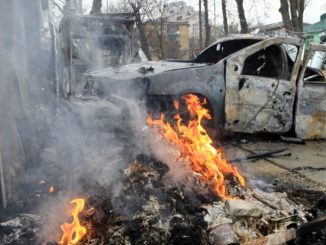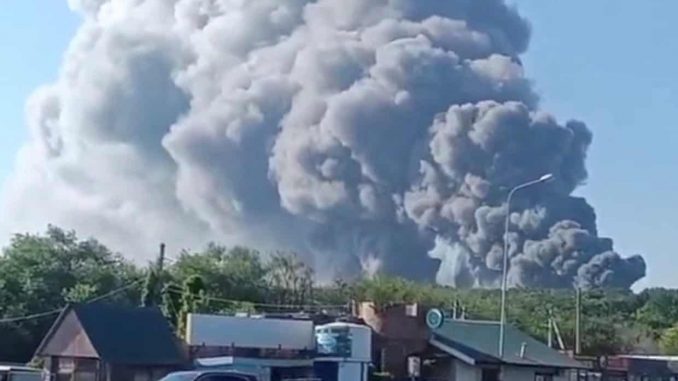
Smoke rises after a Ukrainian drone attack on a Wildberries warehouse in Novosemeykino, in Russia’s south-western Samara region, on Sunday. Photograph: Social media/Reuters
Reported by:

Cherry Meigh Timbol
News Content Editor
Published August 3 , 2026
Ukrainian drone strikes have targeted facilities belonging to Wildberries, one of Russia’s largest online retailers, as Kyiv continues a long-range campaign against Russian infrastructure and supply networks. The attacks have intensified the exchange of aerial strikes between Russia and Ukraine, with both sides reporting casualties and damage.
The strikes on Wildberries warehouses are part of a broader Ukrainian effort to hit strategic locations inside Russia, while Moscow continues launching attacks against Ukrainian cities and infrastructure. The latest escalation highlights the expanding role of drone warfare in the ongoing conflict.
Wildberries Warehouses Targeted in Multiple Strike
Ukrainian drones struck Wildberries logistics facilities in Russia, causing fires and forcing evacuations at some locations.
The attacks included:
- A strike on a Wildberries warehouse in Russia’s Samara region, where authorities reported damage and emergency response efforts.
- A later attack on a warehouse in the Vladimir region that caused a major fire requiring hundreds of firefighters and emergency personnel.
- Previous strikes against Wildberries facilities that disrupted operations and damaged logistics infrastructure.
Wildberries, often compared to Amazon because of its size in the Russian market, said operations were redirected after some facilities were damaged.
Ukraine Expands Long-Range Drone Campaign
The strikes reflect Ukraine’s increasing use of drones to target locations far beyond the front lines.
Ukrainian attacks have focused on:
- Logistics centers and infrastructure connected to Russia’s economy.
- Energy facilities and military-related targets.
- Strategic locations intended to pressure Russia’s war capabilities.
Kyiv has argued that long-range strikes are aimed at weakening Russia’s ability to sustain its military operations, while Russian officials have condemned the attacks as deliberate assaults on civilian infrastructure.
Russia Responds With Continued Attacks on Ukraine
The drone strikes occurred as Russia continued aerial attacks against Ukrainian territory.
Russian strikes reportedly caused deaths and destruction in several Ukrainian regions, including damage to civilian infrastructure.
Ukrainian officials continue calling for stronger air defense systems to protect cities from Russian missile and drone attacks.
Economic and Strategic Impact
The attacks on Wildberries facilities highlight how the war is increasingly affecting commercial and economic infrastructure.
Potential consequences include:
- Disruptions to supply chains and warehouse operations.
- Increased pressure on Russia’s domestic logistics networks.
- Growing concerns among businesses operating in areas vulnerable to drone attacks.
The expansion of strikes beyond traditional military targets demonstrates how both sides are using drones as a major tool in modern warfare. 10
👥 Public / Political Reactions:
🇺🇦 Ukraine
Ukrainian officials defended the continued use of long-range drone operations against targets inside Russia as part of the country’s wartime strategy.
- Kyiv said strikes against Russian facilities are aimed at weakening military capabilities, logistics networks, and Russia’s ability to sustain its war effort.
- Ukrainian officials have emphasized that drone operations are a response to ongoing Russian attacks on Ukrainian cities and infrastructure.
- Authorities continue calling for stronger international support, including additional air defense systems.
➡️ Position: Ukraine views long-range drone strikes as a necessary measure to pressure Russia and defend against continued attacks.
🇷🇺 Russia
Russian authorities condemned the drone attacks on Wildberries facilities and described them as attacks on civilian and economic infrastructure.
- Regional governors reported deaths, injuries, fires, and damage following the strikes.
- Russian officials accused Ukraine of expanding attacks deeper into Russian territory.
- Emergency services were deployed to contain fires and assess damage at affected locations.
➡️ Position: Russia portrays the strikes as acts of aggression and argues that civilian infrastructure is being targeted.
🏢 Wildberries and Business Community
The attacks raised concerns among Russian businesses operating in regions vulnerable to drone warfare.
- Wildberries reported damage to warehouse facilities and disruptions to operations.
- Emergency teams worked to contain fires and secure affected locations.
- The strikes highlighted growing risks for commercial infrastructure during the conflict.
➡️ Position: Businesses are increasingly concerned about the impact of the war on logistics, supply chains, and economic stability.
🌍 International Community
The latest escalation has drawn attention to the expanding use of drones in the Russia-Ukraine war.
- Foreign governments continue monitoring attacks on infrastructure and civilian areas.
- International observers warn that increased long-range strikes could further intensify the conflict.
- Calls remain focused on reducing civilian harm and pursuing diplomatic solutions.
➡️ Position: The international community remains concerned that continued escalation could widen the impact of the war.
👥 Public Response
Communities affected by the strikes expressed concern over safety and the growing reach of drone attacks.
- Residents near affected areas reported fires, explosions, and emergency responses.
- Ukrainian civilians continue facing concerns over Russian missile and drone attacks.
- Russian communities affected by strikes have raised concerns about security and protection.
➡️ Position: Public reaction reflects growing anxiety as drone warfare increasingly affects areas far from the traditional front lines.
🏛️ Broader Impact
The attacks demonstrate how the Russia-Ukraine war is increasingly becoming a conflict involving economic and civilian infrastructure.
- Drone warfare continues reshaping modern battlefield strategies.
- Commercial facilities and logistics networks are becoming increasingly vulnerable.
- The strikes may influence future military planning and security policies on both sides.
➡️ Position: The conflict’s expansion beyond the battlefield highlights the growing strategic importance of drones and the challenges of protecting infrastructure during prolonged warfare.
⚠️ Resulting Effects:
The Ukrainian drone strikes against Wildberries facilities in Russia have intensified concerns over the expanding reach of the Russia-Ukraine war. The attacks demonstrate how drone warfare is increasingly affecting economic infrastructure, civilian areas, and strategic supply networks beyond the traditional battlefield.
1. Damage to Commercial and Logistics Infrastructure
The strikes disrupted operations at one of Russia’s largest online retail companies.
🏢 Wildberries warehouses suffered damage and fires following drone attacks.
🚚 Logistics operations were affected as facilities were forced to respond to emergency situations.
📦 Supply chains and delivery networks faced potential delays due to damaged infrastructure.
➡️ Result: Drone strikes on commercial facilities → disruption of logistics and economic activity.
2. Increased Use of Long-Range Drone Warfare
The attacks highlight the growing importance of drones in the conflict.
🚁 Ukraine continues expanding its ability to strike targets far beyond the front lines.
🎯 Drones are being used to target infrastructure connected to Russia’s war capabilities.
⚠️ Russia faces increasing challenges protecting distant regions from aerial attacks.
➡️ Result: Expanded drone operations → wider battlefield reach and increased security challenges.
3. Rising Security Concerns Inside Russia
The strikes have increased concerns among Russian regions previously considered safer from direct attacks.
🚨 Emergency services were deployed to affected areas following fires and damage.
🛡️ Authorities may strengthen air defense measures around important facilities.
👥 Communities are facing increased anxiety over the possibility of further attacks.
➡️ Result: Drone attacks inside Russia → heightened security measures and public concern.
4. Economic Impact and Business Uncertainty
The attacks demonstrate how the war is affecting Russia’s commercial sector.
💰 Businesses face increased risks from operating in vulnerable regions.
📉 Damage to warehouses could create financial losses and operational disruptions.
🚛 Companies may need to invest more in security and contingency planning.
➡️ Result: Conflict-related risks → greater pressure on businesses and supply networks.
5. Escalation of Russia-Ukraine Tensions
The strikes are likely to further intensify the conflict between Kyiv and Moscow.
🇺🇦 Ukraine views long-range attacks as pressure against Russia’s war infrastructure.
🇷🇺 Russia may respond with additional military operations against Ukrainian targets.
⚠️ Continued exchanges raise concerns over further escalation.
➡️ Result: Reciprocal attacks → deeper military confrontation between both sides.
6. Impact on Civilian Safety
The continued exchange of drone strikes increases risks for civilians.
🏠 Communities near affected areas face possible damage and disruption.
🚑 Emergency responders remain under pressure managing attacks and their aftermath.
🌍 Civilian infrastructure remains vulnerable as both sides expand their strike capabilities.
➡️ Result: Expanding drone warfare → increased risks for civilian populations.
7. Future Military Strategy
The attacks reinforce the growing role of unmanned systems in modern warfare.
🤖 Both Russia and Ukraine are expected to continue investing in drone technology.
🛰️ Surveillance, defense systems, and electronic warfare capabilities may become more important.
⚔️ Drone operations are likely to remain a key element of future battlefield strategies.
➡️ Result: Drone-centered warfare → continued transformation of military tactics and defense planning.
🔮 Future Outlook:
The Russia-Ukraine war is expected to continue evolving as both sides expand their use of drones and long-range attacks. The strikes on Wildberries facilities demonstrate that the conflict is increasingly affecting economic infrastructure and areas beyond the traditional battlefield. Future developments will depend on military decisions, international support, and efforts toward possible negotiations.
1. Drone Warfare Will Continue Expanding
Both Russia and Ukraine are expected to increase their reliance on unmanned systems.
🚁 Ukraine may continue using long-range drones to target logistics hubs, infrastructure, and facilities linked to Russia’s war effort.
🛡️ Russia is expected to strengthen air defenses and expand counter-drone measures.
🤖 Advances in drone technology may further transform battlefield strategies.
➡️ Outlook: Growing drone capabilities → continued expansion of aerial warfare beyond front lines.
2. Russia May Increase Defensive Measures
The attacks could push Moscow to improve protection of critical facilities.
🏢 More security measures may be introduced around warehouses, industrial sites, and transport networks.
🚨 Regional authorities may increase emergency preparedness for possible future strikes.
🛰️ Russia may invest further in surveillance and air defense systems.
➡️ Outlook: Repeated drone attacks → stronger protection of strategic and economic infrastructure.
3. Ukraine Will Continue Long-Range Operations
Kyiv is expected to maintain pressure through strikes inside Russian territory.
🎯 Ukrainian forces may continue targeting locations considered important to Russia’s military and economic capacity.
🤝 Continued foreign military support could influence Ukraine’s ability to conduct such operations.
⚠️ Long-range attacks may remain a major part of Ukraine’s strategy.
➡️ Outlook: Strategic drone campaigns → continued pressure on Russian resources and infrastructure.
4. Risk of Further Escalation Remains
The expansion of attacks could increase tensions between the two countries.
🔥 Additional strikes and retaliatory actions may intensify the conflict.
⚠️ Civilian areas and commercial facilities could face greater risks.
🌍 International concerns may grow over the possibility of wider instability.
➡️ Outlook: Escalating attacks → continued uncertainty and security concerns.
5. Economic Disruptions May Increase
Businesses and supply chains are expected to face ongoing challenges.
📦 Companies operating in affected regions may experience delays and security concerns.
💰 Increased spending on protection and emergency planning may become necessary.
📉 Continued attacks could affect investor confidence and regional economic activity.
➡️ Outlook: War-related disruptions → prolonged pressure on commercial operations.
6. International Pressure for Diplomacy Will Continue
Global actors are likely to continue calling for a reduction in hostilities.
🕊️ Governments may push for negotiations to limit further escalation.
🌍 Allies of both sides will continue influencing the direction of the conflict.
📋 Diplomatic efforts may remain difficult amid ongoing battlefield operations.
➡️ Outlook: Diplomatic efforts → possible negotiations, but major obstacles remain.
7. Drone Technology Will Shape Future Conflicts
The Russia-Ukraine war is expected to remain a major example of modern drone warfare.
⚙️ Both sides are likely to expand production and improve drone capabilities.
🛰️ Electronic warfare and counter-drone systems will become increasingly important.
🌐 Lessons from the conflict may influence military planning worldwide.
➡️ Outlook: Modern warfare evolution → drones will remain a defining feature of future conflicts.
🧩 Bottom Line:
The Ukrainian drone strikes against Wildberries facilities in Russia highlight the growing expansion of the Russia-Ukraine war beyond traditional battlefields. The attacks demonstrate how both sides are increasingly relying on drones to target infrastructure, disrupt operations, and gain strategic advantages in the conflict.
🚁 The drone campaign shows how unmanned weapons have become a central tool of modern warfare, allowing Ukraine to strike deeper into Russian territory while forcing Moscow to strengthen defenses around key facilities.
🏢 Commercial and economic infrastructure is becoming increasingly vulnerable as logistics centers, warehouses, and supply networks are affected by the wider conflict.
🇺🇦 Ukraine views long-range drone operations as a way to pressure Russia’s war capabilities and respond to continued Russian attacks, while 🇷🇺 Russia continues condemning the strikes and warning of further escalation.
🌍 International observers remain concerned that expanding attacks on infrastructure could increase civilian risks, economic disruption, and tensions between the two countries.
➡️ Bottom Line: The Wildberries drone strikes reflect a new phase of the Russia-Ukraine war where economic networks and distant infrastructure are becoming part of the battlefield. As both sides continue expanding their drone capabilities, the conflict is expected to remain defined by long-range attacks, escalating security concerns, and ongoing uncertainty over future diplomatic efforts.
SOURCES: THE UK INDEPENDENT – Ukraine-Russia war latest: Kyiv hits Wildberries again as Zelensky launches hundreds of drones in mass attack
REUTERS – Ukrainian drones kill eight in Russia and strike Wildberries warehouse, governors say