Reported by:

Cherry Meigh Timbol
News Content Editor
Published August 3 , 2026
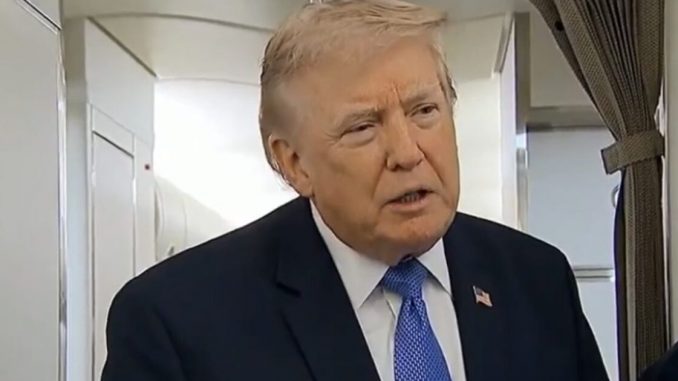
WASHINGTON, D.C. — U.S. President Donald Trump said talks with Iran are set to begin Monday, prompting him to delay what he described as a potential large-scale military strike, as tensions between Washington and Tehran remain dangerously high.
Trump revealed that U.S. forces had been prepared to launch a “massive” attack on Iranian targets but ultimately held off in anticipation of diplomatic engagement. The decision marks a temporary shift away from immediate military action, even as both sides continue to exchange warnings.
The announcement follows days of escalating rhetoric and military posturing that raised fears of a broader conflict in the Middle East. Trump maintained that the United States remains fully prepared to act if negotiations fail, signaling that the pause in military action may only be temporary.
Planned Strike Put on Hold
According to Trump, the planned strike would have been significant in scale, suggesting it could have dealt a major blow to Iran’s military capabilities. However, he opted to delay the operation to allow space for negotiations, describing the move as an opportunity to test whether diplomacy could ease tensions.
Despite the announcement, uncertainty surrounds the talks. Iranian officials have denied that direct negotiations with the United States are currently scheduled, instead pointing to ongoing regional discussions focused on maritime security and stability.
The conflicting statements highlight the fragile and often unpredictable nature of U.S.-Iran relations, where diplomatic openings are frequently overshadowed by mutual distrust.
Tensions Remain High
The situation comes amid continued concerns over Iran’s nuclear program and its activities across the region. The United States has repeatedly warned that it will not allow Iran to develop nuclear weapons, while Tehran insists its program is for peaceful purposes.
Military analysts note that the threat of a strike, even if delayed, continues to place pressure on Iran and its allies. At the same time, the possibility of talks offers a narrow path toward de-escalation if both sides are willing to engage.
Regional powers have also expressed concern that any direct conflict between the United States and Iran could destabilize the Middle East and disrupt global energy supplies.
Markets React to De-escalation Signals
Global markets responded quickly to Trump’s announcement, with oil prices falling as fears of an imminent military strike eased. Investors interpreted the planned talks as a sign that immediate conflict might be avoided, at least in the short term.
However, analysts caution that the situation remains highly volatile. Any breakdown in talks or renewed escalation could quickly reverse market sentiment and push energy prices higher.
Diplomacy or Brinkmanship?
Trump’s decision reflects a broader pattern of combining aggressive military posturing with sudden diplomatic outreach. While the delay in the strike has reduced immediate fears of conflict, it has also left allies and adversaries uncertain about the next steps.
For now, attention turns to the expected talks, which could determine whether the current standoff moves toward negotiation or returns to the brink of military confrontation.
As tensions persist, the balance between diplomacy and force remains uncertain — and the risk of escalation continues to loom over the region.
👥 Public / Political Reactions:
Trump’s decision to delay a potential strike on Iran and pursue talks has drawn mixed reactions from political leaders, analysts, and international stakeholders. While some welcomed the shift toward diplomacy, others warned that the situation remains volatile and could quickly escalate if negotiations fail.
🇺🇸 Trump Administration
- President Donald Trump said the United States was prepared to carry out a “massive” military strike on Iran but chose to delay the operation to allow talks to proceed.
- Trump emphasized that military options remain on the table, signaling that the pause does not mean a permanent de-escalation.
- U.S. officials framed the move as a strategic decision aimed at testing whether diplomacy can reduce tensions.
🇮🇷 Iranian Government
- Iranian officials denied that direct talks with the United States are currently scheduled, contradicting Trump’s announcement.
- Tehran reiterated that its nuclear program is peaceful, while warning against any potential military action.
- Iranian leaders maintained that pressure and threats from Washington would not force concessions.
🇪🇺 European Allies
- European leaders cautiously welcomed efforts to open diplomatic channels, stressing the importance of avoiding another major conflict in the Middle East.
- Several governments called for restraint from both sides and encouraged renewed negotiations over Iran’s nuclear program.
- European officials continue to support diplomatic frameworks aimed at preventing nuclear escalation.
🌍 Middle East & Regional Powers
- Gulf states and regional actors expressed concern that any U.S.-Iran conflict could destabilize the region and disrupt global energy supplies.
- Some regional governments have reportedly encouraged de-escalation and dialogue to avoid a broader war.
- Ongoing tensions in key waterways, including the Strait of Hormuz, remain a major point of concern.
🌐 International Community
- Analysts and international observers described the situation as a mix of brinkmanship and diplomacy, with uncertainty surrounding the outcome of potential talks.
- Global markets reacted positively to the delay in military action, reflecting hopes that conflict might be avoided.
- Many governments and organizations have called for sustained diplomatic engagement to prevent escalation and ensure regional stability.
⚠️ Resulting Effects:
Trump’s decision to delay a potential military strike on Iran while pursuing talks has created immediate geopolitical, economic, and security ripple effects. While the move has temporarily reduced fears of imminent conflict, underlying tensions remain unresolved and continue to shape global reactions.
🚨 1. Immediate Risk of Military Conflict Reduced
- The postponement of a planned U.S. strike has eased short-term fears of a sudden escalation into open conflict.
- Diplomatic channels, whether direct or indirect, have been given space to develop.
💥 Effect: The likelihood of an immediate military confrontation has decreased, offering a brief window for de-escalation.
🛡️ 2. U.S. Military Pressure on Iran Remains
- Despite the delay, President Trump emphasized that a “massive” strike remains an option if talks fail.
- U.S. forces in the region remain on alert, maintaining strategic pressure on Tehran.
⚠️ Effect: Tensions remain high, with the threat of military action continuing to influence Iran’s decisions.
🇮🇷 3. Diplomatic Uncertainty Has Increased
- Iran’s denial of direct talks has created confusion over the scope and legitimacy of the proposed negotiations.
- Mixed messaging from both sides reflects ongoing mistrust and fragile communication channels.
🏛️ Effect: The success of any diplomatic effort remains uncertain, increasing the risk of miscalculation.
🌍 4. Regional Stability Remains Fragile
- Middle Eastern countries, particularly those near key shipping routes, continue to monitor the situation closely.
- Concerns over disruptions in the Strait of Hormuz persist amid ongoing tensions.
🤝 Effect: The region remains vulnerable to sudden escalation, with neighboring states preparing for potential fallout.
📈 5. Global Markets Reacted Positively — For Now
- Oil prices declined following the announcement, reflecting reduced fears of supply disruptions.
- Investors responded cautiously, recognizing that the situation could quickly change.
🌐 Effect: Market stability may be temporary, as any breakdown in talks could reverse gains and trigger volatility.
⚖️ 6. Debate Over U.S. Foreign Policy Intensified
- Trump’s decision has sparked discussion over the balance between military force and diplomacy in dealing with Iran.
- Critics and supporters alike are assessing whether the move represents strategic restraint or continued brinkmanship.
🧭 Effect: U.S. policy toward Iran is likely to remain a key issue in both domestic politics and international relations.
🔮 Future Outlook:
Trump’s decision to delay a potential strike on Iran and pursue talks highlights a fragile moment between escalation and diplomacy. While the immediate threat of conflict has eased, deep divisions, conflicting signals, and ongoing military readiness suggest that tensions could quickly resurface in the coming weeks.
🇺🇸 1. The U.S. May Balance Diplomacy with Military Pressure
- The Trump administration has signaled openness to talks while keeping military options firmly on the table.
- U.S. forces in the region are expected to remain on high alert as a deterrent.
🚀 Outlook: Washington is likely to continue a dual-track strategy — pursuing negotiations while maintaining the threat of force.
🇮🇷 2. Iran Is Expected to Maintain a Cautious but Defiant موقف
- Tehran has denied direct talks while continuing to emphasize its sovereignty and defensive posture.
- Iranian leadership is unlikely to make quick concessions under pressure.
⚠️ Outlook: Iran may engage indirectly or conditionally, but tensions with the U.S. are expected to persist.
🌍 3. Regional Tensions Will Remain a Key Risk Factor
- Middle Eastern countries will continue closely monitoring developments, particularly around key shipping routes like the Strait of Hormuz.
- Any incident in the region could quickly escalate the situation.
🏛️ Outlook: The region is likely to remain on edge, with stability dependent on both diplomatic progress and restraint.
🕊️ 4. Diplomatic Talks Face Uncertainty
- Conflicting statements from Washington and Tehran raise doubts about whether meaningful negotiations will take place.
- Even if talks begin, deep mistrust may hinder progress.
🤝 Outlook: Diplomacy may proceed in fits and starts, with no guarantee of a lasting breakthrough.
📈 5. Global Markets Will Track Every Development
- Oil prices and global markets are expected to remain sensitive to any signs of escalation or progress in talks.
- Investors will continue reacting to both political statements and on-the-ground developments.
🌐 Outlook: Market volatility is likely to persist as uncertainty over U.S.-Iran relations continues.
⚖️ 6. The Risk of Sudden Escalation Remains
- With military forces positioned and rhetoric still strong, any miscalculation could trigger rapid escalation.
- Previous patterns of brinkmanship suggest tensions could quickly return.
🧭 Outlook: The situation may remain unstable, with the possibility of either renewed conflict or cautious de-escalation depending on how talks unfold.
🧩 Bottom Line:
Trump’s decision to delay a potential strike on Iran while signaling the start of talks reflects a high-stakes moment in U.S.-Iran relations, where diplomacy and military pressure are unfolding at the same time. Although the immediate threat of a large-scale attack has been temporarily reduced, both sides continue to project strength, leaving the situation fragile and unpredictable.
🏛️ The United States and its allies maintain that combining diplomatic outreach with a credible military threat is necessary to deter Iran from advancing its nuclear ambitions and to safeguard regional stability. They argue that keeping pressure on Tehran strengthens Washington’s negotiating position while reassuring partners in the Middle East.
⚖️ Iran, however, has rejected claims of direct negotiations and continues to push back against U.S. pressure, insisting its nuclear program is peaceful. Iranian leaders warn that any military action would trigger serious consequences, reinforcing a posture of resistance while leaving limited room for indirect engagement.
📄 International leaders are expected to closely watch developments and adjust their policies accordingly. Decisions involving sanctions, security cooperation, and diplomatic initiatives will play a key role in determining whether tensions move toward de-escalation or renewed confrontation.
🌍 The implications extend far beyond the immediate standoff. The situation continues to affect global oil markets, regional security, and international alliances, with even small developments capable of triggering broader geopolitical and economic impacts.
➡️ Bottom Line: The delay of a U.S. strike on Iran provides a narrow opening for diplomacy, but the underlying tensions remain unresolved. Whether this moment leads to meaningful negotiations or a return to escalation will depend on how both Washington and Tehran navigate the coming days — with the risk of conflict still very much present.
SOURCES: BUSINESS WORLD ONLINE – Trump says Iran talks to begin Monday, delays military strike
KING5 – US and Iran to resume talks
GULF COAST NEWS – Trump says negotiations with Iran will resume today after canceling plans for large-scale military attack
The GATEWAY PUNDIT – Nukes? Trump Says Iran Attack Would Have Been the “Biggest Attack Since World War II” – Iran “Knew the Extent” and Agreed to Negotiate (VIDEO)