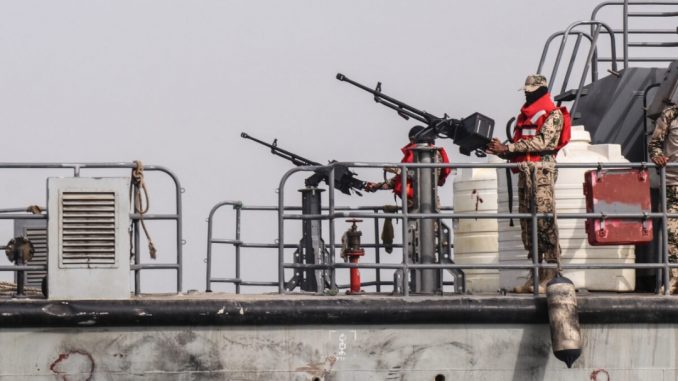
Sailors from the navy of Yemen’s Aden-based internationally recognised government stand at machine-gun positions aboard a vessel patrolling a shipping lane off Hanish Island in the Red Sea on July 27, 2026. Agence France-Presse
Reported by:

Cherry Meigh Timbol
News Content Editor
Published August 6 , 2026
Yemen’s Houthi movement has claimed responsibility for attacks targeting Saudi oil tankers in the Red Sea and the Gulf of Aden, escalating tensions in a region already critical to global energy security. The incidents have raised fresh concerns over the safety of vital maritime routes used for transporting oil and other goods worldwide.
According to statements released by the Houthis, the attacks were carried out as part of their ongoing campaign against Saudi-linked assets, though details on the extent of damage and casualties remain limited. Saudi authorities have yet to provide a full assessment, but initial reports suggest that maritime security forces have been placed on heightened alert following the incidents.
The Red Sea and Gulf of Aden are key transit corridors for international shipping, and any disruption in these waters could have immediate consequences for global trade and oil supply chains.
Escalation in Strategic Waterways
The reported attacks mark another significant escalation in the ongoing conflict involving the Houthis and Saudi Arabia.
Key developments include:
- Houthi forces claiming direct responsibility for targeting Saudi oil tankers.
- Incidents occurring in both the Red Sea and the Gulf of Aden, major global shipping routes.
- Increased naval and security activity in response to potential threats.
- Concerns among international stakeholders over the safety of commercial vessels.
The situation highlights the vulnerability of maritime routes in the region, where tensions have periodically spilled over into attacks on shipping.
Regional Tensions Intensify
The latest developments underscore the fragile security environment in the Middle East, particularly in areas critical to energy transportation.
Analysts say the attacks could be part of a broader strategy by the Houthis to exert pressure on Saudi Arabia and its allies. The move may also signal a willingness to expand operations beyond traditional conflict zones, increasing the risk of wider regional instability.
Officials monitoring the situation warn that continued incidents could provoke stronger military responses, potentially leading to further escalation.
Ongoing Risks to Maritime Security
Despite existing security measures, the attacks reveal persistent challenges in protecting international shipping lanes.
Key concerns include:
- The ability of armed groups to target vessels in high-traffic corridors.
- Limited deterrence despite increased naval patrols.
- Potential disruptions to oil shipments and supply chains.
- Rising insurance and operational costs for shipping companies.
Maritime authorities are expected to review and possibly strengthen security protocols in response to the threat.
Global Economic and Security Impact
The implications of the attacks extend far beyond the immediate region, affecting global markets and trade stability.
The Red Sea and Gulf of Aden serve as critical links between Asia, Europe, and the Middle East. Any sustained disruption could lead to increased oil prices, shipping delays, and broader economic uncertainty.
While the full impact of the incidents is still unfolding, experts warn that continued instability in these waterways could have lasting consequences for international energy security and global commerce.
👥 Public / Political Reactions:
🇺🇸 United States Officials
U.S. officials have voiced concern over the reported attacks on Saudi oil tankers, warning of growing threats to international shipping routes.
- Officials condemned the targeting of commercial vessels in vital maritime corridors.
- The U.S. Navy signaled continued monitoring and readiness to ensure freedom of navigation.
- Washington emphasized the importance of protecting global energy supply chains from disruption.
➡️ Position: The U.S. strongly opposes attacks on maritime assets and supports increased security measures to safeguard international waters.
🇸🇦 Saudi Arabian Government
Saudi authorities have taken a firm stance following the attacks, highlighting risks to both national and global energy security.
- Officials condemned the Houthi claims and labeled the attacks as acts of aggression.
- Saudi forces increased maritime surveillance and defensive operations.
- The government stressed the need for international cooperation to secure shipping lanes.
➡️ Position: Saudi Arabia views the attacks as a serious escalation and calls for stronger global action to deter further threats.
🇾🇪 Houthi Movement
The Houthis have framed the attacks as part of their broader military campaign against Saudi-linked targets.
- The group claimed responsibility, presenting the strikes as strategic operations.
- Houthi leaders suggested the attacks were a response to ongoing conflict dynamics.
- They signaled willingness to continue such operations under current conditions.
➡️ Position: The Houthis justify the attacks as legitimate actions within the conflict, indicating no immediate de-escalation.
🏛️ Regional Political Leaders
Leaders across the Middle East have reacted with concern over rising instability in critical waterways.
- Some governments warned of the خطر (danger) posed to regional trade and security.
- Others called for restraint and diplomatic solutions to prevent escalation.
- Regional blocs discussed potential coordinated responses to maritime threats.
➡️ Position: Regional leaders seek stability but remain cautious, balancing security concerns with diplomatic considerations.
🌍 International Community
Global stakeholders have expressed alarm over the implications of the attacks on international trade.
- Shipping nations stressed the importance of keeping the Red Sea and Gulf of Aden secure.
- European and Asian partners called for de-escalation and protection of commercial vessels.
- International organizations reiterated the principle of freedom of navigation.
➡️ Position: The international community broadly condemns the attacks and supports efforts to maintain safe global shipping routes.
🛢️ Energy and Economic Analysts
Market experts have pointed to the potential ripple effects on global oil prices and trade.
- Analysts warn that repeated attacks could disrupt supply chains and raise insurance costs.
- Some believe short-term price volatility may increase if threats persist.
- Others highlight the long-term risks of instability in key energy transit corridors.
➡️ Position: Analysts see the attacks as a serious risk to energy markets, urging stronger security and long-term stability measures.
👥 Public Response
Public reactions have reflected anxiety over rising geopolitical tensions and economic impacts.
- Many expressed concern about potential increases in fuel prices.
- Others focused on the broader implications for global security.
- Online discussions highlight fears of escalation in the region.
➡️ Position: Public sentiment is cautious and concerned, with growing awareness of the global consequences.
🏛️ Broader Political Impact
The attacks are expected to influence ongoing geopolitical dynamics in the Middle East.
- The incident may intensify international involvement in regional security.
- Governments could increase military presence in key maritime corridors.
- The situation may shape future diplomatic and defense strategies.
➡️ Position: The attacks underscore the intersection of conflict, energy security, and global trade, with significant long-term implications.
⚠️ Resulting Effects:
The reported Houthi attacks on Saudi oil tankers in the Red Sea and Gulf of Aden have triggered immediate geopolitical, economic, and security repercussions. Even without full clarity on the scale of damage, the incidents are already influencing global markets, regional stability, and maritime security strategies.
1. Increased Risk to Global Shipping Routes
The attacks highlight the vulnerability of major maritime corridors.
🚢 Commercial vessels face heightened threats in the Red Sea and Gulf of Aden.
⚠️ Shipping companies are reassessing routes and security protocols.
🌍 International trade flows could face disruptions if incidents continue.
➡️ Result: Attacks on tankers → elevated risk for global shipping lanes.
2. Oil Market Volatility Rises
Energy markets are reacting to renewed instability in key transit areas.
🛢️ Oil prices may experience short-term spikes due to supply concerns.
📉 Traders are factoring in geopolitical risk premiums.
🌐 Energy-importing countries are monitoring supply chain stability.
➡️ Result: Maritime attacks → increased volatility in global oil markets.
3. Strengthened Military and Naval Presence
Regional and international forces are likely to increase security operations.
🛡️ Naval patrols are expected to intensify in affected waters.
⚓ Coalition forces may coordinate to deter further attacks.
📡 Surveillance and monitoring systems are being reinforced.
➡️ Result: Security threats → expanded military presence in strategic waterways.
4. Escalation of Regional Tensions
The attacks contribute to rising tensions between the Houthis and Saudi Arabia.
💥 The incident may provoke retaliatory actions or stronger military responses.
🌍 Regional alliances could become more actively involved.
⚠️ The risk of broader conflict escalation increases.
➡️ Result: Continued attacks → heightened Middle East geopolitical tensions.
5. Rising Costs for Shipping and Insurance
The threat environment is expected to impact operational costs.
📦 Shipping companies may face higher insurance premiums.
💰 Additional security measures will increase expenses.
⚓ Some operators may reroute vessels, causing delays and added costs.
➡️ Result: Maritime insecurity → increased global shipping costs.
6. Pressure on International Security Cooperation
The attacks may prompt stronger collaboration among global powers.
🤝 Countries may coordinate naval efforts to secure trade routes.
🌐 International organizations could push for collective action.
🛡️ Joint operations may be expanded in high-risk zones.
➡️ Result: Growing threats → increased international security coordination.
7. Ongoing Risk of Further Attacks
The situation remains unpredictable, with potential for additional incidents.
⚠️ The Houthis have indicated willingness to continue operations.
💥 Future attacks could further disrupt trade and energy flows.
📊 Governments and markets remain on high alert.
➡️ Result: Unresolved conflict → sustained risk of continued maritime attacks.
🔮 Future Outlook:
The Houthi attacks on Saudi oil tankers in the Red Sea and Gulf of Aden are expected to keep global attention focused on maritime security, regional conflict, and energy stability. While the immediate damage assessment is still unfolding, the broader implications suggest that tensions and risks in these strategic waterways will likely persist in the coming weeks and months.
1. Risk of Further Attacks Remains High
The situation indicates a continued threat to commercial vessels.
💥 The Houthis have signaled willingness to carry out additional strikes.
⚠️ Shipping routes in the Red Sea and Gulf of Aden remain vulnerable.
📊 Maritime operators are likely to remain on high alert.
➡️ Outlook: Ongoing conflict → sustained risk of repeated maritime attacks.
2. Global Energy Markets Will Stay Volatile
Oil markets are expected to react quickly to developments in the region.
🛢️ Continued instability may push oil prices upward.
📉 Temporary calm could stabilize markets, but uncertainty remains.
🌍 Energy-dependent countries will closely track supply disruptions.
➡️ Outlook: Maritime insecurity → continued fluctuations in global oil prices.
3. Increased Military Presence in Key Waterways
Security operations are likely to expand in response to threats.
🛡️ Regional and international naval forces may intensify patrols.
⚓ Escort missions for commercial vessels could become more common.
📡 Surveillance and defense systems will likely be strengthened.
➡️ Outlook: Rising threats → expanded maritime security operations.
4. Regional Conflict Could Escalate Further
The attacks may deepen tensions between the Houthis and Saudi Arabia.
💥 Retaliatory actions could trigger a cycle of escalation.
🌍 Regional allies may become more directly involved.
⚠️ The risk of broader conflict remains a major concern.
➡️ Outlook: Continued hostilities → potential escalation in Middle East tensions.
5. Shipping and Trade Adjustments Likely
Global shipping companies may adapt to the evolving risk environment.
📦 Some routes could be altered to avoid high-risk areas.
💰 Increased insurance and operational costs are expected.
⚓ Delays and logistical challenges may impact global supply chains.
➡️ Outlook: Security concerns → adjustments in global shipping and trade patterns.
6. Stronger International Cooperation Expected
The attacks may prompt coordinated responses from global powers.
🤝 Countries could enhance joint naval operations in affected regions.
🌐 International organizations may push for unified security measures.
🛡️ Collaborative efforts may focus on protecting critical trade routes.
➡️ Outlook: Shared risks → increased global security cooperation.
7. Strategic Importance of the Red Sea and Gulf of Aden Reinforced
The incidents highlight the long-term importance of these waterways.
🚢 A significant portion of global trade passes through these routes.
🌐 Disruptions underscore their vulnerability and global impact.
📡 Governments may invest more in safeguarding maritime chokepoints.
➡️ Outlook: Continued reliance on key routes → sustained global strategic focus.
🧩 Bottom Line:
The Houthi attacks on Saudi oil tankers in the Red Sea and Gulf of Aden highlight the growing risks to global energy security, maritime safety, and regional stability. While the full extent of the damage is still being assessed, the incidents underscore how quickly localized conflict can impact international trade and strategic waterways.
🏛️ For U.S. policymakers, the attacks reinforce the need to protect freedom of navigation and support allies, while balancing military deterrence with efforts to avoid broader regional escalation.
🇸🇦 For Saudi Arabia, the incidents represent a direct threat to its energy infrastructure and exports, prompting stronger security measures and calls for international cooperation against maritime attacks.
🌍 For the international community, the situation emphasizes the importance of safeguarding critical shipping lanes, as disruptions in the Red Sea and Gulf of Aden can have immediate ripple effects on global trade and supply chains.
🛢️ For global markets, the attacks introduce renewed uncertainty, with potential impacts on oil prices, shipping costs, and investor confidence as tensions persist in key transit routes.
➡️ Bottom Line: The continued threat to commercial vessels in these strategic waterways will remain a major concern for global security and economic stability. Whether tensions escalate or are contained, the situation will stay a critical flashpoint influencing energy markets, international trade, and regional geopolitics.
SOURCES: THE STRAITS TIMES – Yemen’s Houthis say attacked two Saudi oil tankers
INQUIRER.NET – Yemen’s Houthis say attacked Saudi oil tanker in the Red Sea