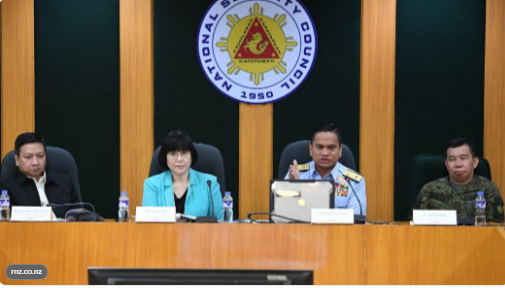
Philippine officials are reviewing information about overseas remittances to a company linked to Vice President Sara Duterte’s husband. Illustrative image
by Diana Zapata • News Writer /Editorial Specialist
Published October 12, 2026
MANILA, Philippines — The Philippine National Security Council is reviewing information about millions of pesos in remittances from China and Hong Kong received by a company linked to lawyer Manases “Mans” Carpio, the husband of Vice President Sara Duterte, following testimony presented during the Senate impeachment trial.
National Security Adviser Eduardo Oban said the council would examine the information to determine whether the reported transactions raise potential national security concerns. According to Reuters, banks had flagged the remittances as suspicious and reported them to the Anti-Money Laundering Council (AMLC).
The review adds a national security dimension to the financial questions raised during Duterte’s impeachment proceedings. However, the reported transactions do not, by themselves, establish illegal activity or prove that the Chinese government financed a Philippine political figure.
AMLC Testimony Identifies ₱319 Million in Remittances
During testimony on October 5, AMLC Executive Director Ronel Buenaventura told the Senate impeachment court that Cale88 Foods Corporation received a total of approximately ₱319.33 million in remittances from China and Hong Kong, based on records presented during the proceedings.
The amount included approximately ₱315.93 million from mainland China and ₱3.39 million from Hong Kong, according to GMA News. Carpio was identified as an incorporator of the food manufacturing company.
Prosecutors introduced the financial records as part of their allegations concerning unexplained wealth and the consistency of Duterte’s declared assets with her income and financial dealings.
The testimony did not establish the purpose of the remittances or demonstrate that the money was transferred directly to Duterte or her husband for personal use.
When questioned about whether the records demonstrated an intention to conceal the source of the transactions, Buenaventura said he could not reach that conclusion based on the information presented to him.
Security Council to Assess Potential National Security Implications
The National Security Council’s review is focused on whether the information presented during the impeachment trial has implications for national security.
The reported origin of the remittances has drawn attention amid continuing tensions between Manila and Beijing over maritime disputes and regional security. However, the geographical origin of a commercial payment alone does not establish that it was directed by a foreign government or intended to influence Philippine politics.
The nature and purpose of the transactions had not been established in the Reuters report published October 6. The council’s announced review should therefore be distinguished from a finding that foreign interference or a criminal offense occurred.
Duterte’s Defense Challenges the Allegations
Duterte’s defense team has disputed claims connecting the transactions to wrongdoing. During the impeachment proceedings, defense lawyer Mark Vinluan argued that the records did not demonstrate that funds received by Cale88 came directly from the Chinese government or that the transactions benefited Duterte and Carpio personally.
According to GMA News, the AMLC executive director acknowledged that the records presented did not establish such a personal benefit and that suspicious transaction reports do not, on their own, constitute a legal finding of money laundering.
Duterte has repeatedly denied wrongdoing. Her camp has also rejected the allegations concerning the financial transactions.
The Chinese Embassy in Manila previously described allegations that China had funneled money to a Philippine political faction as a “false narrative,” according to GMA News.
Questions Remain About the Source and Purpose of the Funds
The central issue remains whether investigators can establish the commercial purpose of the remittances, identify the entities behind the payments and determine whether the transactions had any connection to the allegations raised in the impeachment case.
Financial records can identify the movement of money between accounts, but determining whether a transaction is unlawful requires further evidence. Investigators would need to examine the underlying business arrangements and any documented links between the corporate funds and the individuals named in the proceedings.
The National Security Council’s assessment could provide another avenue for examining the information, although its announced review does not itself resolve the allegations.
💬 Overall Takeaway:
The review of China-linked remittances to Cale88 Foods Corporation has brought financial transparency and foreign influence concerns into the Philippine political debate. With approximately ₱319.33 million in reported remittances under scrutiny, the case raises questions that authorities may need to examine through financial records and further investigation.
However, the distinction between suspicious transactions and proven wrongdoing remains critical. The AMLC testimony did not establish that the remittances came from the Chinese government or that the money personally benefited Sara Duterte and her husband. As the National Security Council reviews the information, the findings of any subsequent inquiry—and the evidence supporting them—will be important in determining whether the transactions have implications beyond the financial questions already raised during the impeachment trial.