
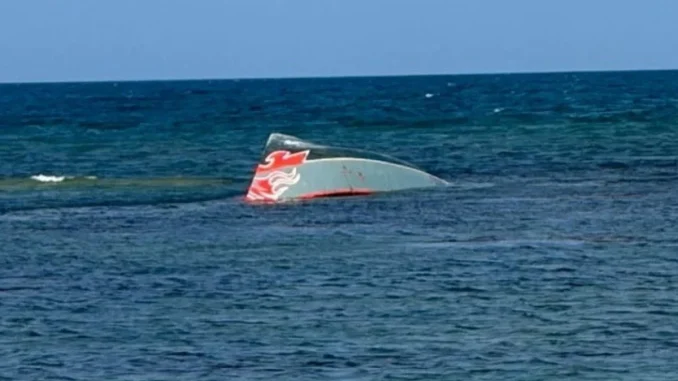
At least 139 migrants died, including 15 children, and 84 went missing when an overcrowded boat sank while heading from Djibouti to Yemen, a UN agency said on Sunday.
by Diana Zapata • News Writer /Editorial Specialist
Published October 12, 2026
A deadly migrant boat disaster off the coast of Djibouti has drawn attention to one of the world’s most dangerous migration routes, where people crossing from the Horn of Africa toward Yemen face overcrowded vessels, treacherous waters and the risk of becoming stranded far from emergency assistance.
At least 139 people reportedly died and another 84 were missing after a boat carrying migrants capsized while traveling toward Yemen, according to reports cited in earlier coverage. The reported scale of the disaster highlights the dangers facing people who attempt the crossing in search of safety, employment or better living conditions.
The tragedy also raises difficult questions about how authorities can locate missing passengers, coordinate rescue efforts across maritime boundaries and protect vulnerable people moving through a region affected by conflict and instability.
The Eastern Route: From Africa to the Arabian Peninsula
The migration corridor is commonly known as the Eastern Route. It begins in countries including Ethiopia and Somalia, with many migrants traveling through Djibouti or Somalia before crossing the Gulf of Aden to Yemen. Some then attempt to continue overland toward Saudi Arabia and other Gulf countries in search of work and better opportunities.

For many, Yemen is not the final destination but a transit point. However, reaching the opposite shore does not guarantee safety. Migrants may encounter armed conflict, detention, trafficking, extortion, forced labor and abuse by criminal networks. Women and children face additional risks of exploitation.
Why the Sea Crossing Is So Dangerous
The waters between Djibouti and Yemen include the Gulf of Aden and the Bab el-Mandeb Strait, a narrow maritime passage connecting the Gulf of Aden with the Red Sea. Although the crossing may appear short on a map, the journey can become deadly when boats are overcrowded, poorly equipped or operated by people without adequate maritime training.
When a vessel capsizes, passengers can be thrown into the water with little or no protective equipment. People who cannot swim, children and passengers trapped beneath the vessel are especially vulnerable. Survivors may also become separated from one another, complicating efforts to determine how many people are missing.
The latest disaster demonstrates the consequences of these risks. According to the IOM, the boat carried 305 people, of whom 82 reportedly survived. At least 139 deaths were reported, while 84 people remained missing. Search and rescue efforts continued after the capsizing.
The death toll may not immediately capture the full scale of a shipwreck. In remote coastal areas, bodies can be difficult to recover and identify, while survivors may be unable to provide an accurate passenger count.
Why Rescue Operations Are Difficult
Finding and rescuing people after a maritime disaster requires coordination among coastal authorities, emergency responders and humanitarian organizations. In the waters between Djibouti and Yemen, several factors can complicate the response.
1. The location of missing passengers may be uncertain. Overcrowded boats may lack reliable tracking equipment, making it difficult to establish their exact position when they capsize. Survivors may be scattered by currents, forcing rescuers to search a wider area.
2. Rescue capacity is limited. Search operations require suitable vessels, trained crews, communications equipment and medical support. When a disaster occurs far from major ports, reaching survivors quickly can be difficult.
3. Maritime boundaries complicate coordination. Search and rescue operations may involve different national authorities and designated maritime rescue regions. International cooperation is essential to clarify who coordinates the response and how resources can be deployed. These boundaries do not remove the need to assist people in distress at sea.
4. Survivors need more than immediate rescue. People pulled from the water may suffer injuries, dehydration, exposure or psychological trauma. They may also need shelter, medical treatment, identification assistance and protection from trafficking or further exploitation.
The IOM has documented persistent protection gaps along the Eastern Route, including limited access to assistance and growing risks for migrants stranded in Yemen and other transit locations.
A Regional Crisis With International Consequences
The disaster is primarily a humanitarian tragedy, but its implications extend beyond Djibouti and Yemen.
The crossing lies near the Bab el-Mandeb Strait, an important international shipping passage. The shipwreck itself does not establish that global trade has been disrupted, but the location connects the migration crisis to a wider region of strategic importance.
The movement of migrants also crosses several jurisdictions, requiring governments and humanitarian agencies to cooperate on rescue operations, protection services and efforts to combat smuggling networks. The IOM’s 2026 regional response plan identifies the Eastern Route as one of the world’s busiest and most dangerous migration corridors.
The challenge for authorities is to address both the immediate emergencies at sea and the circumstances that leave people willing to risk dangerous crossings. Rescue operations can save lives, but preventing future tragedies also requires better access to protection, safer migration pathways and action against those who exploit vulnerable travelers.
What Happens Next?
Search and rescue efforts remain critical to locating missing passengers and identifying victims. Authorities and humanitarian organizations must also support survivors and establish reliable information about the circumstances surrounding the capsizing.
The broader question is whether governments and international organizations can improve cooperation and protection along a route that continues to attract migrants despite repeated deadly incidents.
For the families of those killed or missing, the immediate priority is answers. For the countries involved, the disaster is another warning that the dangers of the Eastern Route cannot be addressed by rescue operations alone.
💬 Overall Takeaway:
The deadly capsizing off Djibouti is a tragic reminder of the dangers faced by migrants crossing the Gulf of Aden toward Yemen. Beyond the devastating loss of life, the disaster exposes the difficulties of conducting rescue operations across international waters and protecting vulnerable people along a route marked by conflict, exploitation and limited access to assistance. While emergency responses remain essential to saving lives, preventing similar tragedies will require stronger international cooperation, more effective action against smuggling networks and safer migration pathways. Until these challenges are addressed, the journey from the Horn of Africa to Yemen will continue to carry potentially fatal consequences for those who undertake it.




