NOAA Confirms El Niño Formation as Intensification Forecasts Rise
by Diana Zapata • News Writer /Editorial Specialist
Published October 12, 2026
The World Meteorological Organization’s latest warning about rising Pacific Ocean temperatures and shifting rainfall patterns deserves closer examination—not simply acceptance of its most alarming implications. While the WMO forecasts a strengthening El Niño and possible changes in weather patterns, the distinction between measured conditions, seasonal projections, and actual local outcomes is essential.
In its October 8 update, the WMO forecast that sea-surface temperatures in the central and eastern tropical Pacific would rise further during October–December 2026. It also projected a greater likelihood of above-average temperatures in many regions, alongside shifts in seasonal rainfall.
But a forecast is not a guarantee, and a warming ocean in one region does not establish what rainfall or temperatures will be in every community.
El Niño is a natural climate cycle
El Niño is part of the El Niño–Southern Oscillation (ENSO), a naturally occurring interaction between the tropical Pacific Ocean and the atmosphere. Its counterpart, La Niña, produces different oceanic and atmospheric conditions.
These alternating phases influence global temperatures, winds, rainfall, and marine ecosystems. Their effects vary by region and from one event to another.
NOAA explains that forecasters use satellite observations, ocean buoys, sea-level measurements, and computer models to assess ENSO. It also acknowledges that different El Niño events do not produce identical atmospheric responses.
That distinction matters when evaluating headlines that suggest a particular El Niño will inevitably produce a specific disaster.
Summary: The video explains how El Niño and La Niña influence global temperatures from year to year. El Niño generally raises global temperatures, while La Niña tends to lower them. These natural fluctuations occur alongside the longer-term global temperature trend. NOAA uses historical observations to illustrate how ENSO can influence whether a particular year sets a temperature record.
Seasonal projections should not be mistaken for local outcomes
The WMO’s seasonal outlook identifies areas where above- or below-average conditions are considered more likely. It does not predict the precise weather that every town, province, or country will experience on a particular day.
A forecast of below-average rainfall, for example, does not automatically mean a drought will occur. Actual drought conditions depend on rainfall deficits, soil moisture, water storage, agricultural demand, and other local factors.
The WMO itself acknowledges that seasonal outlooks are not substitutes for national and local forecasts.
For readers in the Philippines, this is particularly important: the national impact of El Niño cannot be determined from a global ocean-temperature projection alone. PAGASA’s regional forecasts and actual rainfall measurements are more useful for evaluating conditions in individual provinces.
Climate models have limitations, too
There is also a scientific reason to scrutinize projections rather than treating them as settled outcomes.
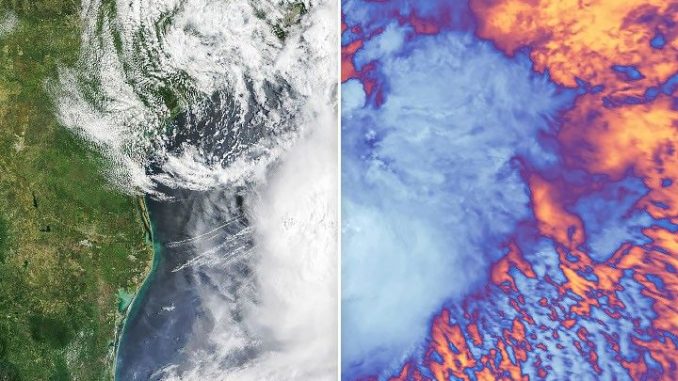
A July 2026 report from NOAA’s Pacific Marine Environmental Laboratory described research showing that coupled ocean–atmosphere models have difficulty reproducing an important feature of El Niño: changes in low-cloud cover over the southeastern tropical Pacific. Such cloud behavior affects the exchange of heat between the ocean and atmosphere.
This does not mean all climate forecasts are unreliable. It does mean that model limitations deserve consideration when assessing projections, particularly those extending several months into the future.
A responsible assessment should ask:
-
How closely have previous seasonal forecasts matched observed conditions?
-
What range of outcomes do the models allow?
-
How much do natural ocean–atmosphere cycles contribute to the projected changes?
-
Are regional observations consistent with the global forecast?
-
Does the evidence support a specific attribution, or only indicate a possible association?
These questions are relevant to any scientific forecast, regardless of the institution issuing it.
Summary: NOAA researchers and scientists from the University of Washington identified a weakness in many coupled ocean–atmosphere models: they struggle to accurately reproduce changes in low-cloud cover over the southeastern tropical Pacific during El Niño.
These clouds influence how much sunlight reaches the ocean and how heat moves between the ocean and atmosphere. Errors in representing cloud behavior can therefore affect how models simulate ocean temperatures and climate patterns.
The findings highlight a limitation in climate modeling and point to the need for improved simulations. However, the study does not establish that all climate models are unreliable or that the World Meteorological Organization’s current El Niño forecast is incorrect.
What does the evidence establish?
The WMO’s warning provides a forecast of a strengthening El Niño and its possible effects. NOAA’s observations and modeling research provide additional context on how ENSO works and where predictive limitations remain. Neither source supports treating every projected rainfall change as a certainty.
The key distinction is between questioning a forecast’s precision and dismissing the underlying observations. A skeptical assessment should do the former without assuming the latter are false.
Conclusion:
The WMO’s El Niño outlook merits scrutiny, not automatic acceptance of every predicted consequence. Natural climate variability, model uncertainty, and regional differences all matter when assessing what may happen next. The most useful test is whether the forecast is borne out by measured conditions as the season progresses.
SOURCES: PACIFIC MARINE ENVIRONMENTAL LABORATORY – Climate models get a key feature of El Niño wrong, undermining forecast accuracy
NATIONAL OCEANIC ANS ATMOSPHERIC ADMINISTRATION – Understanding El Niño & ENSO
CLIMATE.GOV – The Pushy Pacific: Variability and Change in Global Temperature