by Diana Zapata • News Writer /Editorial Specialist
Published October 12, 2026
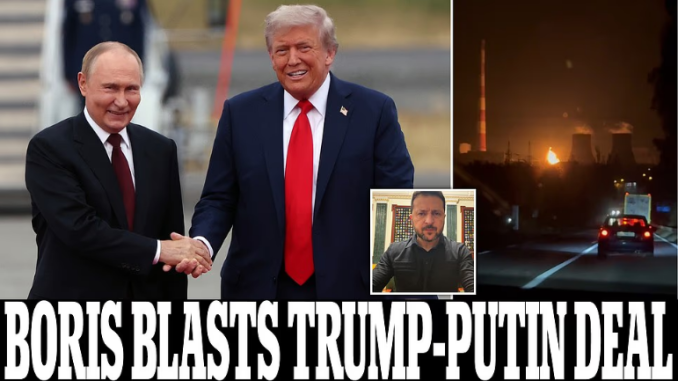
LONDON — Former British Prime Minister Boris Johnson has sharply criticized U.S. President Donald Trump’s agreement with Russian President Vladimir Putin to secure Russian diesel supplies, calling the move “sickening” and arguing that it risks providing Moscow with additional revenue while its war against Ukraine continues.
Johnson also called for tougher action against Russian fuel shipments, including urging the Royal Navy to intercept Russian diesel cargoes, according to reports. His criticism follows Trump’s announcement of a deal intended to increase fuel supplies and address rising diesel prices in the United States.
The dispute has exposed growing tensions over how Western governments should balance domestic energy costs with economic pressure on Moscow.
Trump Announces Diesel Agreement With Putin
Trump announced the agreement on October 9, saying Russia would immediately supply more than 300,000 metric tons of diesel, followed by additional shipments in November and subsequent months.
According to the Associated Press, Trump said the arrangement was intended to help bring down fuel prices for American consumers, farmers, ranchers and truckers. However, the White House and Kremlin provided few details about the financial arrangements, including who would pay for the shipments and whether Washington had offered concessions in return.
The announcement came after fuel prices climbed amid the wider conflict involving Iran and disruptions affecting energy markets. Trump has argued that increasing available supplies would help ease pressure on consumers and businesses.
The decision nevertheless represents a significant shift in U.S. policy after years of restrictions on Russian energy imports following Moscow’s 2022 invasion of Ukraine.
Johnson Says U.S. Policy Could Benefit Moscow
Johnson condemned the decision in comments reported by The Guardian, arguing that lifting restrictions on Russian fuel was unjustified and that blaming Ukraine for rising fuel prices misrepresented the causes of the increase.
He wrote that the White House appeared determined to make American drivers “bankroll Putin’s slaughter,” referring to the revenue Russia could receive from renewed fuel sales while continuing its military campaign against Ukraine.
Johnson’s criticism reflects a broader concern among Ukraine’s supporters that additional Russian energy revenue could help Moscow sustain its military operations.
Ukrainian President Volodymyr Zelenskyy also criticized Trump’s decision. According to the Associated Press, Zelenskyy warned that the arrangement could allow Russia to continue its war for longer and undermine the efforts of Ukraine’s Western partners.
Royal Navy Interception Proposal Raises Legal Questions
Johnson’s call for the Royal Navy to intercept Russian diesel shipments raises questions about how Britain could enforce restrictions on Russian energy exports without violating maritime law.
The United Kingdom has already taken action against vessels suspected of transporting sanctioned Russian oil. In June 2026, British forces boarded the Smyrtos, a sanctioned shadow-fleet tanker, in an operation that the government said was conducted under domestic and international law.
However, naval forces cannot automatically seize every vessel carrying Russian fuel. The legality of an interception depends on factors such as the ship’s status, applicable sanctions, the location of the vessel and the legal authority for boarding it.
The Royal Navy has also continued monitoring Russian vessels operating near British waters and in the North Atlantic. In August, the service reported increased monitoring activity involving Russian naval vessels and shadow-fleet tankers.
Johnson’s proposal would therefore represent a call for stronger enforcement, rather than confirmation that the British government has ordered a new campaign to seize Russian diesel shipments.
Could the Deal Lower Fuel Prices?
Trump has presented the agreement as a way to increase diesel supplies and ease costs for American consumers. Diesel is particularly important to trucking, agriculture and the transportation of goods, meaning price increases can affect a wide range of businesses.
But energy analysts cited by the Associated Press questioned whether the additional shipments would substantially reduce prices. They noted that redirecting Russian diesel to the United States could simply cause other buyers to seek supplies elsewhere, limiting the overall effect on global prices.
The deal’s economic impact will depend on the volume of fuel actually delivered, the timing of shipments, demand in other markets and the extent to which existing sanctions remain in force.
The U.S. Treasury Department issued a temporary license allowing certain Russian diesel shipments to reach the global market, with sanctions relief applying to qualifying cargoes loaded by October 9 and extending through April 2027.
Western Allies Face a Policy Dispute
The disagreement comes as Ukraine continues to seek international support against Russia’s invasion. European governments have maintained sanctions intended to restrict Moscow’s access to revenue and resources, while Washington’s diesel arrangement has raised questions about the consistency of Western policy.
Critics argue that easing restrictions could weaken the economic pressure intended to constrain Russia’s military campaign. Supporters of the deal’s stated objective point to the need to address high fuel costs and maintain adequate energy supplies.
The dispute also highlights the difficulty of coordinating sanctions policy among allies when energy prices rise and domestic economic pressures intensify.
💬 Overall Takeaway:
Boris Johnson’s criticism of the Trump-Putin diesel agreement has intensified debate over whether lower fuel costs justify easing restrictions on Russian energy exports while the war in Ukraine continues. His call for the Royal Navy to intercept Russian diesel shipments highlights demands for tougher enforcement, but any such action would have to comply with applicable maritime law and sanctions rules.
For now, the agreement’s full financial and strategic consequences remain uncertain. Whether it meaningfully reduces fuel prices—or instead provides Moscow with additional revenue without substantially easing costs for consumers—will depend on the shipments delivered and their effect on international energy markets.