
Reported by:

Cherry Meigh Timbol
News Content Editor
Published October 12, 2026
A Melbourne Islamic community leader has publicly rejected what he calls “false accusations” following revelations by United Arab Emirates prosecutors about an alleged attempted hijacking of a passenger aircraft traveling from Dubai to Tel Aviv.
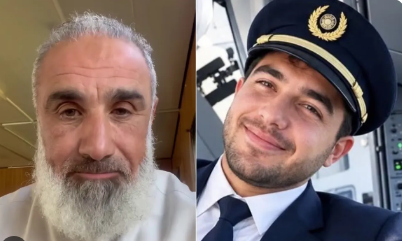
Samir Mohtadi, a Lebanese-born community figure known as Abu Hamza, addressed followers in a video posted on Sunday, October 11, after authorities identified alleged extremist influences in the background of Hamam al-Hammami, the 29-year-old Omani co-pilot accused of attacking the captain of Flydubai Flight FZ1073 on September 30.
The incident has triggered an international investigation into aviation security, the suspect’s alleged radicalization and possible connections in Australia, where he studied before the attempted hijacking.
Mohtadi’s response has drawn renewed attention to MyCentre, the Melbourne-based Islamic community organization he leads. However, authorities and news reports have not established that the center or its leadership participated in, planned or knew about the alleged attack.
What the Islamic Center Leader Said
In the four-minute video, Mohtadi did not directly address the specific allegations made by UAE prosecutors. Instead, he spoke about the treatment of people he considers righteous and explained why he believed remaining silent could sometimes be the best response.
“Right through the ages, those who’re righteous, they’ve always been attacked, abused, accused, killed, imprisoned,” he said, according to reporting by Al Jazeera.
In a separate statement reported by Australian media, Mohtadi strongly rejected attempts to associate him or MyCentre with the accused co-pilot.
His response comes as the allegations have placed the organization under heightened public scrutiny. Community representatives have warned against damaging the reputation of an organization or its members through speculation or guilt by association.
Rateb Jneid, president of the Australian Federation of Islamic Councils, expressed support for MyCentre and its leadership, emphasizing that community organizations should not be condemned based on unproven associations.
What Investigators Say About the Flydubai Incident

The case centers on the September 30 incident aboard Flydubai Flight FZ1073, which was traveling from Dubai to Tel Aviv with more than 170 people on board.
According to UAE prosecutors, al-Hammami attacked the aircraft’s captain in the cockpit during an alleged attempt to seize control of the plane. Prosecutors said the suspect intended to crash the aircraft into the passenger terminal at Ben Gurion Airport in Israel.
The captain, despite being injured, managed to alert others and open the cockpit door. Passengers and crew members helped restrain the co-pilot, and the aircraft made an emergency landing in Saudi Arabia. The suspect was subsequently taken into custody in the United Arab Emirates.
The incident has prompted questions about how the suspect passed airline security screening and was permitted to serve on an Israel-bound flight.
The Associated Press reported that the investigation spans several countries, including the UAE, Israel, Saudi Arabia, Oman and New Zealand, as authorities examine potential failures in screening and intelligence sharing.
Why Melbourne Is Part of the Investigation
UAE prosecutors said the suspect’s alleged radicalization began while he was studying in Melbourne in 2017. Investigators reportedly traced his exposure to extremist literature and online material promoting terrorist organizations and suicide attacks.
Authorities also alleged that he became acquainted with individuals connected to MyCentre, an Islamic community organization led by Mohtadi.
These claims have placed the center in the public discussion surrounding the case, but an alleged acquaintance with people associated with an organization does not establish that the organization supported or participated in a crime.
According to Al Jazeera and The Guardian, neither MyCentre nor Mohtadi has been accused of criminal wrongdoing in connection with the alleged hijacking. Australian authorities are examining possible links as part of their broader investigation.
The distinction is significant because investigators are still working to establish the suspect’s background, the extent of any outside influence and whether other people had knowledge of his alleged plans.
Australian Authorities Continue Examining Possible Links
The Australian Federal Police and Victoria’s Joint Counter Terrorism Team are examining possible Australian connections to the case, according to reports published on October 12.
The investigation raises questions about whether warning signs were identified and properly communicated across jurisdictions before the flight departed.
The Royal Melbourne Institute of Technology (RMIT) confirmed that al-Hammami studied engineering at the university but did not complete his degree, according to the original reporting.
Authorities have not publicly established that MyCentre or its leadership knew about the alleged hijacking plot. The investigation’s findings will be important in determining whether the suspect acted alone or received assistance from others.




