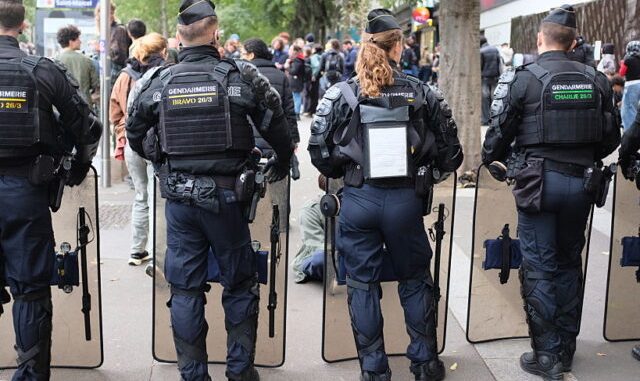
European authorities brace for further demonstrations as left-wing political groups urge supporters to follow France’s protest movement, raising concerns over public order and the potential for renewed clashes.
by Diana Zapata • News Writer /Editorial Specialist
Published October 23, 2026
European left-wing parties and activist organizations are calling for France-inspired protests to spread across neighboring countries, prompting renewed concerns about public safety as authorities monitor planned demonstrations in several major cities.
The calls come after violent unrest in France, where demonstrations initially associated with student grievances and demands for better public services developed into clashes, vandalism and confrontations with police, according to reports published this week.
Germany Prepares for Possible Demonstrations
German authorities are monitoring calls for demonstrations scheduled for October 31, as activists mobilize online around issues including climate protection, the rising cost of living and opposition to military conscription.
German Interior Minister Jan Redmann has expressed concern about the planned protests, according to Die Welt, while police representatives have warned that demonstrations could become more difficult to control if violent individuals become involved.
The reported mobilization illustrates how protests in one European country can influence activists elsewhere, particularly when organizers use social media and digital platforms to coordinate events and circulate campaign materials.
British Activists Also Draw Inspiration From France
In the United Kingdom, Green Party councillor Florence Schechter has promoted a London demonstration scheduled for October 27 under the banner of a march against austerity.
The campaign calls for greater spending on public services, including health care and social housing, as well as opposition to austerity policies and military spending.
The calls have drawn criticism from political opponents who fear that invoking the French protests could encourage disorder. Schechter, however, has defended peaceful demonstrations and argued that drawing inspiration from protests does not amount to endorsing violence.
Separately, a coalition of student and activist organizations is promoting a broader international youth mobilization scheduled for November 20, with demands involving education, employment, defense spending and support for Palestinians.
A Wider European Protest Movement
The movement extends beyond Germany and Britain. Reports describe demonstrations and related unrest in countries including Italy, Belgium and Greece, although the scale and circumstances differ from one location to another.
In Italy, protests in Milan reportedly resulted in more than 270 detentions following two days of unrest. Italian authorities have responded with measures intended to strengthen public order and address violence involving minors.
Activists have framed their campaigns around economic pressures, education, housing costs, public spending and opposition to militarization. Critics argue that the spread of coordinated demonstrations could create opportunities for more radical groups to escalate confrontations with police.
However, participation in a protest campaign does not automatically indicate support for violence. Peaceful demonstrators, political organizers and individuals responsible for criminal acts must be distinguished when assessing the movement.
Law Enforcement Faces a Difficult Balancing Act
Authorities across Europe face the challenge of protecting public safety while preserving the right to peaceful assembly.
Officials must assess credible threats, prevent property destruction and violence, and ensure that police responses remain proportionate. At the same time, governments risk intensifying public anger if legitimate grievances are dismissed or peaceful demonstrations are treated as inherently criminal.
The central concern is whether demonstrations driven by economic and political frustrations will remain peaceful or whether organized groups and opportunistic rioters will turn some events into wider confrontations.
Although the reports point to cross-border coordination among activist organizations, they do not establish that every participating group intends to promote violence or that unrest will spread uniformly across Europe.
💬 Overall Takeaway:
The calls to spread France-style protests across Europe highlight the growing ability of political movements to mobilize supporters beyond national borders. Economic frustration, concerns about public services and opposition to government policies are providing common ground for activists in several countries.
But the distinction between peaceful protest and violent disorder remains critical. Governments must protect citizens and enforce the law without undermining legitimate democratic freedoms, while protest organizers bear responsibility for clearly rejecting violence and preventing demonstrations from becoming destructive.