
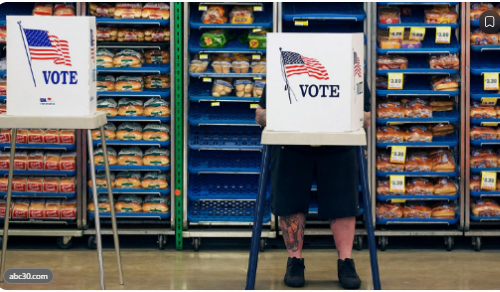
Economic pressures are shaping the political debate ahead of the 2026 midterms, putting both parties under pressure to demonstrate how their policies can improve household finances.

by Diana Zapata •
News Writer /Editorial Specialist
Published October 26, 2026
With the November 3 midterm elections approaching, the debate over America’s political direction is increasingly centered on a practical question: Are voters better off than they expected to be, and which party do they believe can improve their situation?
In its editorial, The Guardian argues that Republican difficulties stem partly from the gap between the economic improvements promised by President Donald Trump and the financial pressures many Americans continue to experience. The publication also raises concerns about political self-interest and argues that campaign messaging focused on cultural disputes may be less persuasive when voters are worried about everyday expenses.
The argument deserves attention, but it also requires a closer examination. Economic dissatisfaction can hurt an incumbent party, yet it does not automatically guarantee victory for the opposition. Voters weigh several issues, and their decisions depend on the candidates, the alternatives offered, and their confidence in each party’s ability to govern.
The real test is not simply whether Americans are dissatisfied. It is whether that dissatisfaction translates into a different political choice.
The Economy Is a Political Test, Not the Entire Story
Economic conditions are among the most important factors in the midterm campaign. A Pew Research Center survey conducted September 28–October 4 found that 84% of registered voters considered the economy very important to their midterm vote.
That finding supports the central premise of The Guardian’s editorial: household finances matter, regardless of the political messages coming from Washington.
For families facing high grocery bills, housing expenses, healthcare costs, and transportation costs, broad claims about national economic performance may carry less weight than their own financial circumstances.
However, a distinction must be made between dissatisfaction with economic conditions and a judgment about which party is responsible. Prices can be affected by federal policies, international developments, supply and demand, energy markets, and decisions made by businesses. Voters may disagree about the relative importance of these factors.
Republicans therefore face a straightforward challenge: explain what their policies have achieved, acknowledge where expectations have not been met, and provide credible plans for improving affordability.
Democrats face a comparable test. Criticizing the administration may attract dissatisfied voters, but criticism alone does not establish that their proposed alternatives will produce better results.
The party that offers the most convincing explanation of the economic situation—and a credible plan to address it—may have an advantage. But that advantage must be demonstrated at the ballot box.
Does Political Messaging Matter More Than Policy?
The Guardian’s editorial also questions whether cultural controversies and attacks on political opponents can compensate for concerns about the cost of living.
This raises a broader issue in American politics: the relationship between political communication and governing performance.
Campaigns frequently emphasize issues that motivate their supporters. Republicans may highlight immigration enforcement, public safety, tax policy, and cultural issues. Democrats may emphasize healthcare affordability, economic inequality, government accountability, and protections for public services.
These subjects are not necessarily distractions. They reflect genuine disagreements about the country’s priorities.
The problem arises when political messaging replaces a substantive explanation of policy. A warning about the opposing party does not tell voters how a candidate intends to address rising costs. Similarly, a promise to protect household budgets is incomplete without details about implementation, funding, and potential consequences.
Voters should evaluate both the message and the policy behind it.
The same standard should apply to media coverage. Commentators can reasonably criticize political strategies, but predictions about their effectiveness should be distinguished from established facts. Polls provide evidence of voter preferences at a particular time; they do not determine the final election result.
Will Dissatisfaction With Republicans Benefit Democrats?
A central question in the current campaign is whether voters who are unhappy with the administration will support Democratic candidates.
Recent polling has identified affordability as a major concern and found that voters differ in which party they trust to handle economic issues.
Nevertheless, dissatisfaction with one party does not necessarily translate into enthusiasm for the other.
Some voters may support Democrats because they want a change in congressional leadership. Others may remain loyal to Republicans because they prefer their positions on immigration, taxation, or other issues. Independent voters may make decisions based on individual candidates rather than national party messages.
Turnout will also matter. The preferences of people who respond to surveys do not always translate directly into the preferences of those who ultimately cast ballots.
Consequently, claims that either party is certain to win control of Congress should be treated cautiously. The outcome depends on individual races, voter participation, and the distribution of support across competitive districts and states.
The Standard Should Be the Same for Both Parties
The most useful lesson from The Guardian’s editorial extends beyond the Republican Party.
Political leaders should be judged by their records, not simply by their promises or the strength of their campaign messaging.
If Republicans argue that their policies are improving the economy, they should provide evidence that supports that claim. If Democrats argue that their proposals would improve affordability, they should explain how those proposals would work and what they would cost.
Both parties should be questioned about government spending, the national debt, conflicts of interest, legislative priorities, and the practical effects of their decisions.
This approach does not require treating every claim as equally credible. Claims should be evaluated according to the available evidence. It does, however, require applying consistent standards rather than excusing failures by one party while condemning similar failures by the other.
That is particularly important during an election campaign, when political incentives encourage candidates to emphasize favorable information and minimize inconvenient facts.
💬 Overall Takeaway: Voters Will Judge Results, but the Outcome Is Not Predetermined
The Guardian makes a persuasive point about the political importance of household finances: voters are unlikely to ignore economic pressures simply because a campaign offers compelling political messages.
But economic dissatisfaction is only one part of the electoral equation. Immigration, healthcare, public safety, constitutional questions, candidate credibility, and party loyalty can also influence voting decisions.
The 2026 midterms will test whether Republicans can defend their record and persuade voters that their policies are working. They will also test whether Democrats can turn criticism of the administration into a convincing governing alternative.
Neither party should assume that public frustration automatically guarantees its success.
Ultimately, the election will provide an opportunity for Americans to express their priorities through their votes. The responsibility of political leaders is to explain their decisions, defend their records, and demonstrate how their proposals would improve the country.
The central issue is not whether one party has mastered political messaging. It is whether either party can translate its promises into results that voters can recognize in their daily lives.




