Reported by:

Cherry Meigh Timbol
News Content Editor
Published October 26, 2026
Elon Musk has publicly accused Ukraine’s military of violating Starlink’s terms of service by using the satellite internet network for offensive drone strikes against Russia, reigniting tensions over the technology’s critical role in Kyiv’s war effort.
The dispute intensified after SpaceX imposed restrictions that disrupted Ukrainian military operations before service speeds were restored. Musk defended the restrictions as enforcement of the company’s rules, while Ukrainian officials argued that the civilian Starlink system’s existing technical limitations made the alleged use for long-range attacks impossible.
The controversy has raised fresh questions about Ukraine’s dependence on privately controlled satellite communications as its war against Russia continues.
Musk Says Ukraine Crossed the Line
In a series of posts on X on October 24 and 25, Musk argued that Starlink, a commercial satellite internet service operated by SpaceX, was never intended to support offensive military strikes.
“Using Starlink, a civilian commercial service, for offensive drone strikes to kill people has never been allowed, nor should it be,” Musk wrote.
He went further, alleging that Ukraine’s military had violated the company’s terms of service and that SpaceX had closed what he described as a loophole the previous week.
Musk also distinguished Starlink from Starshield, a separate satellite communications system controlled by the U.S. government. He said decisions concerning Starshield’s operation were ultimately up to the American government.
The remarks amounted to a public defense of SpaceX’s actions as Ukrainian forces grappled with disruptions to satellite connectivity.
Ukraine Disputes Musk’s Allegations
Ukrainian officials pushed back against Musk’s account, disputing the claim that the military had used commercial Starlink to conduct the alleged long-range drone strikes.
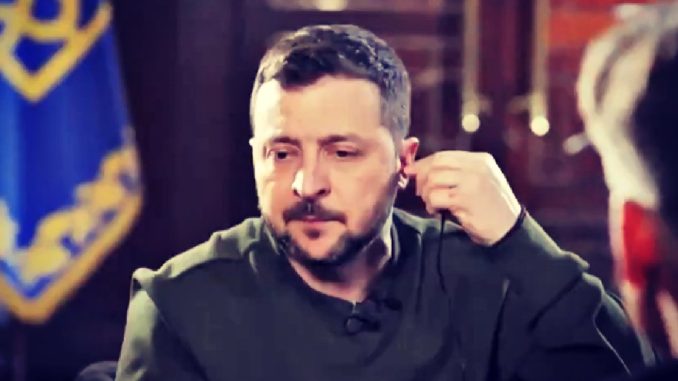
Serhii Beskrestnov, a technology adviser to Ukrainian President Volodymyr Zelenskyy, said existing operating restrictions limited the speed and geographic reach of Starlink-connected systems.
According to Beskrestnov, those restrictions made the use of ordinary commercial Starlink for deep strikes into Russian territory technically impossible.
Other Ukrainian figures involved in military drone operations also challenged Musk’s interpretation, arguing that the civilian service should not be confused with the military-specific systems used by Ukrainian forces.
The competing accounts leave a central question unresolved: whether Ukraine’s military breached Starlink’s terms of service in the manner Musk described. Publicly available statements from both sides do not independently settle that dispute.
Restrictions Disrupted Ukraine’s Military Operations
The dispute emerged after Ukrainian forces experienced more than a week of connectivity problems affecting Starlink and its military-oriented counterpart, Starshield.
The disruptions reportedly interfered with drone missions, frontline communications, logistics and air-defense operations. Ukrainian forces rely on satellite connectivity to coordinate units across an extensive battlefield and respond to Russian attacks.
On October 24, Zelenskyy announced that Starlink and Starshield operations had returned to their previous speeds following the restrictions.
Ukraine’s Defense Ministry also reported that connections had returned to speeds exceeding 400 kilometers per hour, an important capability for certain mobile military applications.
The restoration followed mounting concern over the operational consequences of the restrictions and diplomatic engagement involving Ukrainian and American officials.
Zelenskyy Welcomes the Restoration
Zelenskyy said the restoration of connectivity was important for frontline logistics and protecting Ukrainian territory against Russian drone attacks.
His response highlighted Kyiv’s reliance on satellite communications not only for battlefield coordination but also for defensive operations against incoming aerial threats.
The Ukrainian president had previously warned about the consequences of a Starlink disruption, emphasizing that the service’s availability could affect military personnel and operations on the ground.
However, the restoration of service did not resolve the underlying disagreement over the restrictions, who authorized particular changes, or whether the alleged violations occurred.
Musk’s latest statements also renewed attention to the influence a private technology company can exert over a country’s wartime communications infrastructure.
Musk Defends Starlink’s Role in Ukraine
Despite his criticism of Ukraine’s alleged use of the system, Musk acknowledged Starlink’s importance to the country’s defense.
He argued that the network had helped Ukraine maintain communications during the early stages of Russia’s full-scale invasion, when other communications infrastructure was destroyed or disrupted.
Musk also warned that a complete Starlink shutdown could have devastating consequences for Ukrainian forces at the front.
His comments underscore the complicated position SpaceX occupies in the conflict. The company provides infrastructure that has become important to Ukraine’s military operations, yet it retains substantial control over its commercial service and the conditions under which it can be used.
That dependence has repeatedly raised concerns about the potential consequences of decisions made by private companies during an ongoing war.
A Wider Dispute Over Technology and Military Strategy
The Starlink controversy comes amid continuing disagreements between Washington and Kyiv over military strategy, attacks on Russian territory and the future of American support for Ukraine.
Earlier in October, the restrictions prompted speculation about whether political considerations had influenced access to satellite communications. Reports described uncertainty over the respective roles of SpaceX and the U.S. government, particularly concerning Starshield.
Musk had previously said that Starshield was controlled by the U.S. government and that the American military and president ultimately determined its operating limits. He subsequently acknowledged that SpaceX had restricted Starlink access in Ukraine.
The distinction matters because Starlink and Starshield are separate systems, even though both have played roles in Ukraine’s wartime communications.
The episode illustrates how access to privately operated technology can become a strategic issue when a military depends on it for essential operations.