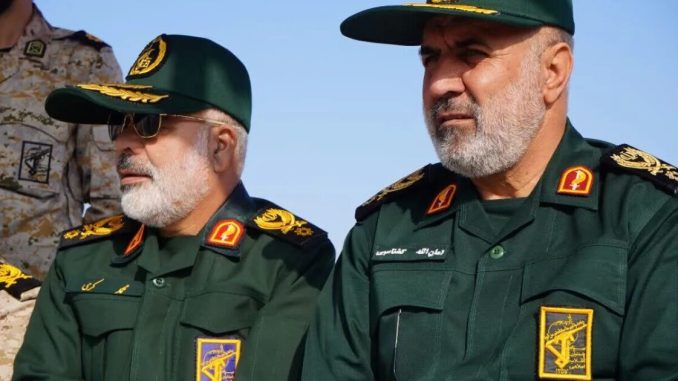
Brig. Gen. Mohammad Karami, commander of the Islamic Revolutionary Guard Corps (IRGC) Ground Forces, has claimed intelligence superiority over U.S. forces and vowed revenge. Photo courtesy of the Islamic Republic News Agency (IRNA).
Reported by:

Cherry Meigh Timbol
News Content Editor
Published November 1, 2026
Iran is refusing to start negotiations or reopen the Strait of Hormuz until Washington meets seven conditions. Meanwhile, the Pentagon has strike options ready for after Tuesday’s U.S. midterm elections.
Mohsen Rezaei, secretary of Iran’s Supreme National Security Council, said Washington had shifted its approach, but the Strait of Hormuz cannot reopen until the conditions are met. He said the first U.S. response was insufficient and the second more favorable. A third proposal still has ambiguities under discussion, and he accused the U.S. of intending to negotiate and then attack again. Foreign Minister Abbas Araghchi said no direct talks with U.S. officials are planned and that consultations continue through mediators.
Tehran has not publicly published the full list, but reported demands include immediate release of frozen Iranian funds, an official end to the war on all fronts including Lebanon, and an end to American interference in Iran’s internal affairs. Rezaei has also named an end to the naval blockade among them. The dispute is partly one of sequencing.
Trump is reportedly seeking a quick nuclear achievement, while Tehran demands concessions on the ground first.
On the U.S. side, the military has drawn up options to attack Iran after the midterms, and CENTCOM’s options have been presented to Defense Secretary Pete Hegseth. The New York Times reported that U.S. and Israeli militaries have detailed joint plans, but that Trump has not approved a new operation. Trump had said he would not attack Iran before the elections.
Washington has warned Middle East allies to prepare for possible renewed action and for Iranian retaliation against energy and other critical infrastructure. Officials said a new round could last several days. Diplomats told the Associated Press that a short, intense campaign could begin as early as November 4. The USS Theodore Roosevelt and amphibious ships carrying Marines, roughly 9,000 troops, are heading toward the Persian Gulf. One reported target is Pickaxe Mountain, near the damaged Natanz enrichment site.
Iranian officials are signaling a harsh response. Rezaei warned that any attack would bring devastating blows using new weapons, under instructions from Supreme Leader Mojtaba Khamenei. IRGC Ground Forces commander Brig. Gen. Mohammad Karami said in July that revenge for the blood of the slain Leader and commanders would be taken in the near future.
Analysts doubt another bombing campaign would change Tehran’s position. The central question military advisers are said to be asking is what further escalation would achieve that earlier rounds did not.