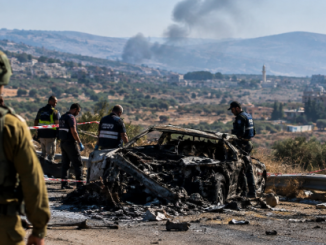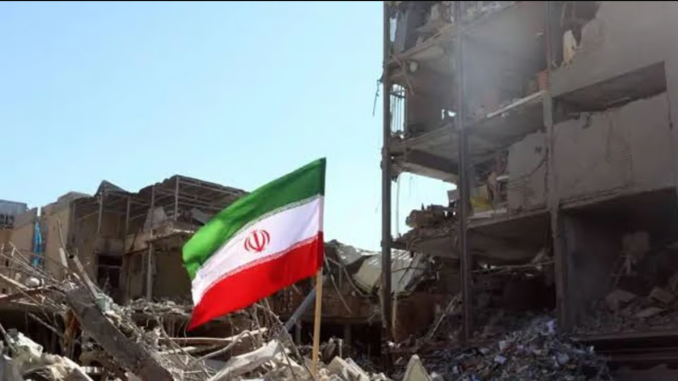
Iran has threatened to widen the conflict, while President Donald Trump says he is prepared to step up U.S. airstrikes if Washington and Tehran fail to reach an agreement. Photo courtesy of Al Jazeera English.
Reported by:

Cherry Meigh Timbol
News Content Editor
Published November 24, 2026
The remarks attributed to U.S. President Donald Trump come amid renewed tensions involving Iran, the Houthis and regional security in the Middle East.
Trump warns of possible military action against Iran
U.S. President Donald Trump has warned that Washington could resume military strikes against Iran after the New Year if negotiations between the two countries fail to produce an agreement.
In an interview with Fox News on November 22, Trump accused Iranian officials of delaying diplomatic efforts while continuing to increase regional tensions.
“They’re more aggressive now than before the election,” Trump said, referring to Iran. He also described Iranian negotiators as “professional tap dancers,” criticizing what he characterized as repeated discussions without meaningful progress.
Trump’s remarks come as the United States maintains a naval blockade of Iranian ports amid continuing hostilities in the Persian Gulf and the Strait of Hormuz. He indicated that military action remained an option if diplomatic efforts failed.
Houthi attack damages Riyadh’s tallest skyscraper
Meanwhile, Saudi Arabia is facing renewed security concerns following a missile attack that damaged Riyadh’s tallest skyscraper on November 19.
The building, identified as the Public Investment Fund (PIF) Tower in the King Abdullah Financial District, sustained damage across several floors. Windows were blown out across approximately seven to eight floors, while portions of its exterior facade were also damaged.
Saudi authorities confirmed material damage to the tower and nearby buildings but reported no casualties.
The Yemen-based Houthi movement claimed responsibility for attacks targeting Riyadh’s financial district. The Saudi-led coalition said it had responded to a missile threat directed at the capital, with debris falling in the area.
The PIF Tower serves as the headquarters of Saudi Arabia’s sovereign wealth fund, a major financial institution involved in the kingdom’s economic diversification and development initiatives under Vision 2030.
Regional tensions continue to complicate diplomacy
The attacks highlight the growing security challenges facing Saudi Arabia and other countries in the region as tensions involving Iran, the United States and Yemen’s Houthi movement continue.
The Houthis are backed by Iran, although their military operations should not automatically be interpreted as direct orders from Tehran.
According to reports, the Houthis have also threatened additional attacks against Saudi infrastructure and Red Sea shipping routes. Saudi Arabia, meanwhile, has maintained that it reserves the right to take necessary measures to protect its sovereignty and national interests.
The developments also raise concerns about the broader economic consequences of continued regional instability, particularly for energy infrastructure, international shipping and trade through strategically important waterways.
The Associated Press reported that Gulf Arab governments have been exploring diplomatic options to reduce tensions and restore stability around the Strait of Hormuz. Analysts have warned that further escalation could result in additional casualties, damage to military assets and higher global energy costs.
Diplomatic efforts remain uncertain
Despite Trump’s warnings, diplomatic efforts have not been entirely abandoned. Iranian officials have indicated that Tehran remains open to discussions under certain conditions, while regional governments continue exploring possible avenues for negotiations.
For now, Washington’s position combines economic pressure, military readiness and the possibility of renewed negotiations.
Whether these efforts will lead to an agreement or another escalation remains uncertain. The situation continues to be closely watched by regional governments and the international community, particularly as the security of energy supplies and commercial shipping remains at stake.