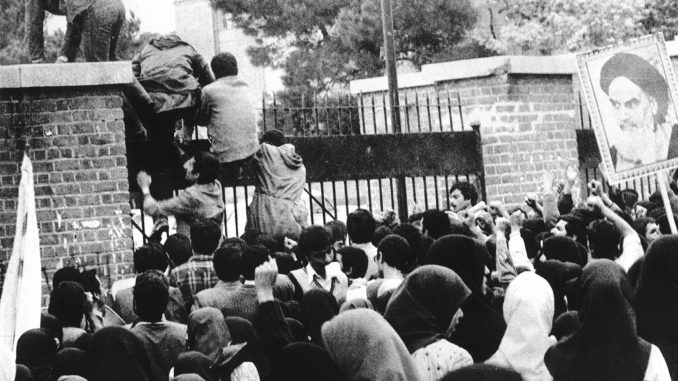
Iran hostage crisis. Iranian students climbing the gates of the U.S. Embassy in Tehran during the takeover that began on Nov. 4, 1979. Author unknown, public domain, via Wikimedia Commons.
Published March 10, 2025
Before President Donald Trump ordered major strikes on Iran, intelligence officials and regional analysts say the Iranian regime and its network of proxy militias had been escalating attacks throughout the Middle East.
For years, Iran has relied on an “axis of resistance” made up of proxy groups in countries such as Iraq, Lebanon, and Yemen. These groups—often armed, trained, or funded by Tehran—have carried out operations targeting U.S. allies, shipping routes, and Western military positions.
According to security analysts, this pattern intensified in the months leading up to the U.S.–Israeli operation launched on February 28, 2026.
Iran’s Proxy Network
Iran’s regional influence relies heavily on armed proxy organizations. These include Hezbollah in Lebanon, Shiite militias in Iraq, and the Houthis in Yemen.
These groups allow Tehran to exert pressure across the region while maintaining plausible deniability. In recent years, they have been involved in attacks on Israeli targets, U.S. military facilities, and international shipping lanes.
For example, Iran-linked forces have used drones, rockets, and missile systems to threaten U.S. bases and commercial shipping routes in the Gulf and Red Sea.
One Iranian intelligence vessel reportedly helped provide targeting data to Houthi fighters attacking ships in the Red Sea, helping them track maritime traffic and coordinate strikes.
Rising Regional Tensions
Tensions escalated sharply in early 2026 after failed diplomatic efforts to limit Iran’s nuclear and ballistic missile programs. Negotiations stalled in February, leaving military options on the table.
U.S. officials said Iran’s missile development and proxy activities posed an imminent threat to American troops and allied forces in the region.
The Trump administration argued that Tehran’s activities—including support for proxy militias and attacks on regional partners—required a decisive response.
Operation Against Iran
On February 28, 2026, the United States and Israel launched a coordinated military campaign targeting Iranian military and leadership facilities.
The strikes killed several senior officials, including Iran’s Supreme Leader Ali Khamenei, in what analysts described as a “decapitation strike” aimed at disrupting the regime’s command structure.
The operation marked one of the most significant escalations in the long-running confrontation between Iran and the United States.
Retaliation and Wider Conflict
Following the strikes, Iran and its allied groups launched retaliatory attacks across the region.
Missile and drone strikes targeted sites in the Gulf and elsewhere, including attacks on Bahrain and Oman connected to the expanding conflict.
Iran also warned that U.S. bases and allied infrastructure throughout the Middle East could become targets if the war continued.
Uncertain Outlook
The conflict has created fears of a wider regional war. Shipping through the Strait of Hormuz—one of the world’s most critical oil routes—has already been disrupted as tensions grow.
While U.S. officials say the objective of the strikes is to eliminate threats and weaken Iran’s military capabilities, Tehran has vowed that the attacks “will not go unanswered.”
As the confrontation unfolds, the Middle East faces the possibility of an extended and unpredictable conflict involving multiple countries and armed groups.
 Implications of the Iran Strikes from a National Security–First Perspective:
The decision by Donald Trump to strike Iranian targets carries several major implications for U.S. foreign policy, global security, and America’s posture in the Middle East. Supporters of a strong national defense and decisive leadership view the operation as a turning point after years of rising aggression from Tehran and its proxy networks.
Restoring Deterrence
One of the most significant implications is the restoration of deterrence. Iran has long relied on proxy groups such as Hezbollah and the Houthis to attack Western allies and disrupt global trade routes while avoiding direct confrontation.
By striking Iranian command structures, the United States signals that attacks carried out through proxies will still bring direct consequences for the regime in Tehran. Advocates of this approach argue that deterrence only works when adversaries believe retaliation will be swift and decisive.
Message to Rival Powers
The strikes also send a broader geopolitical message to adversarial governments such as China and Russia.
For years, critics have argued that global rivals test American resolve through indirect conflicts and regional instability. A strong military response in the Middle East demonstrates that Washington is willing to act militarily to defend its interests and allies.
This could reshape calculations in other regions, including Eastern Europe and the Indo-Pacific.
Protection of Global Trade
Iran-backed militias have repeatedly threatened shipping routes in the Red Sea and the Strait of Hormuz. These waterways are essential for global energy and commercial shipping.
Military action against Iranian assets could reduce the ability of proxy groups to disrupt trade and attack commercial vessels. Supporters argue that protecting these routes is critical not only for allies but also for global economic stability.
Reasserting American Leadership
Another implication is the reassertion of U.S. leadership in the region. Many Middle Eastern partners have long viewed Iran’s growing influence as the primary threat to regional stability.
Decisive action against Tehran may reassure allies such as Israel and Gulf states that the United States remains committed to confronting aggressive regimes.
This could strengthen military cooperation and intelligence sharing among U.S. partners.
Risk of Escalation
Even supporters of the strikes acknowledge a key risk: escalation. Iran could retaliate through its proxy networks, cyber operations, or missile attacks on U.S. forces and allies.
However, advocates argue that failing to respond to repeated provocations would ultimately invite greater aggression.
From this viewpoint, confronting threats earlier prevents larger conflicts later.
Long-Term Strategic Shift
Finally, the operation may signal a broader shift toward confronting state sponsors of terrorism directly rather than only targeting their proxy groups.
If that strategy continues, it could redefine how the United States handles hostile regimes that use indirect warfare to challenge American interests.
 Overall Takeaway:
The strikes against Iran mark a decisive moment in U.S. foreign policy and signal a shift toward confronting threats before they escalate further. By authorizing military action, Donald Trump demonstrated a willingness to respond directly to years of rising aggression linked to Tehran and its network of proxy groups.
Supporters of a strong national security posture argue that holding Iran accountable sends a clear message that attacks carried out through intermediaries will not shield the regime from consequences. At the same time, the situation remains volatile, as Iran and its allies may attempt retaliation across the region.
Ultimately, the long-term outcome will depend on whether the operation successfully weakens Iran’s ability to project power through groups such as Hezbollah and the Houthis. What is certain is that the strikes have reshaped the geopolitical landscape, raising both hopes for renewed deterrence and concerns about the potential for wider conflict in the Middle East.
SOURCES: THE GATEWAY PUNDIT – Before Trump’s Strikes: Iran and Its Proxies Had Been Attacking America for Over Two Decades
REUTERS – US and Iran slide towards conflict as military buildup eclipses talks
GLOBAL CONFLICT TRACKER – War With Israel and the United States