Published March 27, 2026
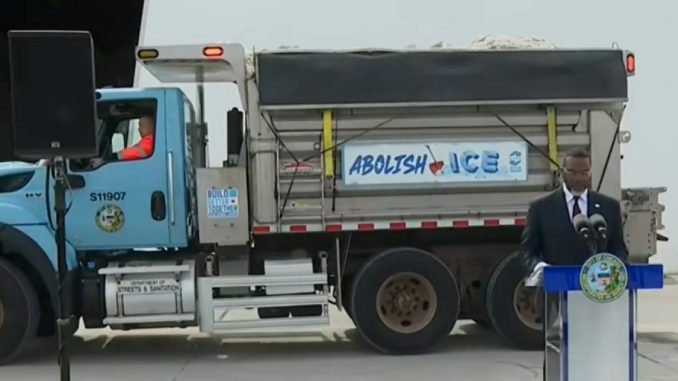
Chicago, IL — Chicago Mayor Brandon Johnson recently revealed the name of a new city snowplow called “Abolish ICE”, stirring strong reactions from residents and leaders across the city and beyond.
Snowplow Contest Name Draws Attention
The name “Abolish ICE” was selected as the winning entry in Chicago’s annual “You Name a Plow” contest. Thousands of residents submitted ideas for the new snowplow, and this particular name received the most votes. Mayor Johnson announced the result during a public event, presenting the plow near the city’s salt dome.
Johnson said the name reflects Chicago’s values of dignity and fairness for all people, regardless of where they come from. He also used the moment to criticize U.S. Immigration and Customs Enforcement (ICE), saying he does not want the agency operating in Chicago’s neighborhoods, airports, or public spaces.
The phrase “Abolish ICE” is widely used by activists and politicians who oppose ICE’s immigration enforcement tactics.
Timing Raises Questions After Student’s Death
The unveiling came just days after 18‑year‑old Sheridan Gorman, a Loyola University Chicago student, was allegedly killed by a Venezuelan migrant who was reportedly in the U.S. without legal status. The tragic event has led to public outcry and criticism of current immigration enforcement policies.
When asked whether he considered postponing the snowplow announcement out of respect for the family’s loss, Mayor Johnson did not reschedule the event.
Public Reaction and Political Debate
The timing of the announcement has sparked debate. Some Chicago residents and relatives of the victim have criticized city leaders, saying the choice of theme feels politically charged in the wake of a violent crime. Others support the message as a defense of immigrant communities.
Illinois Governor JB Pritzker also weighed in, responding to questions about immigration and state policy after the student’s death and criticizing national politics around immigration enforcement.
Broader Context in Chicago Policy
Mayor Johnson has previously taken steps to limit federal immigration enforcement in the city, including executive actions aimed at monitoring ICE activity and asking local police to document federal agents’ conduct rather than assist them.
Chicago has long labeled itself a “sanctuary city,” meaning local officials often resist federal immigration enforcement and focus on protecting undocumented immigrants living in the community.
🔍 Analyst Insight: POLITICS, POLICY, AND PUBLIC PERCEPTION
Political Messaging Through City Programs
The “Abolish ICE” snowplow demonstrates how local governments can use everyday programs to convey political positions. While the “You Name a Plow” contest is meant to be lighthearted, the winning name clearly reflects the city’s stance on federal immigration enforcement. Analysts note that such symbolic gestures can shape public perception without passing new laws or policies, turning ordinary municipal actions into political statements.
Public Safety Concerns
Critics argue that linking a city vehicle to opposition of federal law enforcement can erode trust among residents who prioritize safety. After high-profile crimes allegedly involving undocumented immigrants, decisions like this risk sending a message that public safety is secondary to political messaging. This can increase tension between city officials and federal authorities, complicating cooperation and enforcement in critical situations.
Appealing to Specific Groups
The snowplow’s name strengthens connections with activist groups and communities advocating for immigrant protections, signaling alignment with progressive causes. However, it may also alienate residents who feel vulnerable or disagree with lenient policies, creating a divide between city leadership and neighborhoods most affected by crime.
A Symbol With Real-World Implications
This snowplow is no longer just a municipal vehicle—it has become a visual representation of city priorities and policy direction. Symbolic actions like this can influence media coverage, public debate, and voter perception, demonstrating that even small gestures can carry political weight and social impact.
Potential Long-Term Effects
Analysts warn that repeated symbolic moves can shift public expectations over time. Residents may begin to interpret city programs primarily through a political lens, which can affect trust in local leadership and influence future community engagement and policy debates.
👥 Human Element: IMPACT ON COMMUNITIES AND FAMILIES
Resident Concerns About Safety
For many Chicago families, the snowplow’s announcement comes amid real fears about violent crime and community security. High-profile incidents, including the tragic death of a Loyola University student allegedly killed by an undocumented immigrant, amplify anxiety and concern among parents, students, and local residents.
Timing Amplifies Emotional Impact
The unveiling shortly after a violent crime makes the timing especially sensitive. Families and community members may feel the gesture does not reflect their immediate priorities, raising questions about whether the city leadership is attuned to public concerns about safety and justice.
Mixed Reactions Among Communities
- Immigrant communities may feel recognized and supported, seeing the message as a defense of vulnerable residents.
- Other residents may view it as politically charged and dismissive of public safety concerns, fueling frustration and distrust.
Impact on Daily Life
The decision may influence how residents perceive neighborhood security, interact with local authorities, and make decisions about where to live or work. Symbolic gestures, while intended for messaging, can have practical and emotional effects on daily life, especially in communities already experiencing heightened concerns about crime.
Trust and Community Cohesion at Stake
Leadership decisions like this highlight the delicate balance between symbolic advocacy and real-world safety priorities. Misalignment between messaging and resident experience can undermine confidence in city governance, strain relationships between different community groups, and affect social cohesion.
🎯 Conclusion: BALANCING SYMBOLISM AND PUBLIC SAFETY
The “Abolish ICE” snowplow illustrates the tension between political messaging and community priorities. While city leaders may see it as a way to highlight values or advocate for immigrant communities, the broader public sees it through the lens of safety, security, and recent tragic events.
Symbolic gestures in municipal programs can resonate with some residents, but they can also risk alienating families and neighborhoods that expect protection and law enforcement. Timing matters, and in this case, the announcement came shortly after a violent crime, which has heightened scrutiny and debate.
At its core, the situation highlights a key challenge for local leadership: how to convey policy priorities without undermining trust or public confidence. Actions that are meant to be symbolic must be weighed carefully against the real-world impact on residents’ safety and well-being.
The “Abolish ICE” snowplow may be memorable, but its lasting effect will depend on whether it strengthens community trust—or deepens divisions at a moment when security is top of mind.
SOURCES: FOX NEWS – Chicago Mayor Johnson unveils ‘Abolish ICE’ snowplow days after student allegedly murdered by illegal migrant
THE GATEWAY PUNDIT – Chicago Mayor Unveils City Vehicle That Directly Attacks ICE a Week After Illegal Alien Allegedly Commits Murder
AOL – Pritzker breaks silence on migrant charged in student’s murder, blames Trump for ‘politicizing’ case