Published June 22, 2026
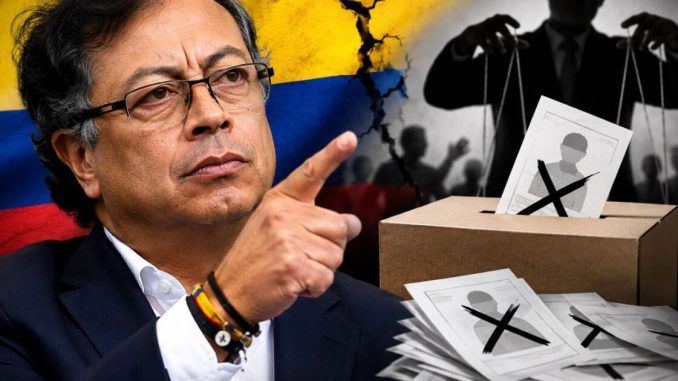
BOGOTÁ, Colombia — Outgoing Colombian President Gustavo Petro is calling for a nationwide audit and recount following one of the closest presidential elections in the country’s modern history, raising concerns about election transparency and alleging possible foreign interference in the vote-counting process.
The controversy erupted after preliminary results showed conservative candidate Abelardo de la Espriella narrowly leading left-wing Senator Iván Cepeda in a tightly contested runoff election. Election authorities reported de la Espriella holding a slim advantage with nearly all ballots counted, though the official verification process remains ongoing.
Petro, whose term is ending due to constitutional limits, has publicly questioned the integrity of the vote-counting system. In a series of statements, he pointed to alleged changes in server IP addresses associated with Colombia’s electoral infrastructure and argued that a comprehensive forensic audit is necessary before any winner is officially declared.
“The scrutiny process determines who becomes president,” Petro said, urging Colombians to remain calm while electoral authorities complete their review. He has also called for judicial oversight of the count and a full recount of ballots nationwide.
The most controversial aspect of Petro’s allegations involves his claim that Israel may have played a role in election interference. Petro suggested that the alleged technical irregularities could have originated from actors linked to the Israeli state, though he did not publicly provide evidence supporting the accusation.
The allegation quickly drew international attention, particularly given Petro’s strained relationship with Israel during his presidency. Observers and political opponents have pushed back on the claims, arguing that no publicly available evidence has yet substantiated the accusation.
Opposition Also Questions Results
The challenge to the election outcome is not limited to Petro. Reports indicate that left-wing candidate Iván Cepeda and his allies have also raised concerns regarding tens of thousands of polling stations and are seeking additional scrutiny of vote totals.
Election officials have emphasized that Colombia’s legal certification process includes multiple stages of review and verification before a president-elect is formally recognized. As of now, no official recount has overturned the preliminary result.
Political Stakes
If confirmed, de la Espriella’s victory would represent a significant political shift for Colombia. The conservative outsider campaigned on law-and-order policies, stronger ties with the United States, and a reversal of several foreign-policy decisions made under Petro’s administration.
The election has exposed deep divisions within Colombian society, with supporters on both sides taking to the streets and social media to defend their positions. Analysts warn that confidence in democratic institutions could be tested if disputes over the vote continue in the coming days.
For now, Colombia remains in a period of political uncertainty as officials continue the formal scrutiny process and competing camps battle over the legitimacy of one of the closest elections in the nation’s history.
🧩 Reading Between the Lines:
Reading Between the Lines:
On the surface, Colombian President Gustavo Petro’s call for an election audit and recount is being framed as a response to alleged irregularities in a razor-thin presidential election.
Supporters argue that every vote deserves scrutiny and that transparency is essential for public confidence in the outcome.
But beyond the immediate controversy, a larger question is emerging: does this dispute reflect genuine concerns about election integrity, or is it part of a broader political battle over the future direction of Colombia?
In simple terms: the debate is no longer just about counting ballots—it’s about whether Colombians will trust the final result, regardless of who wins.
1. Election Challenges Are Becoming More Common Worldwide
Around the world, close elections increasingly lead to demands for audits, recounts, and additional scrutiny.
When margins are narrow, losing sides often seek further review to reassure supporters that the process was conducted fairly.
The challenge is balancing transparency with public confidence.
Key questions include:
- Were election procedures followed properly?
- Are the alleged irregularities significant enough to affect the outcome?
- Can authorities investigate concerns without undermining trust in the system?
- Will all sides accept the final verified result?
The answers may determine whether the controversy fades or continues long after the votes are counted.
2. Trust in Institutions Is Being Tested
Much of the current dispute centers on confidence in Colombia’s electoral institutions.
For some voters, an audit represents a reasonable safeguard.
For others, repeated allegations of misconduct without definitive evidence risk weakening trust in democratic processes.
The broader issue is not simply who wins the election, but whether the public believes the institutions responsible for overseeing elections are acting fairly and transparently.
3. Political Stakes Extend Beyond One Election
This election represents more than a contest between individual candidates.
It reflects competing visions for Colombia’s future on issues such as security, economic policy, international relations, and government reform.
Because the stakes are so high, both sides have strong incentives to challenge narratives that could hurt their legitimacy.
As a result, disputes over election administration can quickly become larger debates about the direction of the country itself.
4. International Attention Is Growing
Petro’s allegations of possible foreign interference have added an international dimension to what would otherwise be a domestic election dispute.
Such claims naturally attract attention because they raise concerns about sovereignty, cybersecurity, and election security.
At the same time, extraordinary claims often lead to calls for extraordinary evidence.
Many observers will be looking for concrete findings from investigators and election officials before drawing conclusions about what may have occurred.
🔗 The Stakes: What’s Really On The Line?
President Gustavo Petro’s demand for an election audit and recount is about more than a disputed vote count.
While the immediate focus is on allegations of irregularities, transparency concerns, and questions surrounding the electoral process, the broader stakes involve public confidence in Colombia’s democracy and the country’s political future.
At its core, the issue is simple: can Colombians trust that the final election result accurately reflects the will of the voters?
The answer could have consequences that extend far beyond this election cycle.
1. Public Confidence In Democratic Institutions
One of the biggest stakes is trust.
Democratic systems depend on public confidence that elections are conducted fairly, votes are counted accurately, and disputes are resolved through established legal processes.
If voters lose confidence in those institutions, political divisions can deepen and acceptance of election outcomes becomes more difficult.
Supporters of an audit argue that additional scrutiny can strengthen confidence.
Critics warn that prolonged disputes may have the opposite effect if the public begins questioning every result.
2. Political Stability
Closely contested elections often create uncertainty, particularly when accusations of irregularities emerge.
Colombia’s next president will face major challenges involving security, economic growth, crime, and international relations.
A prolonged dispute could delay the transition of power, increase political tensions, and make governing more difficult regardless of who ultimately wins.
For many observers, stability depends not only on the final result but on whether the process is viewed as legitimate.
3. Colombia’s Future Direction
This election represents competing visions for the country’s future.
Voters are effectively choosing between different approaches to public security, economic policy, foreign relations, and government priorities.
Because the policy differences are significant, both supporters and opponents view the outcome as highly consequential.
That raises the stakes of every allegation, recount request, and legal challenge that follows.
4. International Credibility
Foreign governments, investors, and international organizations are closely watching how Colombia handles the dispute.
Countries gain credibility when election disagreements are addressed transparently through established legal mechanisms.
If institutions demonstrate independence and professionalism, confidence in Colombia’s democratic system may be strengthened.
If questions remain unresolved, international scrutiny could continue long after the election is over.
5. The Precedent For Future Elections
The way this controversy is handled may influence future elections as well.
If audits and recounts are conducted fairly and transparently, they can reinforce confidence that concerns will be taken seriously.
If disputes become increasingly political or partisan, future candidates may be more likely to challenge unfavorable outcomes.
The response today could help shape expectations for how election disagreements are managed in the years ahead.
🏁 The Final Word:
At this stage, Colombia’s disputed election is less about political slogans and more about whether the system itself can prove it worked the way it is supposed to. Calls for audits and recounts may help clarify doubts, but they also risk stretching out uncertainty at a time when many voters simply want a clear and final answer.
In the end, the credibility of the outcome will depend on whether institutions can provide transparent, verifiable results that both winners and losers can recognize as legitimate. Without that shared confidence, the argument over ballots may turn into something bigger—and harder to resolve—than the election itself.
SOURCES: THE GATEWAY PUNDIT – “ELECTION DENIER!” Colombian President Gustavo Petro Calls to Audit Software in Colombian Election Following Trump-Backed Victory
MIDDLE EAST MONITOR – Colombia’s Petro alleges Israeli interference in election, demands audit and recount
DEMOCRATA – Petro denounces opacity and alterations in the minutes: This is a crime against the vote