Reported by:

Cherry Meigh Timbol
News Content Editor
Published August 2 , 2026


👥 Public / Political Reactions:
The mass migration into Spain’s North African enclave of Ceuta has sparked strong reactions from political leaders, humanitarian organizations, and migration experts. While governments have emphasized border security and orderly migration, many organizations argue that the crisis also reflects deeper economic and social challenges facing Morocco and other parts of North Africa.
🇪🇸 Spanish Government
Spanish authorities described the unprecedented influx into Ceuta as a major humanitarian and border security challenge. The government deployed additional security personnel and emergency responders while coordinating with Moroccan authorities to manage the situation and facilitate the voluntary return of many migrants. Spanish officials also reaffirmed their commitment to protecting the European Union’s external border while respecting international humanitarian obligations.
🇲🇦 Moroccan Government
Moroccan authorities have worked with Spain to help stabilize the situation and assist in the return of many migrants. While the government has not characterized the departures as a reflection of national instability, it continues facing growing scrutiny over economic conditions, youth unemployment, and limited opportunities that many analysts believe are contributing to increased migration pressures.
🇪🇺 European Union
European Union officials expressed support for Spain in managing the sudden influx while reiterating the need for stronger cooperation with Morocco on migration management. EU leaders continue emphasizing the importance of balancing effective border security with the protection of migrants’ rights and addressing the root causes of irregular migration through economic development and regional partnerships.
🤝 Humanitarian Organizations
Humanitarian groups voiced concern over the dangerous conditions faced by migrants attempting to reach Ceuta, particularly those who crossed by sea. Aid organizations renewed calls for the protection of vulnerable migrants, expanded search-and-rescue efforts, and policies that address the humanitarian consequences of irregular migration while respecting international law.
🌍 Migration and Economic Experts
Migration specialists argue that the recent surge reflects more than a border security issue. Many point to persistent unemployment, rising living costs, income inequality, and limited economic opportunities as major factors pushing people to leave Morocco. Experts say that unless these underlying conditions improve, migration pressures toward Europe are likely to continue despite tighter border enforcement.
⚠️ Resulting Effects:
The mass migration into Ceuta has highlighted the growing impact of economic migration on Europe’s southern border. Beyond the immediate humanitarian response, the crisis has intensified debates over border security, migration policy, and the economic conditions driving thousands of Moroccans to leave their country in search of better opportunities.
🚨 1. Spain’s Border Security Has Come Under Greater Pressure
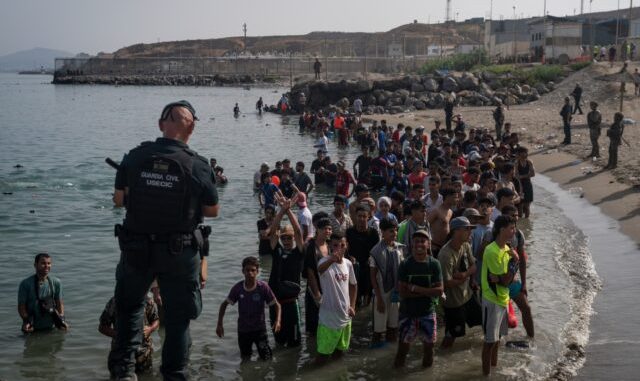
The sudden arrival of tens of thousands of migrants overwhelmed reception facilities and required Spanish authorities to deploy additional security personnel and emergency responders. Border operations in and around Ceuta have since been reinforced.
🛡️ Effect: Spain is expected to continue strengthening surveillance and border management while working closely with Morocco to prevent future mass crossings.
👥 2. Humanitarian Challenges Have Intensified
The large influx of migrants placed significant strain on emergency services, temporary shelters, and humanitarian organizations. Dangerous sea crossings also resulted in casualties, underscoring the risks faced by those attempting to reach Europe.
⚠️ Effect: Humanitarian agencies are likely to expand calls for safer migration pathways and stronger protections for vulnerable migrants.
📉 3. Morocco’s Economic Challenges Have Drawn Greater International Attention
The migration surge has renewed focus on unemployment, rising living costs, and limited economic opportunities facing many Moroccans, particularly young people seeking better prospects abroad.
🏛️ Effect: Increased international attention may place additional pressure on Morocco to address long-term economic and social issues contributing to outward migration.
🇪🇺 4. European Migration Policy Faces Renewed Scrutiny
The events in Ceuta have reignited discussions across the European Union over border protection, asylum procedures, and cooperation with neighboring countries to manage irregular migration.
🤝 Effect: European governments may pursue stronger coordination on migration management while balancing border security with humanitarian responsibilities.
📱 5. Migration Networks May Encourage Further Crossings
Images and reports of the mass crossings have spread widely through social media and migrant communities, potentially encouraging others facing similar economic hardships to attempt the journey.
🌍 Effect: Authorities may face continued migration pressure unless the underlying economic factors driving departures are effectively addressed.
📈 6. Economic Migration Is Expected to Remain a Major Regional Challenge
The crisis has demonstrated that migration is increasingly driven not only by armed conflict but also by persistent poverty, unemployment, and limited opportunities for economic advancement.
🧭 Effect: Unless economic conditions improve and legal migration opportunities expand, Europe is likely to continue experiencing periodic migration surges from North Africa and other neighboring regions.
🔮 Future Outlook:
🧩 Bottom Line:
SOURCES: BREITBART NEWS – The Situation in Morocco: What Are Migrants ‘Fleeing’ From?
TIME MAGAZINE – Why Thousands of Moroccan Migrants Crossed Into the Spanish Exclave Ceuta
AP NEWS – Tens of thousands of migrants voluntarily leave after crossing into Spanish territory of Ceuta