
Published June 14, 2026
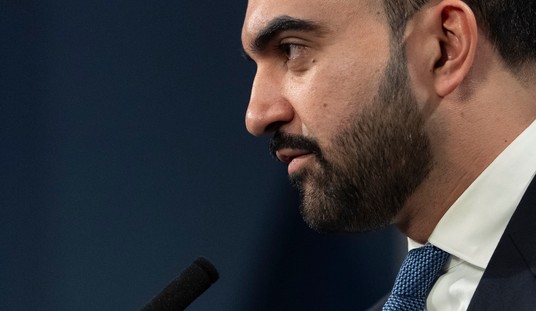
NEW YORK — New York Democrats are moving forward with Mayor Zohran Mamdani’s controversial plan to establish city-backed grocery stores across the five boroughs, even as critics warn the proposal could undermine private businesses, burden taxpayers, and repeat the failures of past government-run retail experiments.
Mamdani, a self-described democratic socialist, campaigned on a promise to create publicly supported grocery stores as part of a broader affordability agenda. His administration has allocated approximately $70 million for the initiative, with plans for one store in each borough. The first announced locations are in East Harlem’s La Marqueta marketplace and at The Peninsula development in the Bronx.
Supporters argue the stores will help lower food prices in neighborhoods struggling with high living costs and limited access to affordable groceries. The administration says public investment can help deliver lower prices on everyday necessities while addressing food insecurity.

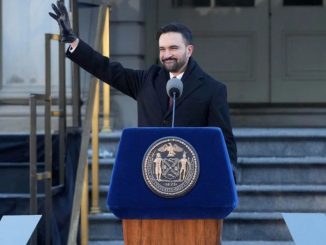
Mayor Zohran Mamdani announcing the location of the second city-run grocery store at an event in Mott Haven on May 18, 2026.Camara Porter/ AdMedia / SplashNews.com

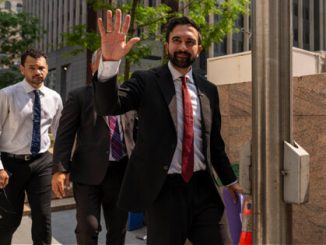
Mamdani’s city-owned grocery stores are in competition with small businesses.ZUMAPRESS.com
But opposition is growing from local business owners, industry groups, and fiscal conservatives who question whether government should be competing directly with private retailers. Critics argue that taxpayer-subsidized stores could place neighborhood grocers, bodegas, and family-owned markets at a competitive disadvantage.
Those concerns intensified after city officials acknowledged that no comprehensive study had been conducted on the potential impact the project could have on existing small businesses. During a City Council hearing, officials confirmed that an economic analysis examining how government-backed stores might affect local retailers had not been completed before the project advanced.
Business advocates say that omission raises serious questions about the plan’s long-term consequences. Opponents contend that subsidized pricing and government support could distort the marketplace while exposing taxpayers to financial risks if the stores fail to meet expectations.
 City Hall plans to open the first city-run grocery store at La Marqueta in East Harlem.James Keivom for NY Post
The proposal has also become a flashpoint in the broader debate over socialism and government intervention. Mamdani has embraced an activist role for government and has argued that public institutions should play a larger role in addressing affordability challenges facing working-class families.
Conservative commentators have compared the concept to other government-operated enterprises that struggled with inefficiency and cost overruns, while warning that political priorities rather than consumer demand could shape future operations. Some critics have even drawn parallels to state-controlled economic models that historically produced mixed results.
Supporters counter that public grocery programs have existed in various forms around the world and that the city’s plan could provide relief in areas where residents face higher food costs or limited competition. They argue that government intervention is justified when market forces fail to deliver affordable essentials.

The Post’s cover on immigrant business owners opposing Mamdani’s plans for city-run grocery stores
As New York moves closer to launching the first locations, the debate is likely to intensify. For critics, the unanswered questions about costs, competition, and government expansion remain a warning sign. For supporters, the initiative represents an ambitious attempt to tackle one of the city’s most persistent affordability challenges. The outcome could become a major test case for progressive economic policies in America’s largest city.
🧩 Reading Between the Lines:
What This Debate Is Really About
On the surface, this is a debate about grocery stores. But beneath that, it’s a debate about how much control government should have over parts of everyday life that have traditionally been handled by private businesses.
Many New Yorkers struggling with high food prices understandably want relief. The question is whether creating government-run stores will actually solve the problem or simply create new ones.
Government as Competitor
Normally, grocery stores compete against one another for customers. If one store charges too much or offers poor service, shoppers can take their business elsewhere.
Critics worry that when the government enters the grocery business, it is no longer acting as a neutral referee. Instead, it becomes a taxpayer-funded competitor with advantages that private businesses don’t have. If losses occur, taxpayers—not investors—could end up covering the bill.
Lessons From the Past
Supporters see government-run stores as a fresh solution. Skeptics see a familiar pattern: politicians promising lower costs through government programs, only for taxpayers to face higher expenses later.
History is filled with examples where government projects sounded good at launch but became more expensive, less efficient, and harder to manage over time than originally promised.
The Small Business Question
One of the biggest unanswered questions is what happens to neighborhood grocery stores, bodegas, and family-owned markets.
If a government-backed store can sell products below market prices because it receives public funding, nearby small businesses may struggle to compete. While consumers could benefit in the short term, some communities could eventually lose locally owned businesses that have served residents for decades.
A Growing Trend
The grocery store proposal is also part of a larger movement that favors government involvement in areas traditionally left to private enterprise.
Supporters argue government should step in whenever markets fail to provide affordable necessities. Critics respond that every new government program increases public spending, expands bureaucracy, and reduces the role of competition that often drives innovation and lower prices.
🔗 The Stakes:
More Than Just a Grocery Store
At first glance, this may look like a simple plan to make groceries cheaper. But the decisions made here could have consequences far beyond a handful of city-run stores. The outcome could influence how much government becomes involved in industries that have traditionally been run by private businesses.
Taxpayer Money on the Line
Unlike private grocery chains, government-run stores do not rely solely on investors and shareholders. If a private business fails, the owners bear the losses. When a government project falls short, taxpayers often end up covering the costs.
The key question is whether these stores can operate efficiently enough to avoid becoming an ongoing expense for residents who may never shop there.
The Future of Small Businesses
Neighborhood grocery stores, bodegas, and family-owned markets are often the backbone of local communities. They provide jobs, serve long-time customers, and operate without public subsidies.
If government-backed stores can absorb losses or receive additional funding, some local businesses could find themselves competing on an uneven playing field. The concern is that a program intended to help consumers could unintentionally hurt the very entrepreneurs who have invested their savings into serving their communities.
Setting a Precedent
Once government enters one industry, the debate often shifts to whether it should enter others as well. If city-run grocery stores become accepted, future leaders may argue for government-run pharmacies, gas stations, housing developments, or other services.
Supporters may see that as progress. Critics see it as a gradual expansion of government into areas where competition and private investment have traditionally played the leading role.
Trust and Accountability
Public officials are asking voters to trust that the program will deliver lower prices and better access to food. But many residents want answers about costs, oversight, and long-term sustainability before the project moves forward.
Questions about economic studies, business impacts, and taxpayer exposure are not just political talking points—they are basic concerns about accountability and responsible spending.
🏁 The Final Word:
New York’s government-run grocery store plan is being promoted as a solution to rising food costs, but many questions remain unanswered. While the goal of making groceries more affordable is widely shared, critics argue that good intentions alone do not guarantee good results. Concerns about taxpayer costs, the impact on neighborhood businesses, and the lack of a completed economic study have fueled doubts about whether the program is ready to move forward. As the city prepares to launch its first locations, the debate is no longer just about grocery stores—it is about the role of government, the future of local businesses, and whether public officials can deliver on their promises without creating new problems along the way. Ultimately, New Yorkers will judge the plan not by its political message, but by its real-world results.




The left doesn’t have the capability to learn from history!!!
Severe disorder!!