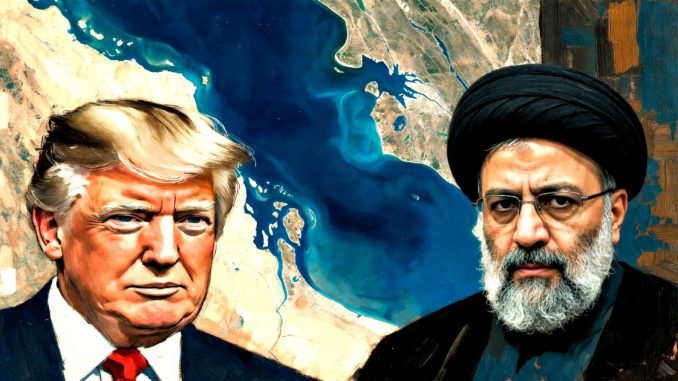
President Donald Trump and Iranian leader Mojtala Khamenei GROK
Published May 25, 2026
President Donald Trump indicated over the weekend that the United States may be close to reaching a major agreement with Iran, raising hopes of easing tensions in the Middle East and reopening the critical Strait of Hormuz shipping route after months of conflict and instability.
Speaking to reporters and posting updates online, Trump said a framework for a potential deal was “largely negotiated,” though he later cautioned that there was “no rush” and insisted the U.S. would maintain pressure until final terms are secured.
The developing agreement reportedly includes discussions surrounding a ceasefire, the reopening of the Strait of Hormuz, sanctions relief, and limitations tied to Iran’s nuclear activities. Regional mediators, including Pakistan and Gulf states, have reportedly played a role in pushing negotiations forward behind the scenes
 American negotiators believe that Iranian Supreme Leader Mojtaba Khamenei has signed off on the “broad template” of a peace plan in which his nation would agree “in principle” to dispose of its highly enriched uranium.ISNA/AFP via Getty Images
Secretary of State Marco Rubio said “significant progress” had been made in talks, though he stressed that key issues remain unresolved. Trump has repeatedly stated that Iran cannot be allowed to obtain nuclear weapons, while Iranian officials continue insisting their nuclear program is for civilian purposes only.
Reports suggest the draft proposal could involve phased sanctions relief and limited nuclear concessions in exchange for restoring commercial shipping through the Strait of Hormuz, one of the world’s most important oil transit routes. Global markets have closely watched the negotiations due to fears that prolonged disruption in the region could push energy prices sharply higher.
At the same time, skepticism remains high. Iranian state-linked media pushed back against some of Trump’s claims, while critics inside the United States warned against any agreement they believe could resemble the Obama-era nuclear deal.
 A satellite image of the nuclear facility complex in Natanz, Iran.DigitalGlobe/Getty Images
The negotiations come after months of military escalation between Iran, Israel, and U.S.-aligned forces in the region. Analysts say both sides now face growing economic and political pressure to avoid a broader regional war that could disrupt global trade and destabilize energy markets.
While no final agreement has officially been announced, the White House signaled that negotiations remain active and that further developments could emerge in the coming days.
🧩 Reading Between the Lines:
Beyond the headlines about negotiations and possible peace deals, the talks between the United States and Iran reveal several larger issues involving energy, military power, global trade, and America’s role in the Middle East.
Avoiding Another Middle East War
One major reason both sides may be pushing for negotiations is the fear of a larger regional conflict. A direct war involving Iran could affect oil supplies, global shipping routes, and military stability across the Middle East. After years of costly overseas conflicts, many Americans are wary of another long military involvement abroad.
Oil and Economic Pressure
The Strait of Hormuz is one of the most important oil shipping routes in the world. Any disruption there can quickly affect fuel prices, transportation costs, and inflation worldwide. Governments know that rising gas prices can create political pressure at home, especially when families are already struggling with high living expenses.
Strength Through Pressure
The negotiations also reflect a strategy of using economic sanctions and military pressure to force Iran back to the table. Supporters of this approach argue that maintaining strong leverage gives the United States a better position in negotiations compared to offering major concessions too early.
Concerns Over Another Weak Deal
Some critics fear the agreement could end up resembling past nuclear deals that they believe gave Iran financial relief without permanently stopping its nuclear ambitions. There are concerns that lifting sanctions too quickly could provide Tehran with billions of dollars while only delaying larger problems for the future.
America’s Global Image
The talks are also being watched closely by allies and rivals around the world. Countries like China, Russia, and Israel are paying attention to how firmly the United States handles negotiations with Iran. The outcome may influence how other nations respond to American diplomacy and military pressure in future conflicts.
The Public Wants Stability
After years of global conflicts, inflation, and economic uncertainty, many ordinary people are less focused on political speeches and more concerned about stability. Lower fuel prices, avoiding another war, and reducing international tension are practical concerns that affect everyday life far beyond Washington or Tehran.
🔗 The Stakes:
The possible Iran deal carries major consequences not just for the Middle East, but for the global economy, energy markets, military stability, and America’s position on the world stage.
Preventing a Regional Explosion
If negotiations fail, tensions between Iran, Israel, and U.S.-aligned forces could escalate into a much larger conflict. The Middle East remains one of the world’s most sensitive regions for oil production and military activity. Even a limited war could disrupt global trade routes and trigger economic shocks worldwide.
Energy Prices and Inflation
One of the biggest concerns is oil. The Strait of Hormuz handles a large portion of the world’s energy shipments, and instability there can quickly drive up gas and transportation costs. Families already dealing with inflation could feel the impact almost immediately through higher fuel, food, and shipping prices.
Iran’s Nuclear Ambitions
The central issue remains Iran’s nuclear program. American officials continue insisting Iran must never obtain nuclear weapons capability. Critics worry that a weak agreement could give Iran financial relief while allowing its nuclear development to continue behind the scenes. Supporters of tougher policies argue that long-term security depends on strict enforcement and real verification.
America’s Credibility
The negotiations are also a test of American leadership. Allies in the region, especially Israel and Gulf nations, are watching closely to see whether the United States maintains strong negotiating leverage or makes concessions too easily. Rival nations like China and Russia are also paying attention to how America handles high-pressure diplomacy.
Avoiding Another Endless Conflict
After decades of military involvement in the Middle East, many Americans want to avoid another open-ended conflict that could cost lives, money, and political stability. Leaders now face the challenge of balancing peace efforts with national security concerns while avoiding policies that could pull the country into another prolonged war.
Global Markets Watching Closely
Financial markets are reacting to every update from the negotiations. Investors understand that peace could stabilize oil prices and calm international markets, while failure could create new economic uncertainty. In today’s interconnected world, events in the Middle East can affect jobs, investments, and living costs far beyond the region itself.
🏁 The Final Word:
The Iran negotiations represent a high-stakes moment with real consequences for global stability, energy prices, and national security. While a deal could help avoid another costly conflict and bring short-term calm to oil markets, there are still serious concerns about whether any agreement will truly stop Iran’s long-term nuclear ambitions or simply delay them. At the same time, the pressure to prevent another Middle East war is strong, especially with inflation and global uncertainty already affecting everyday families. The outcome will likely shape not only U.S. foreign policy, but also the balance of power and economic conditions worldwide for years to come.
SOURCES: THE GATEWAY PUNDIT – JUST IN: Progress Made on Iran Deal as Iran’s Supreme Leader Believed to be in Favor
THE NEW YORK POST – Iran’s supreme leader has agreed ‘in principle’ to give up uranium as part of peace deal, US official says
AL JAZEERA – Trump: No rush on Iran deal, as Netanyahu demands end to nuclear threat
AP NEWS – Details emerge of a potential Iran deal as Trump says not to rush
BBC NEWS – Trump says Iran talks ‘constructive’ but Tehran ‘must understand’ it cannot develop a nuclear weapon
AXIOS – Exclusive: What’s inside the Iran deal Trump is close to signing