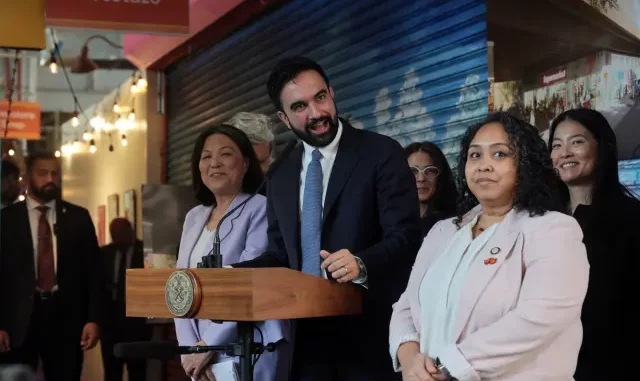
Mayor Zohran Mamdani attends a news conference to announce the city-run grocery store, La Marqueta in East Harlem.Getty Images
by Diana Zapata • News Writer /Editorial Specialist
Published August 25, 2026
NEW YORK — A coalition of immigrant-owned grocery stores and bodegas has launched a legal battle against New York City Mayor Zohran Mamdani, arguing that his plan to create government-owned supermarkets would unfairly compete with thousands of small businesses that have served the city’s neighborhoods for decades.
The lawsuits, filed by the Multicultural Business Coalition (MBC), represent roughly 50 ethnic business organizations whose members include Hispanic, Arab, Asian, African, and Eastern European grocery owners. The plaintiffs claim the city is using taxpayer dollars to create a publicly subsidized competitor that independent retailers simply cannot match.
Small businesses say they’re being undercut
At the heart of the dispute is Mamdani’s proposal to open five city-owned grocery stores—one in each borough—selling staple food items at prices reportedly up to 30% lower than traditional supermarkets.
Business owners argue that while large corporations may survive aggressive price competition, neighborhood bodegas operate on razor-thin margins and rely on everyday grocery sales to remain open. Many fear the city’s pricing model could drive long-established immigrant businesses out of the market.
“The government shouldn’t become our competitor,” coalition leaders argue in the legal filings, saying the proposal threatens the American dream built by immigrant entrepreneurs.

Ken Roldan is the president of the Multicultural Business Coalition.WB&B
Why critics compare it to Walmart
Opponents say the proposal carries a striking political contradiction.
For years, progressive leaders in New York opposed Walmart’s expansion, arguing that a retail giant’s purchasing power would devastate small local businesses. The lawsuits contend that government-owned supermarkets would create the same market imbalance—except the competitor would be financed by taxpayers rather than private investors.
The coalition argues that if predatory pricing was considered dangerous when practiced by a corporation, it should be equally concerning when implemented by City Hall.

The La Marqueta food marketplace in East Harlem was the first announced site for a city-owned grocery store.Christopher Sadowski for NY Post
Mamdani defends the plan
Mayor Mamdani’s administration insists the initiative is aimed at lowering grocery costs, not replacing neighborhood stores.
City officials say New Yorkers have experienced dramatic food inflation in recent years and estimate families could save as much as $1,000 annually by purchasing essentials through municipal grocery stores. The administration also notes that city-run markets would not sell products like alcohol, lottery tickets, cigarettes, or prepared hot foods—key revenue sources for many bodegas.

A rendering of The Peninsula Hunts Point, formerly the Spofford Juvenile Detention center, in the Bronx where a city-owned grocery store will open.WXY
What the lawsuits seek
The plaintiffs are asking the court to:
-
Block construction of the city-owned grocery stores
-
Require full economic and environmental impact reviews
-
Determine whether New York City has legal authority to operate municipal supermarkets
-
Prevent taxpayer-funded competition against privately owned neighborhood grocers
If the court grants an injunction, the Bronx location—the first planned government grocery store—could face significant delays while litigation proceeds.