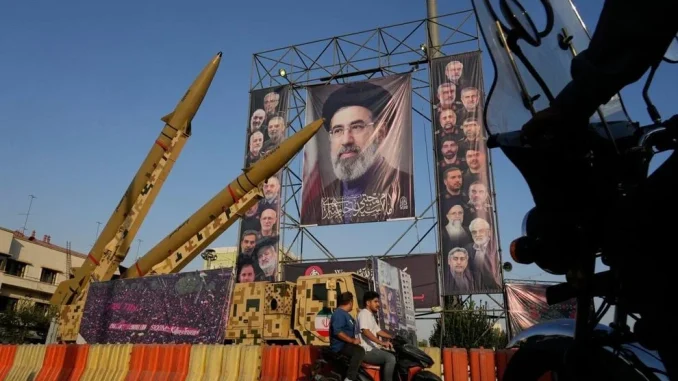
Motorbikes drive past Iranian missiles and banners showing portraits of the Iranian Supreme Leader Ayatollah Mojtaba Khamenei, center, and the late armed forces commanders and nuclear scientists, who were killed in Israeli and U.S. strikes, displayed in a military exhibition commemorating the anniversary of the start of the 1980-88 Iraq-Iran war at Baharestan Square, in Tehran, Monday, Sept. 28, 2026. (AP Photo/Vahid Salemi)
Reported by:

Cherry Meigh Timbol
News Content Editor
Published September 30, 2026
Iran says it has received an official response from the United States to its proposal for ending the seven-month war, opening a new stage in indirect negotiations between Washington and Tehran.
Iranian government spokeswoman Fatemeh Mohajerani said Wednesday that Foreign Minister Abbas Araghchi presented the American response to President Masoud Pezeshkian during a cabinet meeting. Iranian authorities did not immediately disclose the full contents of Washington’s proposal.
The development follows days of indirect diplomacy involving Qatar, after Iran submitted a seven-day framework that linked the reopening of the strategically important Strait of Hormuz to U.S. concessions, including an end to the American blockade of Iranian ports.
Reuters reported that the two sides appear to agree on many of the steps that would be necessary for a settlement, but remain divided over the sequence in which those steps should occur.
Iran Confirms Receipt of U.S. Response
The Iranian confirmation came after President Donald Trump publicly said over the weekend that he had rejected Tehran’s proposal.
Iranian officials had maintained that they were still waiting for a formal response through the mediators. Qatar subsequently transmitted the U.S. position to Araghchi, who was returning from the United Nations General Assembly in New York.
CNA reported that the response was presented to Pezeshkian at a cabinet meeting but that Iranian officials did not immediately reveal its contents.
The formal exchange is significant because it indicates that diplomatic channels remain open despite public statements from both governments rejecting elements of the other side’s proposals.
What Iran Wants
Iran’s original seven-day plan was built around a series of conditions for ending hostilities and restoring shipping through the Strait of Hormuz.
According to CNA, Tehran has demanded:
- A ceasefire covering the wider Middle East, including Lebanon
- The unfreezing of Iranian assets held abroad
- The lifting of sanctions on Iran’s oil sector
- An end to the U.S. naval blockade of Iranian ports
- The reopening of the Strait of Hormuz
- A return to negotiations over Iran’s nuclear program
Iran has not publicly disclosed every condition, but the demands that have been made public demonstrate that the dispute extends well beyond the shipping route itself.
Reuters reported that under Iran’s proposal, the United States would lift its blockade of Iranian ports while Iran would reopen the Strait of Hormuz within seven days.
The Strait of Hormuz Remains the Key Pressure Point
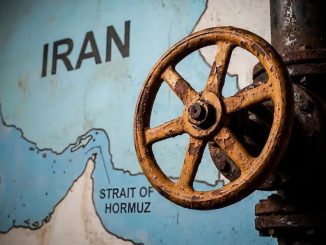
The Strait of Hormuz has become one of the most important pressure points in the conflict.
The waterway connects the Persian Gulf with the Gulf of Oman and is a major route for international oil and gas shipments. The conflict has sharply disrupted maritime traffic, with vessels continuing to face security risks.
Reuters reported Wednesday that shipping through the strait had increased in recent weeks, but flows of crude oil, refined petroleum products and natural gas remained substantially below normal levels. Britain’s UK Maritime Trade Operations agency also reported that two vessels had been struck by projectiles on Tuesday.
ZeroHedge, citing maritime security reports, likewise highlighted several recent incidents involving tankers and an LNG carrier. It reported that the attacks had added to uncertainty over whether the recovery in Gulf shipping could continue.
Washington and Tehran Disagree Over Sequencing
One of the most important details emerging from the negotiations is that the disagreement may not be primarily about what needs to happen, but when each side must act.
A source briefed on the negotiations told Reuters that the United States and Iran largely agree on the necessary steps but remain divided over their sequencing.
That distinction could prove crucial.
Iran wants guarantees and economic relief connected to the reopening of the Strait, while Washington has its own demands concerning Iran’s nuclear program and other security issues.
If each side expects the other to move first, negotiations could remain stalled even if the broad outline of a settlement is understood.
Qatar Continues to Mediate
Qatar has played an increasingly important role in carrying messages between Washington and Tehran.
The latest round of indirect discussions began around the United Nations General Assembly in New York. Qatari mediators subsequently traveled between the two sides, carrying proposals and responses.
The arrangement allows Washington and Tehran to continue communicating without returning to direct negotiations.
ZeroHedge reported that the seven-day framework is intended to create a trust-building period before the sides move toward a broader settlement. It also cited reporting that the dispute centers heavily on the order in which the proposed measures would be implemented.
Iran Says It Is Ready to Continue Negotiations
The delivery of the U.S. response does not mean an agreement has been reached.
Iranian President Masoud Pezeshkian said the government would seek to advance an agreement while defending what he described as the rights of the Iranian people. According to the reporting cited by ZeroHedge, Pezeshkian said any eventual agreement should be based on a “win-win” approach.
Tehran’s position is also complicated by the economic pressure created by the war and U.S. sanctions.
The Iranian economy has suffered substantial disruption, while the government has continued to maintain military leverage in the region and around the Strait of Hormuz. Reuters reported that the war has placed significant pressure on Iran’s economy even as Tehran retains the ability to threaten regional shipping.
U.S. Withdrawal From Iraq Changes the Regional Equation
The diplomatic development coincided with another major event: the completion of the U.S. military withdrawal from Iraq.
Reuters reported that the final American forces left Iraq on September 30, ending a U.S. military presence that had lasted 23 years. Iranian officials and Iran-backed armed groups portrayed the withdrawal as a victory.
The withdrawal also changes the strategic environment surrounding the Iran conflict.
Reuters cited analysts who warned that Iran-backed groups could feel more empowered in Iraq without a Western military presence and could seek greater influence within Iraqi institutions.
For Washington and Tehran, the change adds another layer to negotiations already involving the nuclear program, Gulf shipping, sanctions and regional armed groups.
The War’s Economic Impact Extends Beyond Iran
The dispute over Hormuz has consequences well beyond the immediate U.S.-Iran confrontation.
The waterway was a major route for global energy shipments before the war, and prolonged disruption has affected oil and gas markets. Reuters reported Wednesday that oil prices were rising as stalled U.S.-Iran negotiations offset signs of recovering supply.
Brent crude for November delivery reached $103.19 a barrel, while the more actively traded December contract gained 1.7% to $97.78. West Texas Intermediate rose 1.3% to $90.57.
The persistence of shipping disruptions therefore remains an important economic consideration for governments and consumers around the world.
🧩 Bottom Line:
Iran has confirmed that it received an official U.S. response to Tehran’s proposal for ending the war, marking a new development in the indirect negotiations between the two countries.
The broad framework now appears clearer: Iran wants the lifting of the U.S. blockade and economic restrictions alongside a ceasefire and eventual reopening of the Strait of Hormuz, while Washington continues to press its own security and nuclear-related demands.
The biggest unresolved question is no longer simply whether the two sides can identify common ground, but which side acts first and how the proposed steps are sequenced.
For now, diplomacy remains active, but the continuing danger to commercial shipping and the lack of agreement over implementation leave the outcome uncertain.
SOURCES: ZEROHEDGE – Iran Says It Received Official US Counter-Proposal On Ending The War
CHANNEL NEWS ASIA – Iran says received US response to its proposal to end war
REUTERS – Iran says it receives US response to latest proposal as Washington pulls out of Iraq