Reported by:

Cherry Meigh Timbol
News Content Editor
Published November 19, 2026
Israel-Lebanon tensions remain unresolved as Israeli military operations continue in Lebanese territory, while the Lebanese government faces increasing pressure to bring all weapons under state control and disarm Hezbollah.
Developments reported between November 15 and 19, 2026, highlight the growing divide between Israel’s security demands, Lebanon’s efforts to strengthen government authority, and Hezbollah’s refusal to surrender its weapons without an Israeli military withdrawal.
The latest developments also involve renewed U.S. pressure on Hezbollah’s financial networks and diplomatic discussions over the future of international peacekeeping forces in southern Lebanon.
Israeli Strike Hits Suspected Hezbollah Weapons Shipment on November 16
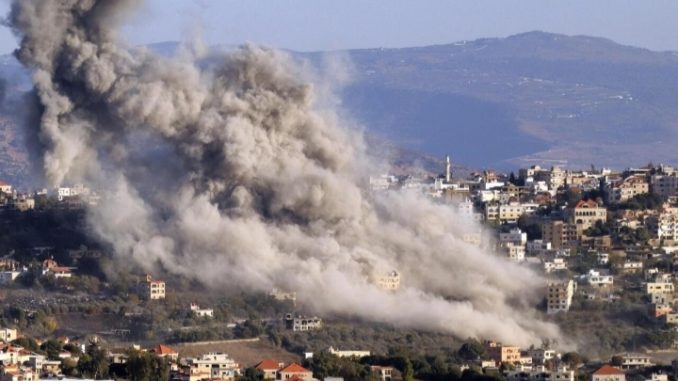
One of the latest military developments occurred overnight on November 15–16, 2026, when the Israeli Air Force struck an area near Janta in Lebanon’s eastern Beqaa Valley, close to the Syrian border.
The Israeli military confirmed the attack on November 16, saying it had targeted a shipment of weapons that had reportedly been transferred from Syria into Lebanon and was intended for Hezbollah.
According to the Israel Defense Forces (IDF), the weapons shipment was considered a threat because it could strengthen Hezbollah’s military capabilities and support attacks against Israeli civilians and soldiers.
The Israeli military also identified the Janta area as a location previously used for weapons transfers.
Lebanese media reported the airstrike in the mountainous area near the Syrian border. The attack was described as the first Israeli strike in the Beqaa Valley region in approximately three months.
The available reports did not establish the number of casualties or the full extent of the damage.
Israeli Forces Detain Two Lebanese Men in Shebaa
Another incident occurred early on November 16, when Israeli troops entered the outskirts of Shebaa, a town in southern Lebanon, and detained two Lebanese brothers.
Lebanon’s National News Agency reported that Israeli forces searched the brothers’ residence, damaged belongings and subsequently took them away.
The Israeli military confirmed the detention, identifying the two men as members of the Lebanese Resistance Brigades, a group affiliated with Hezbollah.
The IDF said the individuals were being questioned by Israeli security forces.
The incident added to tensions surrounding Israeli military activity in southern Lebanon, where Israeli troops continue to operate in areas they describe as security positions.
Israeli Military Reports Destruction of Underground Tunnel on November 15
A day before the Janta airstrike, on November 15, the Israeli military announced that its forces had destroyed an underground tunnel in Majdal Zoun, a village in southern Lebanon.
According to the IDF, the tunnel measured approximately 35 meters in length and contained two rooms.
The operation was described as part of continuing efforts to locate and dismantle Hezbollah-related military infrastructure in areas where Israeli forces maintain a presence.
Lebanese media have also reported Israeli artillery fire, tank activity, airstrikes and demolitions in parts of southern Lebanon during the November 9–16 period.
The Israeli military’s claims concerning the tunnel and its military purpose have not been independently verified in the available reporting.
Lebanon’s Government Orders Army to Prepare Nationwide Weapons-Control Plan on November 17
A significant political development took place on Tuesday, November 17, when Lebanon’s cabinet tasked the Lebanese army with preparing a plan to place weapons across the country under the authority of the state.
The decision followed a cabinet meeting at the presidential palace in Baabda that lasted nearly six hours.
Prime Minister Nawaf Salam announced that the army had been authorized to develop a plan to ensure that weapons would be restricted to six designated state security institutions by the end of 2026.
The decision represents a major political challenge to Hezbollah, which maintains an independent armed structure outside the Lebanese military.
Lebanese officials have faced growing pressure from the United States and other international partners to demonstrate progress toward disarming the group.
Information Minister Paul Morcos said the army would have until the end of November to submit its proposed plan. The cabinet also discussed U.S. proposals concerning Hezbollah’s weapons but did not reach a final agreement on all aspects.
The government was expected to continue discussing the issue during another cabinet session on November 19.
Hezbollah Leader Rejects Disarmament Demands
The Lebanese government’s decision came amid strong opposition from Hezbollah leader Naim Qassem.
In a televised address on November 17, Qassem rejected external pressure to disarm the organization, arguing that surrendering its weapons without adequate national security guarantees would leave Lebanon vulnerable.
He also maintained that any decision concerning Hezbollah’s weapons must involve national consensus and the group’s participation.
Qassem warned that Hezbollah would respond if Israel resumed a broader military campaign against Lebanon.
His position reflects the continuing disagreement between Hezbollah and the Lebanese government over the country’s future security arrangements.
While the government seeks to establish exclusive state control over weapons, Hezbollah maintains that its military capabilities remain necessary as long as Israeli forces occupy Lebanese territory and continue conducting military operations.
The disagreement has become one of the central obstacles to implementing a lasting security arrangement between Israel and Lebanon.
United States Announces Sanctions Against Hezbollah-Linked Individuals and Organizations on November 18
On Wednesday, November 18, the U.S. Department of the Treasury announced sanctions targeting three individuals and three entities in Lebanon and Turkey over alleged financial connections to Hezbollah and Iranian networks.
Among those targeted was Wa Ta’awanu Association, a Lebanon-based charity that provides emergency assistance in southern Lebanon, along with its founder, Afif Abdel Rida Chouman.
The sanctions also targeted Lebanese businessman and money changer Hassan Khechen and his brother Ibrahim.
According to the U.S. Treasury, the individuals and organizations were allegedly involved in financial activities supporting Hezbollah and networks connected to Iran’s Islamic Revolutionary Guard Corps’ Quds Force.
The department alleged that the charity diverted donor funds toward Hezbollah-related activities and that the two brothers helped transfer money from Iran to Lebanon through gold and cash transactions.
The sanctions also covered Gold Global Company in Lebanon and Sankari Gold Kuyumculuk Ticaret Limited Sirketi in Turkey.
The Treasury Department said the measures were intended to disrupt Hezbollah’s financial networks and limit its ability to obtain funding.
The allegations were made by the U.S. government. The available report did not establish independent findings of guilt against the individuals or organizations targeted.
UN Peacekeeping Mission Faces Uncertain Future
Another concern involves the future of the United Nations Interim Force in Lebanon (UNIFIL), which has monitored the security situation along the Israel-Lebanon border for decades.
Under United Nations Security Council Resolution 2790, adopted in August 2025, UNIFIL’s mandate was extended for a final time until December 31, 2026, with an orderly drawdown and withdrawal process to follow.
As the deadline approaches, international discussions have focused on possible arrangements to maintain security monitoring and support the implementation of existing agreements.
The United States has also discussed alternative arrangements for an international presence in southern Lebanon.
The possible transition raises questions about how border security, monitoring and the implementation of United Nations resolutions will be maintained after UNIFIL’s departure.
No final replacement arrangement has been established in the reporting available as of November 19.
Background: Why the Ceasefire Remains Fragile
The latest developments are part of a longer confrontation between Israel and Hezbollah.
A U.S.-brokered ceasefire in November 2025 ended the previous major round of fighting. However, the agreement did not resolve the fundamental disagreements over Hezbollah’s weapons, Israeli military positions in southern Lebanon and the implementation of security arrangements along the border.
A new escalation began on March 2, 2026, following U.S. and Israeli attacks on Iran on February 28, according to the United Nations Security Council Report’s November assessment.
Israel subsequently deployed forces into parts of Lebanese territory, with some positions reportedly extending as far as 10 kilometers inside Lebanon.
A trilateral framework involving Israel, Lebanon and the United States was signed on June 26, 2026, in an effort to address the renewed hostilities.
Further negotiations took place in Rome during the summer and in Florida on October 20–21. However, the discussions reportedly failed to produce a breakthrough on key security issues.
Israel has continued military operations in parts of Lebanon, while Hezbollah has maintained its opposition to disarmament without a complete Israeli withdrawal.