Reported by:

Cherry Meigh Timbol
News Content Editor
Published November 8, 2026
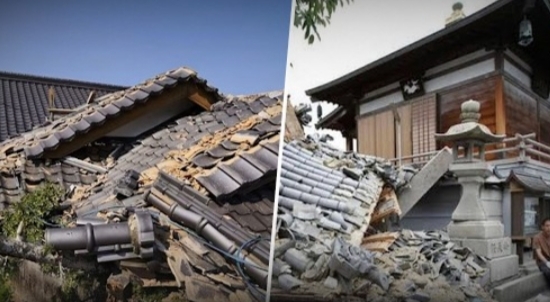
A magnitude 5.7 earthquake struck central Japan early Sunday, November 8, 2026, injuring more than 20 people and causing damage to buildings and businesses, according to Japanese authorities and international news reports.
The Japan Meteorological Agency (JMA) recorded the earthquake at approximately 1:04 a.m. local time. Its epicenter was located in western Shizuoka Prefecture, at an estimated depth of 40 kilometers.
The United States Geological Survey (USGS), meanwhile, reported a magnitude of 5.5 for the same earthquake.
Injuries and Damage Reported
At least 22 people were reported injured across Aichi and Shizuoka prefectures, according to reports from local authorities cited by the Associated Press and other news organizations.
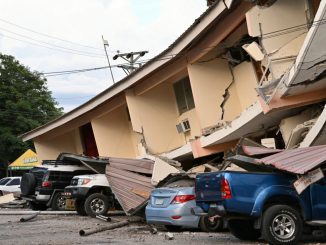
The earthquake caused storefront windows to shatter, scattered broken glass across streets and sent merchandise falling from shelves. A bookstore was also affected, with numerous books falling onto the floor during the shaking.
Some people sustained injuries while attempting to evacuate buildings, including individuals who fell while descending stairs.
The tremors were felt across several areas of central Japan, including Aichi, Shizuoka, Nagano and Gifu. Hamamatsu and surrounding communities also experienced shaking.
No Tsunami Warning Issued
Authorities did not issue a tsunami warning following the earthquake.
The earthquake also prompted precautionary railway measures. Shinkansen bullet trains in affected areas operated at reduced speeds while railway operators conducted safety inspections.
Chubu Electric Power, which operates the Hamaoka Nuclear Power Plant in Shizuoka Prefecture, reported no abnormalities following the earthquake.
Authorities Warn of Possible Aftershocks
The Japan Meteorological Agency advised residents to remain prepared for additional seismic activity in the coming days.
Officials warned that strong aftershocks could occur during the following week, particularly within the first two to three days after the main earthquake.
Residents in affected communities were encouraged to remain alert, secure potentially unstable household objects and follow official disaster preparedness instructions.
According to the Associated Press, authorities also reported no apparent change in the condition of the Nankai Trough, an area where scientists have identified the potential for a major future earthquake.
Japan is located along the Pacific Ring of Fire, making it one of the world’s most earthquake-prone countries. Its location near several tectonic plate boundaries exposes the country to frequent seismic activity.
As of November 8, authorities continued monitoring the affected areas and assessing the earthquake’s impact.