Published April 10, 2026
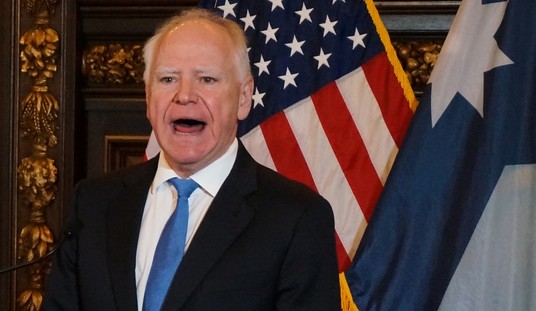
A growing political firestorm is unfolding in Minnesota as members of the state’s Freedom Caucus intensify efforts to impeach Gov. Tim Walz and Attorney General Keith Ellison, citing concerns over governance failures, public safety issues, and ongoing fraud investigations that have shaken confidence in state leadership.
The move marks a significant escalation in legislative tensions, setting the stage for a prolonged political battle inside the Minnesota Capitol.
Freedom Caucus Moves to Impeachment
Republican lawmakers aligned with the Minnesota Freedom Caucus have introduced articles of impeachment targeting both Walz and Ellison, arguing that state leadership has failed in its constitutional responsibilities.
The resolutions center on allegations of mismanagement and oversight failures, particularly in connection with widely publicized fraud investigations involving state programs. Lawmakers pushing the effort argue that leadership accountability is necessary to restore public trust.
The impeachment push reflects deepening partisan divisions in the state legislature, where Republicans have increasingly focused on governance and accountability issues.
Fraud Investigations Fuel Political Pressure
At the center of the controversy are ongoing fraud investigations that have drawn national attention and intensified scrutiny of Minnesota agencies.
Reports of alleged misuse of public funds in social service programs have triggered inquiries from both state and federal authorities. While not all allegations have been proven, the political fallout has been significant, placing pressure on top state officials to respond decisively.
Governor Walz has defended his administration’s response, pointing to increased oversight measures and internal reforms aimed at strengthening accountability within state-run programs.
Attorney General Keith Ellison has also faced questioning over enforcement priorities and oversight mechanisms tied to fraud prevention efforts.
Walz and Ellison Defend Records
Both Walz and Ellison have pushed back strongly against impeachment efforts, framing them as politically motivated and disconnected from the broader context of ongoing investigations.
Walz has emphasized that his administration has already taken steps to address fraud concerns, including the creation of task forces and expanded monitoring of vulnerable programs.
Ellison’s office has similarly highlighted active investigations and prosecutions related to fraud cases, arguing that enforcement actions are ongoing and not indicative of systemic failure.
Despite these defenses, critics argue that more aggressive action should have been taken earlier to prevent alleged abuses.
Escalating Partisan Divide in Minnesota
The impeachment push highlights a widening divide in Minnesota politics, where debates over fraud, public spending, and governance have become increasingly central.
Republican lawmakers argue that systemic breakdowns in oversight require stronger corrective measures at the highest levels of state government. They contend that accountability must extend beyond agencies to include executive leadership.
Democratic leaders, meanwhile, have characterized the impeachment effort as an extreme political maneuver that risks distracting from ongoing reforms and investigations.
The result is a sharply divided legislature, with little indication of near-term consensus.
🔍 Critical View: Accountability, Governance Failures, and State Leadership Responsibility
The push to impeach Minnesota Gov. Tim Walz and Attorney General Keith Ellison reflects more than a routine political dispute—it highlights growing concerns over accountability, oversight failures, and whether state leadership has adequately responded to serious fraud-related issues. At the center of the debate is a broader question of trust: when large-scale public programs are compromised, who ultimately bears responsibility?
Several key issues define this controversy.
1. Executive Accountability for Systemic Failures
One of the core arguments behind the impeachment effort is that leadership cannot be separated from outcomes within state agencies.
When widespread fraud or mismanagement occurs under an administration, critics argue it reflects not just isolated failures but a breakdown in oversight at the highest levels. Even if officials are not directly involved, they are responsible for ensuring systems are in place to prevent abuse of public funds.
From this perspective, accountability must extend upward—not just to individual employees or contractors, but to the leadership overseeing them.
2. Public Trust and Government Oversight
A major concern is the erosion of public confidence in state institutions.
Fraud investigations involving taxpayer-funded programs raise questions about whether safeguards are strong enough to protect public resources. When oversight mechanisms fail repeatedly, it creates skepticism about whether reforms are meaningful or merely reactive.
Critics argue that rebuilding trust requires more than internal reviews—it requires visible consequences for leadership when systemic breakdowns occur.
3. The Scale of Fraud and Its Political Impact
The allegations surrounding fraud in state programs have become a central political issue because of their scale and visibility.
Even as investigations continue, the perception of widespread misuse of funds has already influenced public opinion. This has placed pressure on elected officials to respond not only administratively but politically.
In this environment, failure to act decisively is often interpreted as tolerance of mismanagement, further intensifying calls for accountability measures.
4. Oversight vs. Reactionary Reform
Another key issue is whether reforms have been proactive or reactive.
Supporters of impeachment efforts argue that corrective actions were implemented only after problems became public, suggesting that oversight systems were not functioning effectively beforehand. They question whether existing safeguards are sufficient to prevent similar issues in the future.
This raises a broader concern about whether government reform efforts are addressing root causes or simply responding to political pressure.
5. The Standard for Impeachment and Public Office Responsibility
While impeachment is an extraordinary measure, its proponents argue that extraordinary circumstances justify its consideration.
The argument is not solely about legal violations, but about whether leadership has met the standards expected by the public. In cases involving large-scale financial oversight failures, critics contend that political consequences are a necessary part of restoring institutional integrity.
From this viewpoint, impeachment is framed less as a partisan tool and more as a mechanism for accountability when governance systems break down.
👥 On the Ground: Political Pressure, Public Trust, and Institutional Strain in Minnesota
Beyond the legislative maneuvering and impeachment rhetoric, the situation in Minnesota is playing out in a more practical and immediate way across agencies, communities, and state institutions. On the ground, the debate over Gov. Tim Walz and Attorney General Keith Ellison is not just political—it is shaping how residents perceive government performance, how agencies operate under scrutiny, and how trust in public systems is being tested.
Several key dynamics stand out.
1. Heightened Scrutiny Inside State Agencies
State departments are now operating under increased attention from lawmakers, auditors, and the public.
Employees within affected programs are facing tighter oversight, more frequent reviews, and pressure to demonstrate compliance with evolving accountability measures. While some view this as necessary correction, others describe an environment where administrative caution has increased, slowing down normal operations.
On the ground, this translates into a more cautious bureaucracy—one that is reacting in real time to political and legal pressure.
2. Public Confidence Under Strain
Among residents, there is a noticeable shift in how state programs are perceived.
Reports of fraud investigations and mismanagement allegations have raised concerns about whether taxpayer-funded systems are being properly safeguarded. Even for programs not directly involved in the controversy, public trust has become harder to maintain.
This erosion of confidence is shaping how communities interact with government services, with more questions being asked about oversight and accountability.
3. Political Tension Filtering Into Daily Governance
The impeachment push has created an environment where governance and politics are increasingly intertwined.
On the ground, agency decisions are being viewed through a political lens, even when they are routine in nature. This dynamic can create hesitation in decision-making, as officials weigh not only policy outcomes but potential political interpretation.
The result is a state government operating under heightened awareness that administrative actions may quickly become political flashpoints.
4. Pressure on Law Enforcement and Oversight Bodies
Investigative and enforcement agencies are also feeling the effects.
With fraud allegations under the spotlight, auditors and investigators are working under increased expectations to produce visible results. At the same time, they face pressure to ensure accuracy and avoid overreach in politically sensitive cases.
On the ground, this creates a balancing act between demonstrating accountability and maintaining procedural fairness.
5. Community Reaction and Polarization
Across Minnesota communities, reactions are mixed and increasingly polarized.
Some residents view the impeachment effort as a necessary response to perceived governance failures and want stronger corrective action. Others see the political conflict as disruptive, arguing that it distracts from addressing underlying issues through administrative reform.
This divide is shaping local conversations, civic engagement, and trust in state institutions.
🎯 The Final Word:
At its core, the impeachment push in Minnesota reflects a broader demand for stronger accountability from elected leaders when serious breakdowns in oversight and public program integrity occur. When large-scale fraud allegations and administrative failures surface under a sitting administration, many argue that leadership must ultimately be held responsible for ensuring effective safeguards are in place. Regardless of political outcomes, the underlying message is clear: public trust is only restored when consequences are real, oversight is enforced, and government leaders are fully accountable for what happens under their watch.