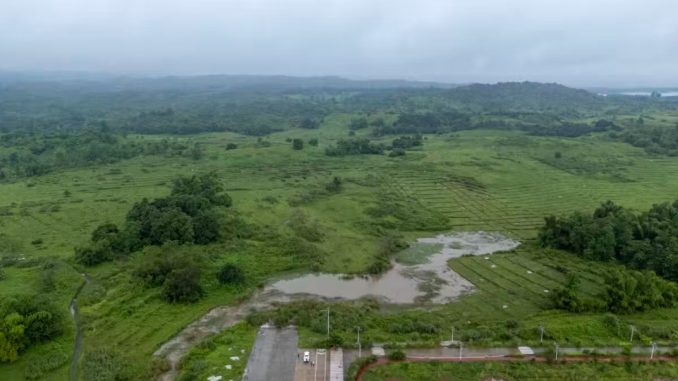
An aerial view shows the proposed 1,620-hectare Pax Silica site at New Clark City in Capas, Tarlac, on July 27, 2026. (Grig C. Montegrande/Inquirer)
Published August 1 , 2026
A 4,000-acre technology hub. Billions of dollars in projected investments. More than 100,000 high-skilled jobs. Artificial intelligence, semiconductor manufacturing, advanced electronics, and data centers—all planned for the heart of New Clark City.
To some, Pax Silica represents the future of the Philippine economy. It is being promoted as a transformational project that could propel the country into the global race for artificial intelligence and advanced manufacturing.
But beneath the promises of innovation lies a question that deserves just as much attention:
Who will pay the price for progress?
History has repeatedly shown that large-scale industrial developments often arrive with bold promises—economic growth, employment, and modernization. Yet they can also bring environmental degradation, pressure on natural resources, rising costs of living, and profound changes to communities that have called an area home for generations.
Will Pax Silica become a model for sustainable development? Or could it become another example of economic ambition outpacing environmental and social responsibility?
A Vision Worth Billions
Government officials have described Pax Silica as a once-in-a-generation opportunity. Designed to attract global technology companies, the project aims to establish the Philippines as a regional center for artificial intelligence, semiconductor production, critical minerals, cloud computing, and advanced manufacturing.
If successful, it could reduce dependence on lower-value industries and create thousands of highly skilled jobs for Filipino engineers, scientists, researchers, and technology professionals.
The economic promise is undeniable.
But history reminds us that major developments should be measured not only by the wealth they create—but also by the costs they leave behind.
The Environmental Questions That Cannot Be Ignored
Artificial intelligence may exist in the digital world, but the infrastructure behind it is anything but virtual.
Massive data centers consume enormous amounts of electricity. Semiconductor fabrication facilities require large volumes of ultra-pure water. Industrial construction reshapes landscapes, alters drainage systems, and can place pressure on local ecosystems if growth is not carefully managed.
Environmental advocates have asked difficult but important questions:
- Where will the enormous water demand come from?
- Can existing power infrastructure support continuous industrial operations?
- How will construction affect nearby ecosystems, wildlife, and flood management?
- Will environmental impact assessments remain transparent and independent?
Government officials have pledged compliance with environmental regulations, sustainable design, green spaces, and modern resource management. Those commitments will ultimately be judged not by announcements—but by implementation.
Water: The Resource That Could Define the Project
Water is emerging as one of the most closely watched issues.
Around the world, semiconductor plants and AI data centers are among the largest industrial consumers of water. Cooling systems, manufacturing processes, and facility operations require millions of liters every day.
Officials say Pax Silica will incorporate rainwater harvesting, recycling systems, and sustainable water management technologies.
Critics, however, argue that long-term demand must be evaluated against drought risks, population growth, and the needs of surrounding communities.
The question is not simply whether enough water exists today.
It is whether enough will remain decades from now.
Powering Artificial Intelligence
Artificial intelligence has become one of the world’s fastest-growing industries.
It is also one of the most energy-intensive.
Every AI model, cloud platform, and data center requires constant electricity, cooling systems, backup infrastructure, and reliable power transmission.
Can the Philippine energy sector expand quickly enough to meet that demand without increasing electricity costs or delaying the country’s transition toward cleaner energy?
The answer may determine whether Pax Silica becomes an international success—or an expensive lesson in infrastructure planning.
Communities Standing at the Crossroads
Economic development changes more than skylines.
It changes lives.
As investment flows into New Clark City, surrounding communities could experience rising land values, increased housing costs, heavier traffic, and shifts in local employment.
For some families, these changes may create new opportunities.
For others, they may bring uncertainty.
Farmers may find agricultural land becoming more valuable for industrial development. Small businesses may struggle with rising rents. Young professionals may benefit from new careers, while long-time residents worry about whether they will still be able to afford living in their own communities.
Development creates winners.
It can also create people who are left behind.
A Strategic Project in a Changing World
Pax Silica is not simply an economic initiative.
It is unfolding during an intense global competition over semiconductors, artificial intelligence, critical minerals, and supply-chain security.
Supporters believe the Philippines has an opportunity to become an indispensable partner in one of the world’s fastest-growing industries.
Others caution that increased strategic importance may also place the country at the center of broader geopolitical competition.
As global powers compete for technological leadership, the Philippines may find itself balancing economic opportunity with increasingly complex foreign policy decisions.
The Questions That Will Define the Future
Every major national project should face public scrutiny—not because development should be feared, but because accountability builds public trust.
Among the questions that deserve clear answers are:
- How will water resources be protected?
- How much electricity will the project require?
- What environmental safeguards will be independently monitored?
- How will nearby communities benefit directly?
- What protections exist against displacement?
- How transparent will future environmental reports be?
- Who will be held accountable if promised safeguards fail?
These are not obstacles to development.
They are the foundations of responsible development.
The Verdict Has Yet to Be Written
Pax Silica could become one of the most transformative economic projects in Philippine history.
It could also become one of its greatest tests.
Success should not be measured only in investment figures, factory construction, or employment statistics. It should also be measured by clean rivers, protected forests, secure water supplies, resilient communities, transparent governance, and the confidence of the people whose lives will be most directly affected.
The future of Pax Silica will not be decided by groundbreaking ceremonies or investment announcements.
It will be decided by whether economic progress and public interest move forward together.
When history looks back on this project, the most important question may not be how much wealth it created—but whether it improved the lives of Filipinos without sacrificing the environment, local communities, and the country’s long-term future.
👥 Public / Political Reactions:
The proposed Pax Silica technology hub has generated strong reactions from government officials, business leaders, environmental advocates, and civil society organizations. While supporters describe the project as a historic opportunity to transform the Philippines into a regional technology powerhouse, critics are urging greater transparency and stronger safeguards to ensure economic gains do not come at the expense of communities, natural resources, and national interests.
🇵🇭 Marcos Administration
- President Ferdinand Marcos Jr. has promoted Pax Silica as a strategic investment that could generate high-quality jobs, attract foreign capital, and strengthen the country’s competitiveness in artificial intelligence and advanced manufacturing.
- Malacañang has assured the public that the project will comply with Philippine laws and environmental regulations, adding that the government is open to refining aspects of the proposal in response to legitimate concerns.
🏢 Bases Conversion and Development Authority (BCDA)
- BCDA officials have defended the project, emphasizing that Pax Silica is intended to create a sustainable, innovation-driven economy while preserving significant green spaces and implementing modern water and environmental management systems.
- The agency has repeatedly rejected claims that the project would automatically displace communities or threaten local water supplies, saying environmental studies and public consultations will remain part of the planning process.
🌿 Environmental and Civil Society Groups
- Environmental advocates have welcomed economic development but continue to question the project’s long-term impact on water resources, biodiversity, energy consumption, land use, and nearby communities.
- Some organizations have called for greater transparency, independent environmental assessments, and broader public participation before major construction begins.
🌍 International Partners
- The United States has described Pax Silica as part of a broader initiative to strengthen secure AI and semiconductor supply chains among allied nations. Since its launch, several countries, including Italy, have announced plans to participate in the initiative, reflecting growing international interest.
💬 Public Opinion
- Public reaction has been divided. Many Filipinos see Pax Silica as an opportunity to bring high-paying technology jobs and attract world-class investment, while others remain cautious about its potential environmental, social, and geopolitical consequences. Discussions on social media and in public forums continue to reflect both optimism and concern over the project’s long-term impact.
⚠️ Resulting Effects:
Even before construction begins, Pax Silica has already reshaped discussions about the Philippines’ economic future, environmental sustainability, national security, and foreign investment. The proposed project has generated optimism among investors while prompting increased scrutiny from environmental advocates, policy experts, and local communities.
💼 1. Investment Confidence Has Increased
- The announcement of Pax Silica has strengthened investor interest in the Philippines’ technology and advanced manufacturing sectors.
- Government officials believe the project could attract billions of dollars in foreign direct investment over the coming years.
- International technology firms are closely monitoring the development.
📈 Effect: The Philippines is gaining greater visibility as a potential destination for AI, semiconductor, and high-tech manufacturing investments.
👨💻 2. Demand for High-Skilled Filipino Workers Could Grow
- The project is expected to create opportunities for engineers, IT professionals, researchers, technicians, and skilled manufacturing workers.
- Universities and training institutions may need to expand programs related to artificial intelligence, semiconductor engineering, robotics, and advanced manufacturing.
🎓 Effect: Demand for science, technology, engineering, and mathematics (STEM) education could increase significantly in the coming years.
🌿 3. Environmental Concerns Have Intensified
- Environmental organizations continue to question the project’s potential impact on water resources, biodiversity, energy consumption, and land development.
- Calls for transparent environmental assessments and independent monitoring have grown louder as planning continues.
🌱 Effect: Environmental protection is becoming one of the most closely watched aspects of the project’s implementation.
💧 4. Water and Energy Infrastructure Are Under Greater Scrutiny
- AI data centers and semiconductor facilities require substantial amounts of electricity and water.
- Government agencies are now evaluating long-term infrastructure capacity to support future industrial demand.
- Officials have proposed sustainable water management and renewable energy solutions.
⚡ Effect: National discussions about infrastructure resilience, water security, and energy planning have gained renewed urgency.
🏘️ 5. Communities Are Seeking Greater Transparency
- Residents, farmers, and advocacy groups have raised questions about land use, housing affordability, and the long-term effects of rapid industrial development.
- Government agencies have pledged continued public consultation and compliance with existing laws.
🤝 Effect: Public participation and community engagement are likely to play an increasingly important role as the project moves forward.
🌏 6. The Philippines’ Strategic Role Has Expanded
- Pax Silica has strengthened the country’s position within global discussions on secure semiconductor and AI supply chains.
- The initiative has also drawn greater international attention to the Philippines’ role in regional economic and geopolitical cooperation.
🌐 Effect: The project could elevate the Philippines’ global economic profile while also placing it at the center of broader geopolitical and supply-chain discussions.
🔮 Future Outlook:
As planning for Pax Silica moves forward, the project’s long-term success will depend not only on attracting investment but also on how effectively the government balances economic growth with environmental protection, community welfare, and national interests. The decisions made during the planning and implementation stages are likely to shape the Philippines’ technological and industrial landscape for decades.
🏗️ 1. Construction Could Begin Once Regulatory Requirements Are Met
- Environmental studies, public consultations, and regulatory approvals are expected to continue before large-scale construction progresses.
- Government agencies have stated that the project will comply with Philippine environmental and investment laws.
- Infrastructure development is expected to be carried out in phases.
🔍 Outlook: The pace of development will largely depend on regulatory approvals, investor commitments, and infrastructure readiness.
💻 2. The Philippines Could Emerge as a Regional Technology Hub
- If completed as envisioned, Pax Silica could attract global companies involved in AI, semiconductors, cloud computing, and advanced manufacturing.
- The project may encourage additional foreign investment and strengthen the country’s role in global technology supply chains.
📈 Outlook: Successful implementation could significantly boost the Philippines’ competitiveness in high-value industries across Southeast Asia.
🌿 3. Environmental Oversight Will Remain Under Close Watch
- Environmental organizations are expected to continue monitoring compliance with environmental safeguards.
- Water management, energy use, biodiversity protection, and pollution control will likely remain major public concerns throughout development.
🌱 Outlook: The project’s long-term credibility will depend on whether environmental commitments are consistently fulfilled.
🏘️ 4. Communities Will Expect Inclusive Development
- Residents, farmers, and local businesses are expected to seek continued consultation as the project evolves.
- Questions surrounding housing affordability, livelihood, land use, and access to new employment opportunities are likely to remain part of the public discussion.
🤝 Outlook: Public support may depend on whether surrounding communities experience tangible economic benefits while minimizing negative social impacts.
🌏 5. Geopolitical Interest Is Likely to Grow
- As global competition for AI and semiconductor supply chains continues, international attention toward the Philippines may increase.
- The project could strengthen strategic partnerships while also placing greater focus on the country’s role in regional economic and security cooperation.
🌐 Outlook: Pax Silica may become an increasingly important component of both the Philippines’ economic strategy and broader Indo-Pacific supply chain initiatives.
⚖️ 6. The Project’s Legacy Will Depend on Execution
- Economic projections alone will not determine the project’s success.
- Long-term outcomes will be measured by job creation, environmental sustainability, infrastructure resilience, transparency, and public trust.
- Effective governance will be essential in ensuring that development benefits both investors and ordinary Filipinos.
🧭 Outlook: If managed responsibly, Pax Silica could become a landmark achievement in Philippine industrial development. If environmental, social, or governance concerns are not adequately addressed, however, it could face continued public opposition and become a cautionary example of the challenges that accompany rapid modernization.
🧩 Bottom Line:
Pax Silica represents one of the most ambitious development projects ever proposed in the Philippines, carrying the potential to reshape the nation’s economy through artificial intelligence, semiconductor manufacturing, and advanced technology industries. While supporters view the initiative as a historic opportunity to generate high-quality jobs, attract global investment, and position the country as a regional innovation hub, the project’s scale has also raised legitimate questions about its long-term environmental, social, and geopolitical consequences.
🏛️ Supporters of Pax Silica argue that the project could accelerate economic growth, strengthen the Philippines’ role in global technology supply chains, and provide thousands of Filipinos with new career opportunities in high-value industries. They also point to government commitments on environmental compliance, sustainable infrastructure, and community engagement.
⚖️ Environmental groups, policy experts, and some community advocates continue to call for greater transparency, independent environmental monitoring, and meaningful public consultation. Their concerns focus on water security, energy demand, biodiversity, land use, housing affordability, and ensuring that local communities share in the project’s benefits rather than bearing disproportionate costs.
📄 Government agencies are expected to continue refining the project’s framework through environmental assessments, infrastructure planning, and stakeholder consultations. The success of Pax Silica will depend not only on attracting investors but also on maintaining public trust through accountability and responsible implementation.
🌍 The project’s significance extends beyond the Philippines. As global competition for AI, semiconductors, and secure supply chains intensifies, Pax Silica could become an important part of the Indo-Pacific technology landscape while placing the Philippines in a more prominent strategic and economic position.
➡️ Bottom Line: Pax Silica has the potential to become a defining milestone in the Philippines’ technological future—but its lasting legacy will depend on whether economic progress can be achieved alongside environmental stewardship, transparent governance, and the protection of communities whose lives will be directly affected. The challenge is not simply building a world-class technology hub, but ensuring that innovation benefits both present and future generations of Filipinos.
SOURCES: PHILIPPINE INFORMATION AGENCY – BCDA says Pax Silica project could generate over 130,000 high-quality jobs
ABS-CBN NEWS – Teodoro says Pax Silica project won’t threaten water supply
INQUIRER.NET – Pax Silica brings promise – but at what cost?