
Published April 11, 2026
A college in Portland is drawing national attention after reports surfaced that it will host a multi-day event tied to activist movements often associated with street protests and confrontations.
The school, Lewis & Clark College, is set to hold a three-day event called the “Transformative Action and Abolition Symposium,” scheduled for mid-April.
But what’s causing concern is not just the event itself—it’s what critics say will be discussed, taught, and explored during the sessions.
What is this event really about?
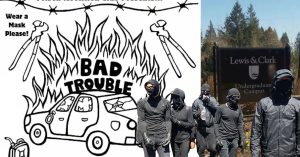
According to reports and publicly available event descriptions, the symposium is being organized by a student group known as the Prison Abolition Club and will include panels, readings, and workshops centered on activism, protest culture, and resistance movements.
Organizers describe the event as an academic space to examine systems of policing and incarceration, as well as broader political theories related to abolitionist thought.
Some of the discussions are expected to explore topics such as:
- The role of “direct action” in activism and protest movements
- How participants assess risk during demonstrations and civil unrest
- Strategies used in past social and political movements
- The philosophy behind resisting state authority and institutions
Critics, however, argue that some of these topics go beyond academic discussion and may edge into material that could be interpreted as encouraging confrontational or disruptive protest behavior.
Concerns about radical ideas and protest tactics
One of the biggest concerns raised by critics is the nature of some of the content reportedly included in the program.
According to published descriptions, certain sessions may include analyzing writings associated with anarchist political theory and exploring how activists respond during arrests or physical confrontations with law enforcement.
Other materials reportedly referenced include discussions around “de-arrest” scenarios—a term used in activist circles to describe coordinated efforts to intervene when someone is being detained by police.
There are also reports that event-related materials encouraged attendees to wear masks, a practice commonly seen in modern protest environments, particularly during large-scale demonstrations.
For critics, these details raise a broader concern about the intent and impact of such programming.
Is this simply academic exploration of political theory and protest history—or does it risk normalizing behavior that could lead to real-world confrontations?
The bigger issue: what is being taught on campus?
The situation has reignited a wider debate over what role colleges and universities should play when it comes to politically charged topics.
On one hand, universities have long been seen as places for open debate, intellectual exploration, and the study of political movements throughout history. Many academic programs include coursework on civil disobedience, social change, and activism as part of political science, sociology, and history curricula.
Supporters of such events argue that examining controversial ideas does not equate to endorsing them, and that students should be exposed to a broad spectrum of political thought—even when it challenges mainstream views.
On the other hand, critics say there must be clear boundaries, especially when discussions appear to focus on tactics that could cross into unlawful activity or encourage confrontation with law enforcement.
For many observers, the central question is not whether activism should be studied—but how far academic institutions should go in exploring the mechanics of protest behavior.
Portland’s history adds to the concern
The location of the event is also part of why it is drawing heightened attention.
Portland has experienced years of sustained protests and political demonstrations, particularly during periods of national unrest. Some of those demonstrations have, at times, escalated into clashes with law enforcement and property damage, drawing national media coverage and political debate.
Because of that backdrop, any campus event connected to activist movements—or groups perceived to be aligned with more radical protest ideology—tends to attract additional scrutiny.
For many critics, the concern is not limited to a single symposium, but rather part of a broader pattern of activism-focused programming in academic spaces.
Supporters vs. critics
As expected, reactions to the event remain sharply divided.
Supporters argue:
- Colleges should remain spaces for open discussion and political inquiry
- Activism and protest are historically tied to social change
- Students should be free to study and debate controversial ideas without censorship
Critics argue:
- Some discussions may normalize confrontation or illegal protest tactics
- Universities should avoid hosting content that could encourage unsafe behavior
- There should be stronger oversight when public safety implications are involved
🔍 Critical View: What’s really going on inside this campus event?
A college in Portland is now under the spotlight after reports that it is hosting a symposium focused on activism, protest tactics, and “radical” social movements often linked in public debate to far-left street protest groups like Antifa.
On the surface, it’s being described as an academic discussion about social change. But many people are asking a much simpler question:
Is this just education—or is it teaching students how to push political confrontation further?
TOPIC 1: When does “Education” become instruction?
Colleges are supposed to teach ideas, encourage thinking, and open discussion. That part is normal.
But critics argue there’s a difference between talking about movements and training people in how those movements operate in real life, especially when it involves protest tactics, confrontation strategies, and dealing with law enforcement situations.
In simple terms:
- Talking about history = education
- Teaching how to act in real-world conflict = something more serious
That line is what people are questioning.
TOPIC 2: Normalizing Street-level Political Conflict POLITICAL CONFLICT
Another concern is that events like this may slowly normalize the idea that political change comes through confrontation in the streets instead of discussion, voting, or peaceful organizing.
When students hear repeated discussions about:
- protest strategy
- “direct action”
- confrontation scenarios
Critics worry it shifts thinking from debate to disruption.
The fear is not academic discussion itself—it’s what mindset gets shaped over time.
TOPIC 3: Safety and Real world consequences
People on the critical side are also asking a practical question:
What happens when ideas discussed in a classroom move outside the classroom?
Past protests in cities like Portland have sometimes turned tense or violent, and that history makes people more sensitive to events that sound like they prepare for confrontation.
The concern is simple:
Ideas don’t stay in the classroom if they are designed for real-world action.
TOPIC 4: Should Taxpayer-Supported Institutions host this?
Even though this is a private college, the broader question applies to higher education in general.
Critics argue:
- Schools should stay neutral spaces
- Students should not be guided toward any political “side”
- Education should focus on learning, not activism training
Supporters of these programs say universities must allow all viewpoints.
But the debate continues:
Is this open learning—or political shaping?
TOPIC 5: The Broader trend in Higher Education
This event is being seen by some as part of a bigger pattern where universities are increasingly hosting discussions that move beyond theory into real-world activism.
That raises concern for those who believe:
- Universities should teach thinking, not organizing
- Classrooms should not become recruitment-style spaces for movements
- Students should be exposed to ideas, not directed toward action paths
👥 On the Ground: What’s Really Happening at Lewis & Clark College
A college in Portland is getting a lot of attention right now—not because of sports or academics, but because of an upcoming event that some people say could go too far.
Lewis & Clark College is set to host a three-day gathering called the “Transformative Action and Abolition Symposium.”
That’s a complicated name, so here’s the simple version:
👉 It’s an event where students and speakers talk about protests, activism, and how to challenge systems like policing and prisons.
Sounds like a normal college discussion—but critics say there’s more to it.
Topic 1: What the Event is About
The event is organized by a student group called the Prison Abolition Club.
In everyday terms, that group believes:
- Society should move away from prisons and traditional policing
- Communities should handle safety in different ways
During the event, people will talk about:
- How protests work
- How movements grow
- How people push for change
On the surface, that sounds like a typical campus discussion.
But the concern comes from how deep those discussions go.
Topic 2: “Direct Action” — What Does That Mean?
One of the key topics is something called “direct action.”
Simple meaning:
👉 Instead of just talking or voting, people take action themselves to force change.
That can include:
- Protests
- Blocking roads
- Confronting authorities
Supporters say this is how change has always happened in history.
Critics say:
👉 This is where things can cross the line from peaceful protest into chaos.
Topic 3: Protest Tactics and Risk
Another part of the event focuses on how people handle real protest situations.
In plain terms, they may discuss:
- What to do if a protest gets intense
- How to deal with police presence
- How to avoid getting into trouble
This is where many people start to get uncomfortable.
Why?
Because it can sound less like theory—and more like training for real-life confrontations.
Topic 4: Arrest Situations and “De-Arrest”
One of the most controversial topics involves how protesters react when someone is being arrested.
In simple terms:
👉 “De-arrest” means trying to stop or interrupt an arrest.
That could involve:
- Pulling someone away
- Surrounding officers
- Creating confusion
Critics warn:
👉 This can be dangerous—not just for police, but for everyone involved.
Topic 5: Masks and Identity
There are also reports that attendees are encouraged to wear masks.
Simple explanation:
👉 Masks hide identity.
This has become common in protests, especially in cities like Portland.
Some say it’s for privacy.
Others say:
👉 It allows people to act without being held accountable.
Topic 6: Why Portland Makes This Bigger
This isn’t happening just anywhere.
Portland has a long history of protests—some peaceful, some not.
Because of that:
👉 Events like this get more attention and more concern.
People remember past clashes, and they worry about history repeating itself.
Topic 7: The Bigger Question
This situation isn’t just about one college event.
It raises bigger questions:
- Should schools go this far in teaching protest tactics?
- When does education turn into encouragement?
- Who decides what’s acceptable?
Supporters say:
👉 Colleges should allow all ideas, even controversial ones.
Critics say:
👉 There should be limits—especially when safety is involved.
🎯 The Final Word:
At the end of the day, most people aren’t against students learning about history, protests, or different ideas—but there’s a growing concern when it starts to feel less like education and more like preparation for real-world confrontation. Schools are supposed to help young people think critically and build a future, not put them in situations where things could turn risky or out of control. For many, the issue is simple: freedom to learn should come with responsibility, and there has to be a clear line between understanding how protests work and encouraging actions that could lead to harm, chaos, or trouble with the law.




