President Vladimir Putin said Kyiv had opened “Pandora’s box” with strikes on Russian economic targets and threatened to hit back at Ukraine’s “most sensitive economic sectors.”
Reported by:

Cherry Meigh Timbol
News Content Editor
Published August 23, 2026
MOSCOW — Russian President Vladimir Putin has warned that Ukraine has “opened Pandora’s box” by expanding drone strikes against Russian economic infrastructure, threatening a broader Russian retaliation against some of Ukraine’s most sensitive economic sectors.
Putin’s remarks, reported Saturday, came as Ukraine has intensified attacks on Russian oil refineries, logistics facilities, warehouses and other infrastructure that Kyiv says supports Moscow’s ability to wage war. Russia has responded with strikes against Ukrainian economic infrastructure, including facilities connected to the country’s agricultural and grain-export industries.
Putin threatens retaliation
Putin accused Kyiv of deliberately attempting to damage Russia’s economy and said Ukraine’s strategy had created a new escalation in the conflict.
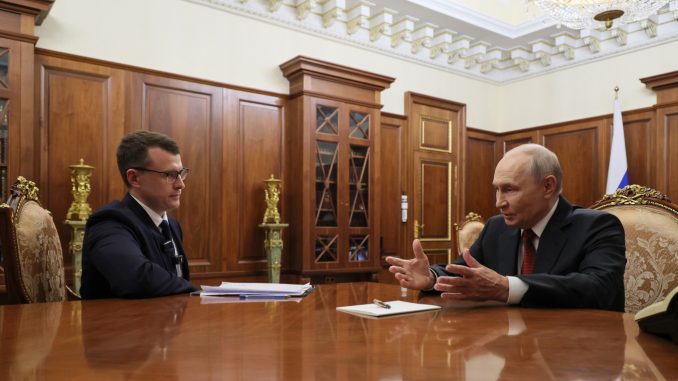
“The Kyiv regime set out to damage our economy,” Putin said, according to Reuters. “What did it do? It opened this Pandora’s box itself.”
He warned that Moscow would respond by targeting Ukraine’s “most sensitive economic sectors,” signaling that future Russian strikes could focus increasingly on infrastructure critical to Ukraine’s ability to produce, transport and export goods.
The warning comes after a series of Ukrainian drone attacks against Russian economic targets, including oil refineries and major commercial logistics facilities.
Ukraine targets Russia’s war economy
Ukraine has increasingly sought to take the fight beyond the traditional battlefield by striking infrastructure that generates revenue or supports Russia’s military campaign.
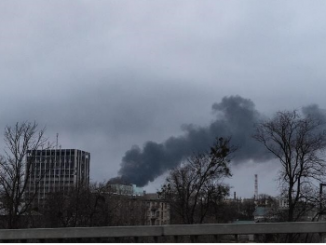
Recent attacks have targeted Russian oil-processing capacity as well as warehouses operated by major online retailers. A drone attack also struck an Ozon warehouse in Russia’s Orenburg region, according to regional authorities.
Kyiv’s strategy is aimed at putting pressure on Russia’s economic machinery and disrupting resources that can ultimately support Moscow’s war effort.
Moscow, however, argues that the attacks have not produced decisive effects on the battlefield.
Russia threatens Ukraine’s agricultural sector
Putin specifically pointed toward Ukraine’s agricultural exports as a potential target, saying the sector is among Kyiv’s most important sources of revenue.
Russia has already struck Ukrainian economic infrastructure and grain-export routes through the Black Sea. The Kremlin has also argued that Moscow can compensate for any disruption in Ukrainian grain exports and prevent a global food shortage.
That claim comes as Ukraine remains one of the world’s major agricultural exporters, making its ports, storage facilities and transportation networks economically and strategically important.
The economic war expands
The latest exchange represents another evolution in the Russia-Ukraine conflict.
Rather than limiting attacks to military formations and weapons facilities, both sides are increasingly targeting infrastructure that supports the broader economic foundation of the war.
Ukraine has struck Russian refineries, warehouses and industrial facilities, while Russia has continued attacking Ukrainian energy, transportation, agricultural and commercial infrastructure.
The strategy carries significant risks for civilians because economic infrastructure often operates alongside residential areas and civilian supply chains.
Russia continues missile offensive
Putin’s warning also comes amid a broader intensification of Russia’s missile and drone campaign against Ukraine.
Ukrainian officials say Russia has significantly increased missile production and continues to launch large-scale attacks against Ukrainian cities. A recent Russian barrage killed at least 16 people in the Kyiv region and damaged apartment buildings, a school, a children’s hospital and a kindergarten, according to the Associated Press.
Ukraine has responded by expanding its own long-range drone campaign against targets inside Russia.
Peace talks remain uncertain
Despite the escalating attacks, Putin reiterated that Moscow remains open to negotiations.
However, he insisted that any future settlement must take into account what he described as the “realities on the ground.” He rejected Ukrainian proposals that he characterized as unrealistic.
The conflicting positions suggest that military escalation and diplomatic discussions are continuing simultaneously, with neither side appearing ready to make major concessions.
🧩 Bottom Line:
Putin’s “Pandora’s box” warning should not be dismissed as simply another piece of Kremlin rhetoric. Ukraine has demonstrated that it can reach deep inside Russia and disrupt economic infrastructure, while Moscow has made clear that it intends to answer by striking where Ukraine may be most vulnerable.
That creates a dangerous cycle. When economic infrastructure becomes a battlefield, ordinary people ultimately pay the price. Oil refineries, grain terminals, warehouses and transportation networks may be strategic targets to governments, but they also support jobs, food supplies, energy and everyday life.
What concerns me most is where this escalation leads next. Every new strike creates an incentive for the other side to retaliate harder. Unless there is a serious effort to break that cycle, the war risks becoming increasingly destructive not only for soldiers on the front lines, but for civilians whose livelihoods are thousands of miles away from the battlefield.
SOURCES: NEWSWEEK – Russia Strikes Ukraine After Putin ‘Pandora’s Box’ Warning
THE MOSCOW TIMES – Putin Says Ukraine Opened ‘Pandora’s Box’ With Strikes on Economic Targets
REUTERS – Putin says Ukraine opened ‘Pandora’s box’ with strikes on economic targets