Reported by:

Cherry Meigh Timbol
News Content Editor
Published November 17, 2026
The U.S. Army has demonstrated a new combination of unmanned ground vehicles and coordinated drone systems during a live-fire exercise in Germany, highlighting its efforts to develop new battlefield capabilities while reducing the risks faced by soldiers.
The demonstration took place on November 12, 2026, at the Grafenwoehr Training Area in Bavaria, Germany. It was organized by the U.S. Army Combat Capabilities Development Command (DEVCOM) Armaments Center in coordination with U.S. Army Europe and Africa and the 7th Army Training Command.
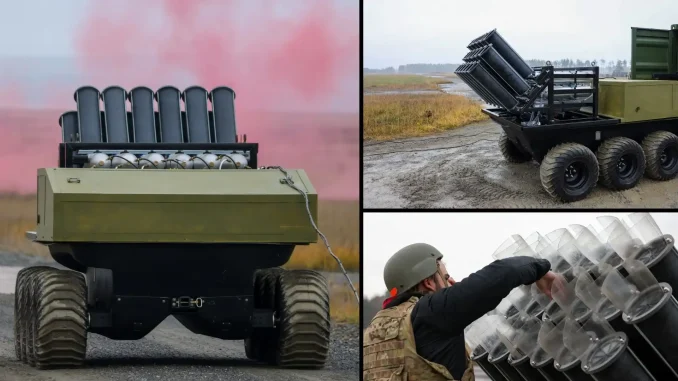
One of the main features of the exercise involved an unmanned ground vehicle known as the R3NEGADE emerging from a pre-positioned shipping container and deploying a swarm of 18 drones using an HIV3 launcher. The drones subsequently carried out a coordinated autonomous strike against a designated target.
According to the Army, the demonstration was designed to evaluate how emerging unmanned aerial and ground technologies could work together to provide commanders with additional operational options, extend strike capabilities and reduce soldiers’ exposure to danger.
Multiple Unmanned Systems Demonstrated
The exercise featured several other experimental and existing military technologies working together.
A separate R3NEGADE unmanned ground vehicle was equipped with a remotely operated weapons system carrying a Javelin anti-tank missile. The configuration demonstrated how robotic ground platforms could transport and operate existing weapons without requiring soldiers to remain directly beside them.
The demonstration also included TRV-150 drones, which deployed smoke against a target, and first-person-view (FPV) drones operated by soldiers from the 173rd Airborne Brigade.
Another system displayed during the exercise was the TRV-400 aircraft equipped with the developmental FIR3FLY anti-armor capability. The system was presented as part of the Army’s exploration of additional unmanned strike options.
The different platforms demonstrated how drones, robotic vehicles and conventional weapons could be integrated into coordinated battlefield operations.
Containerized Systems for Rapid Deployment
The exercise was conducted under the Army’s Remote Rapid Response Autonomous Contingency Team (R3ACT) initiative.
The program explores the use of modular unmanned air and ground platforms stored in shipping containers that can be positioned at strategic locations and deployed when needed.
According to Alex Tomosieski, the R3ACT program manager, containerized systems could give military commanders more flexible options for distributing unmanned capabilities across operational areas.
Pre-positioning these systems could allow military units to deploy equipment without having to transport and assemble every component at the time of an operation.
The Army is also examining how commercially available technologies can be combined with existing military weapons and equipment to develop more affordable and scalable capabilities.
Part of a Broader Shift in Military Strategy
The demonstration reflects the U.S. military’s growing focus on unmanned warfare, particularly following the extensive use of drones in the Russia-Ukraine war.
Both sides in that conflict have increasingly relied on unmanned aerial systems for reconnaissance, surveillance and attacks against military targets, demonstrating how relatively small and inexpensive platforms can challenge conventional military equipment.
The Army said the Grafenwoehr exercise supported its broader operational framework, known as *How the Army Fights*, particularly its emphasis on strike capabilities and endurance.
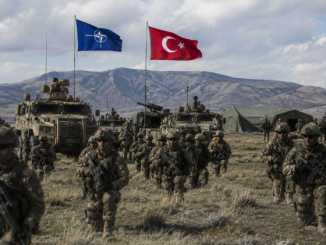
It also supported the Eastern Flank Deterrence Initiative, which seeks to strengthen deterrence and improve military readiness alongside NATO allies and partners in Europe.
DEVCOM officials emphasized that involving soldiers in the testing process remains important for evaluating how these technologies perform and identifying improvements before potential wider use.
While the demonstration showcased several emerging capabilities, the Army did not announce a decision to deploy the systems operationally or provide a timeline for their broader adoption.
The exercise nevertheless offered a practical demonstration of how unmanned ground vehicles and coordinated drone systems could become increasingly integrated into future military operations.