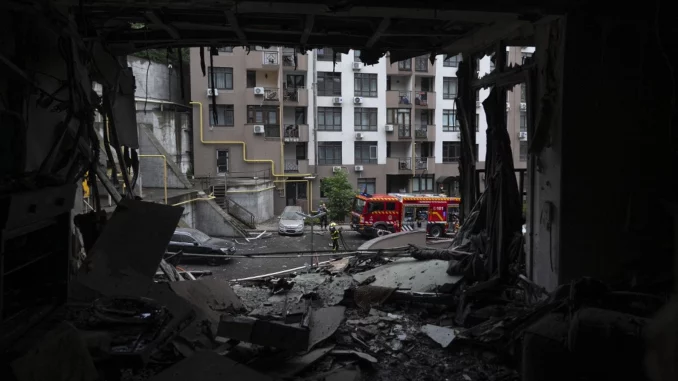
This photo shows a damaged residential building following a Russian attack in Kyiv on July 21, 2025, amid the Russian invasion of Ukraine. (Photo by OLEKSII FILIPPOV / AFP)
Published July 21, 2025
The attacks come amid a sharp escalation in Russian aerial strikes. Over the past two months, Russia has been launching hundreds of drones at Ukraine almost daily, often in near-nightly waves.
🇷🇺 Russia’s overnight barrage on Ukraine
-
Scale of attack: Russia carried out a massive strike overnight into Monday (July 21, 2025), deploying roughly 450 missiles and suicide drones against Kyiv and other Ukrainian cities. A school, residential buildings, and a metro shelter in Kyiv were hit, resulting in at least 2 fatalities and 15–27 injuries
-
Civilian toll & infrastructure damage: Multiple civilian structures—including homes, schools, and metro stations—sustained damage across different locales
🌐 Western response & air‑defense efforts
-
European reinforcements: In response, European nations pledged additional air-defense systems and munitions. The Netherlands notably pledged “substantial” help in transporting U.S.-made Patriot missile batteries to Ukraine; Germany is also buying defense ammunition under joint UK coordination
-
NATO coordination: A planned NATO strategy meeting was set to discuss Ukraine’s defense capabilities, especially regarding Trump’s initiative to supply extra weaponry
🎯 Drone warfare escalation
-
Record drone usage: Russia now reportedly possesses the capacity to launch up to 2,000 drones at once, according to Germany’s defense analysis—making intercepts costlier and more complex
-
Ukraine’s retaliation & strategy: Kyiv is stepping up its own drone counter‑strikes, including alleged attacks near Moscow, and is pushing for peace talks while in a stronger bargaining position
🕊️ Peace negotiations & political pressure
-
Zelensky-Donald Trump dynamic: A “mega‑deal” is being discussed whereby Ukraine would supply its drone tech to the U.S. in exchange for long-range American missiles. Trump has also imposed a 50‑day deadline for Putin to agree to a peace deal or face tougher sanctions
-
Putin’s stance: Kremlin remains resistant—demanding Ukrainian neutrality, legal guarantees over NATO, and acceptance of lost territory. Putin believes Russia can sustain war pressure
-
Ukraine pushes diplomacy: Zelensky’s team proposed a fresh round of peace talks for the coming week, building on prior Istanbul discussions and prisoner-exchange deals
🔧 Ukraine’s defense adaptation
-
Domestic arms push: Ukraine aims to ramp up domestic weapons production to 50% within six months (from about 40%), focusing heavily on drones and air-defense systems, supported by both NATO and EU nations
-
Tech‑centric defense: Reflecting advice from top military and tech leaders, Ukraine is transitioning to a “hi‑tech war of survival”—prioritizing drones, robotics, and digital warfare over conventional territorial offenses
 Resulting Effects:
Here’s a breakdown of the resulting effects of the latest Russian overnight strike on Ukraine, along with broader consequences for civilians, geopolitics, and military dynamics:
🏚️ 1. Civilian Impact
-
Casualties & injuries: The barrage killed at least 2 civilians and injured 15 to 27 others, including children. Rescue workers had to dig survivors from the rubble of homes and schools.
-
Destruction of homes & infrastructure: Dozens of residential buildings, a school, and metro infrastructure were damaged or destroyed, displacing many families and increasing pressure on emergency shelters.
-
Psychological toll: The frequency and intensity of overnight strikes have deepened civilian anxiety, with more residents forced to sleep in underground shelters or evacuate cities like Kyiv and Dnipro.
🚨 2. Ukrainian Defense & Strategic Shifts
-
Strain on air-defense systems: Ukraine intercepted many drones and missiles, but saturation tactics by Russia (450 drones/missiles launched at once) overloaded some air defense zones.
-
Acceleration of domestic arms production: In response, Ukraine is aiming to produce at least 50% of its weapons domestically, especially drones, by the end of the year.
-
Shift to tech warfare: Ukraine is investing heavily in high-tech solutions—drones, satellite intelligence, and electronic warfare—as opposed to large-scale offensives.
🌍 3. International Reactions & Alliances
-
Europe steps up: NATO countries—especially Germany, the Netherlands, and the UK—pledged more air-defense systems (e.g., Patriot missiles) and intelligence-sharing.
-
Stronger NATO-Ukraine cooperation: Military leaders are prioritizing integrated defense systems and anti-drone strategies; some officials are calling for Ukraine to receive real-time satellite targeting data.
-
Trump’s peace deadline: Donald Trump has reportedly imposed a 50-day ultimatum for Putin to consider peace, using the prospect of tighter sanctions and a weapons deal with Ukraine as leverage.
🛢️ 4. Economic & Energy Repercussions
-
Regional economic slowdown: Ongoing attacks on Ukrainian cities and infrastructure are pushing up logistics and insurance costs, especially for grain exports through the Black Sea.
-
Russian economy under stress: Sanctions and war costs are draining Russia’s reserves, though Moscow appears willing to endure this to maintain military pressure.
-
Global food and fuel concerns: Disruptions to Ukrainian grain flow and Russian oil markets could again pressure global prices, especially in Europe, Africa, and Southeast Asia.
🕊️ 5. Peace Talk Tensions
-
Stalemate continues: Despite calls for peace, Russia demands Ukraine’s neutrality, non-NATO status, and recognition of occupied territories—conditions Kyiv refuses.
-
Zelensky-Trump backchannel: Ukraine is reportedly exploring a possible drone-for-missile trade deal with the U.S. under Trump’s influence, hoping to leverage its advanced drone capabilities to gain long-range missiles.
-
Public fatigue & diplomacy pressure: Both Ukrainian and Russian civilians are experiencing “war fatigue,” increasing pressure on leaders to find an off-ramp—but no breakthrough is in sight.
 Bottom Line:
Russia’s massive overnight strike—one of the most intense in recent months—has deepened the humanitarian crisis in Ukraine, intensified military and diplomatic pressure, and reinforced the urgent need for modernized defense systems. As homes, schools, and shelters are destroyed, Ukraine is being forced to adapt quickly by ramping up domestic arms production and shifting toward a high-tech, drone-based defense strategy.
Meanwhile, international alliances are being tested and reshaped. NATO countries are accelerating military aid, and the U.S., under renewed political pressure, is inching closer to brokered negotiations—possibly involving weapons-for-drones deals. However, peace remains elusive as Russia’s demands remain incompatible with Ukraine’s sovereignty.
Ultimately, the war is entering a more complex phase: one marked by evolving technology, global economic ripple effects, and a narrowing window for diplomacy. The outcome may hinge not just on the battlefield, but on strategic innovation, international unity, and the political will to bring an end to this prolonged conflict.